
Who is responsible for arranging water sample testing?
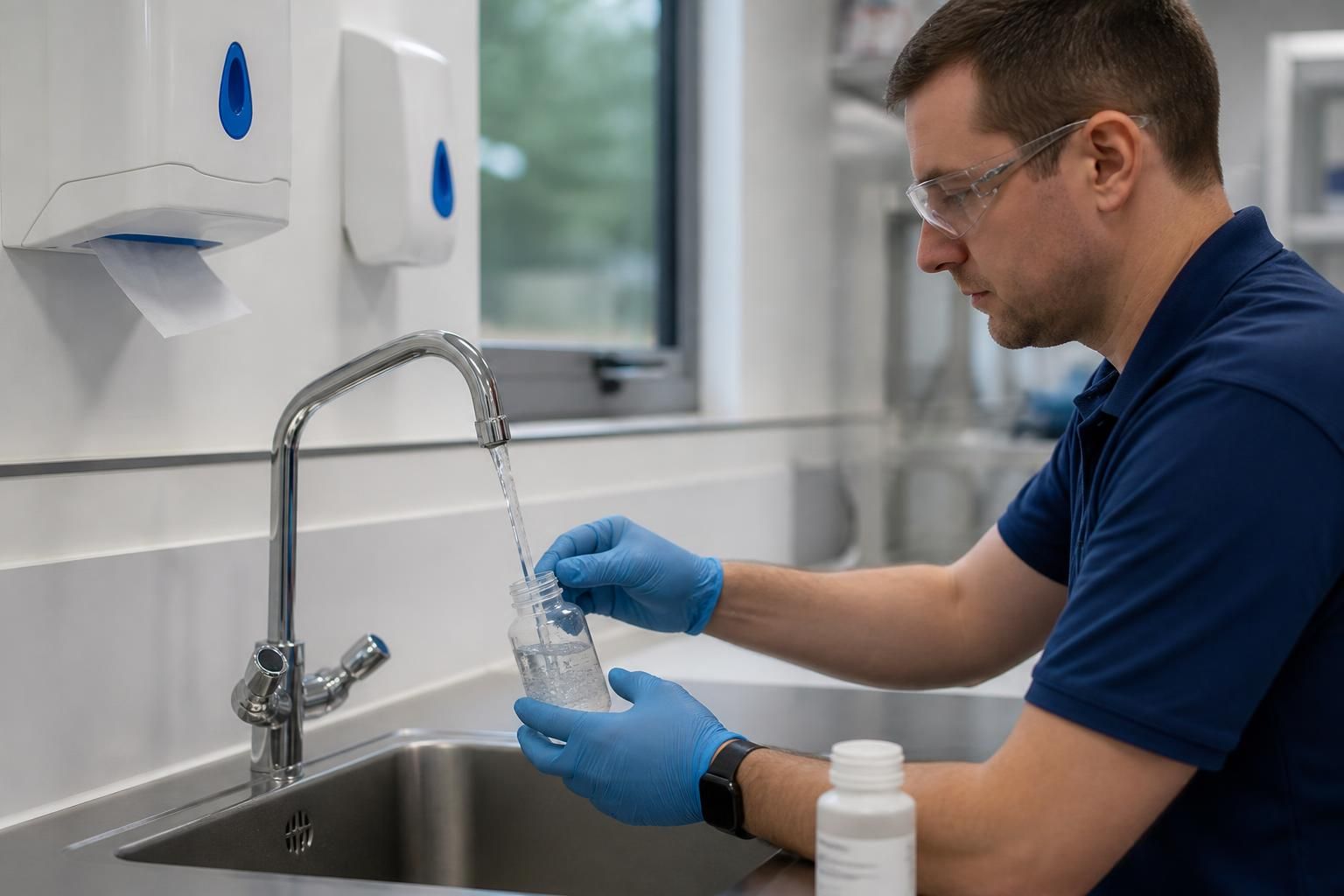
The organisation with control of the premises and its water systems should arrange water sample testing as part of its wider legionella control arrangements. This responsibility should be assigned to a named responsible person, supported by suitable management procedures, records and access to competent technical advice.
Responsibility is not limited to booking a sampling visit. The responsible person should ensure that testing is justified by the water system risk assessment, included in the written control scheme and carried out at suitable locations and intervals. They should also ensure that results are reviewed, communicated to relevant people and followed by proportionate action where necessary.
- The duty holder or organisation in control: provides the overall governance, resources and authority for the testing programme.
- The named responsible person: coordinates the arrangements, maintains records, checks that sampling is completed and escalates significant findings.
- The facilities or estates team: provides system information, arranges access, identifies changes to the water services and helps implement corrective work.
- A competent water hygiene specialist: can advise on the sampling plan, take representative samples, interpret results and recommend follow-up measures.
- The testing laboratory: analyses submitted samples using appropriate methods and reports the findings in a form that can be assessed against the control scheme.
These roles may be carried out by different organisations, particularly where a building is leased, managed by an agent or occupied by several businesses. A contract can allocate practical tasks, but it should clearly state who retains oversight, who receives the reports and who has authority to arrange remedial action. Delegating sampling to a contractor does not remove the need for the client or duty holder to understand the findings and manage the associated risks.
Where responsibility is shared, the parties should document the boundaries between them. For example, a landlord may control central plant and incoming water services, while an occupier controls outlets, local hot-water equipment or day-to-day use. A facilities management provider may organise visits, but the property owner or occupier may still need to approve expenditure and ensure that recommendations are implemented. The relevant lease, service agreement and risk assessment should be reviewed together rather than relying on an informal assumption about who is responsible.
The person arranging testing should confirm that the appointed provider is competent for the work being undertaken. This includes checking that the sampling approach reflects the actual system, that samples are collected without compromising their integrity, and that laboratory analysis is performed by a suitably capable laboratory. Sampling should not be treated as a substitute for control measures such as temperature management, cleaning, disinfection, removal of redundant pipework or prevention of stagnation.
Testing may be arranged as part of routine monitoring identified by the risk assessment, or in response to a particular event. Examples include significant changes to the water system, commissioning or recommissioning, prolonged stagnation, suspected exposure, abnormal previous results or verification after remedial work. The responsible person should be able to explain why each sampling programme is in place and what decision will follow from the result.
When a report is received, responsibility moves beyond simply filing it. The responsible person should check whether samples were taken from the intended outlets, whether any locations were missed, whether results show an adverse trend and whether the findings are consistent with other monitoring records. A competent adviser may help interpret the technical information, but management must still decide how actions are authorised, recorded and closed out.
Good records should identify the premises, system or outlets sampled, sampling dates, test methods where relevant, results, report recipients, decisions made and any corrective actions. They should be retained with the legionella risk assessment, monitoring records and maintenance history so that the testing programme can be demonstrated during an internal review, audit or inspection.
Blue Fish Water Management can support organisations by providing water sampling and testing, compliance advice and practical interpretation of findings. The client remains responsible for making sure the arrangements are appropriate to its premises, appointing the relevant internal lead and acting on information produced by the testing programme.
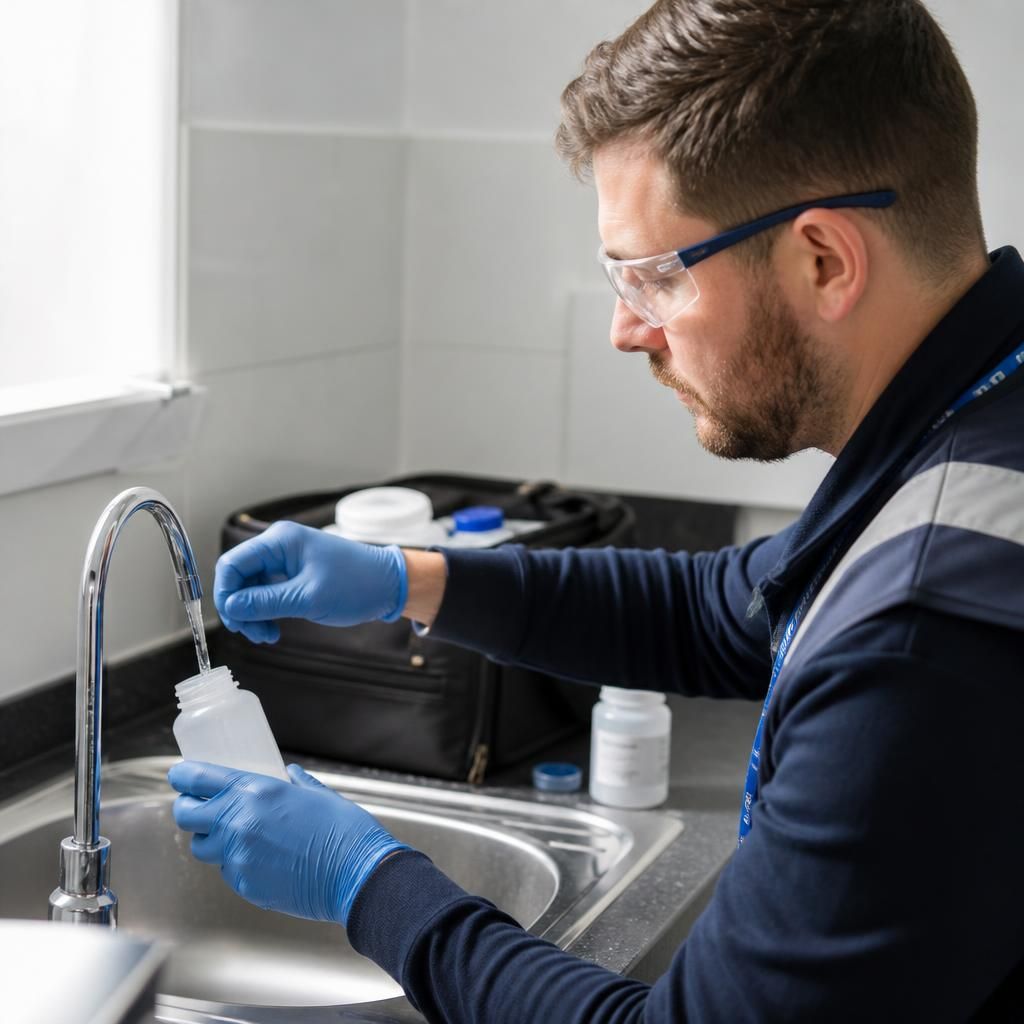
Responsibility for arranging water sample testing should be linked to control of the people, premises and water systems that may be exposed to risk, rather than to ownership alone. In a shared or managed building, an occupier may need to raise concerns about its own outlets or vulnerable occupants even where another organisation arranges the formal sampling programme.
A practical arrangement should therefore identify how concerns are reported, who can request additional sampling and who must be informed when circumstances change. This is particularly important after alterations, periods of low occupancy or changes in the use of a space. Clear escalation routes help prevent a known issue being delayed because each party assumes another organisation is responsible for initiating the next step.
Discuss Your Water Sampling Responsibilities
If you need to clarify who should arrange water sample testing at your premises, speak to Blue Fish Water Management about reviewing your current responsibilities and testing arrangements.