
Which water systems require routine water sampling and testing?
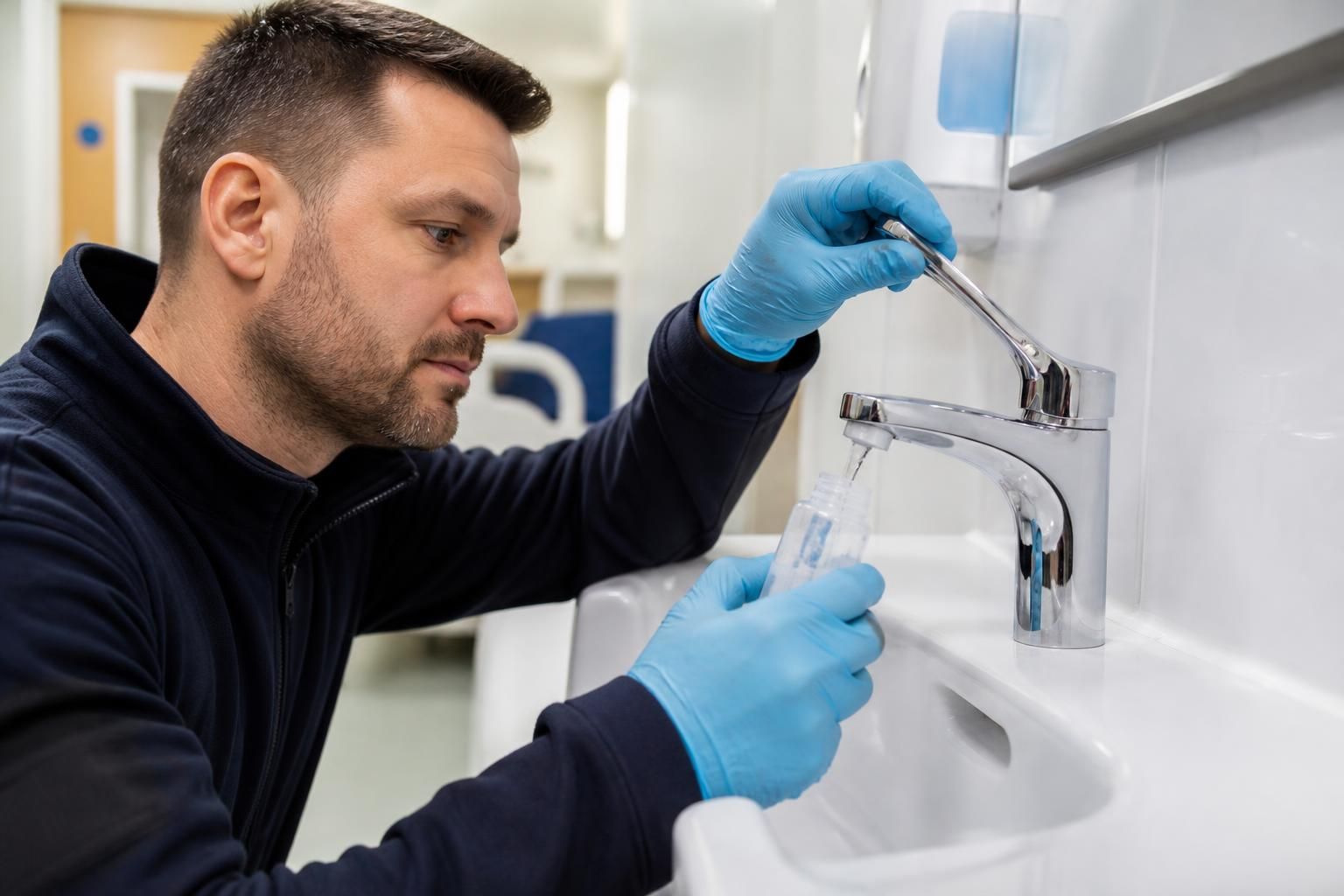
Routine water sampling and testing is required where a water system presents a foreseeable risk of microbial contamination, particularly Legionella growth or exposure to contaminated aerosols. The systems most commonly subject to planned testing are those with stored or recirculating water, variable temperatures, low-use outlets, complex distribution pipework, or users who may be more vulnerable to infection.
Domestic hot and cold water systems may require routine sampling in premises such as hospitals, care homes, hotels, student accommodation, residential blocks, schools, prisons, leisure facilities and large workplaces. Sampling is more likely to be appropriate where the system contains storage tanks, calorifiers, secondary return loops, blending valves, showers, spray taps or rarely used outlets. A small, simple system with consistent use and effective temperature control may not need the same testing regime as a large or complex installation.
In these systems, sampling can be used to check for Legionella and, where relevant, other microbiological or chemical indicators. Results should be considered alongside temperature records, inspection findings, flushing arrangements, cleaning work and any changes to the system. A laboratory result is therefore one part of water hygiene control rather than a substitute for managing the system itself.
Healthcare and care environments generally require closer attention because patients and residents may be more susceptible to infection. Hospitals, care homes, nursing homes, supported living premises and similar settings may need planned testing of outlets and systems based on the vulnerabilities of occupants and the services provided. Additional microbiological parameters may be relevant in clinical areas, particularly where water is used around invasive procedures, respiratory equipment or people with weakened immune systems. The responsible water safety team should determine the scope of testing with reference to the risks in each area.
Cooling towers and evaporative condensers require routine monitoring because they can generate aerosols and provide conditions in which Legionella can multiply. Testing commonly forms part of a wider programme that includes water treatment, biocide control, plant inspection, cleaning and records of operational parameters. A positive or unexpected result should trigger a documented review and, where necessary, corrective action rather than being treated as an isolated laboratory issue.
Spa pools, hot tubs and similar water features also need planned sampling because warm, aerated water can support microbial growth and create airborne droplets. Testing may need to cover Legionella, disinfectant control, pH and other indicators required for the type of installation. Public and commercial spa facilities should have clear procedures for sampling, interpreting results, taking remedial action and confirming that controls are effective before normal use continues.
Other systems may require routine testing where their design or use creates a comparable risk. Examples include:
- Showers, spray systems and water features that produce fine droplets.
- Systems with dead legs, redundant pipework, infrequently used outlets or poor circulation.
- Temporary or seasonal systems that are drained, recommissioned or left unused for extended periods.
- Industrial process-water systems where people may be exposed to aerosols.
- Water systems affected by refurbishment, changes in occupancy, alterations to plant or a history of unsatisfactory results.
Not every outlet needs to be sampled at every visit. A competent risk assessment should identify representative locations and any higher-risk points that warrant separate attention. This may include sentinel outlets close to the beginning and end of a distribution run, outlets furthest from the source, low-use points, showers, thermostatic mixing valves and areas used by vulnerable people. Sampling plans should be reviewed when the building, population or system changes.
The required test frequency cannot be selected from the system name alone. It depends on factors including water temperature, storage and circulation arrangements, outlet use, aerosol generation, system condition, occupancy, previous results and the effectiveness of existing controls. Relevant UK guidance, the site’s written scheme and the findings of the legionella risk assessment should be used together. Testing may be more frequent after commissioning, alteration, cleaning, disinfection, an elevated result or a period of low use, while a stable system may follow an established risk-based schedule.
Routine sampling should also be distinguished from investigative sampling. Investigative samples may be needed after a suspected case of legionellosis, an abnormal result, a control failure, a complaint about water quality or an unexplained change in system performance. These samples should be planned to answer a specific question, with the locations, timing and test parameters recorded clearly.
For reliable decisions, samples should be collected by a competent person using suitable methods and submitted to a laboratory with appropriate accreditation for the tests performed. Reports should identify the sampling points, dates, methods, results and any relevant interpretation. The findings should then be compared with the site’s risk assessment and control limits, recorded with other monitoring information and used to decide whether further investigation or remedial work is necessary.
Blue Fish Water Management supports organisations by combining water sampling and testing with practical interpretation of the wider control programme. This helps businesses determine which systems and outlets need routine attention, whether the existing schedule remains suitable and what action may be required when results do not align with the risk assessment.
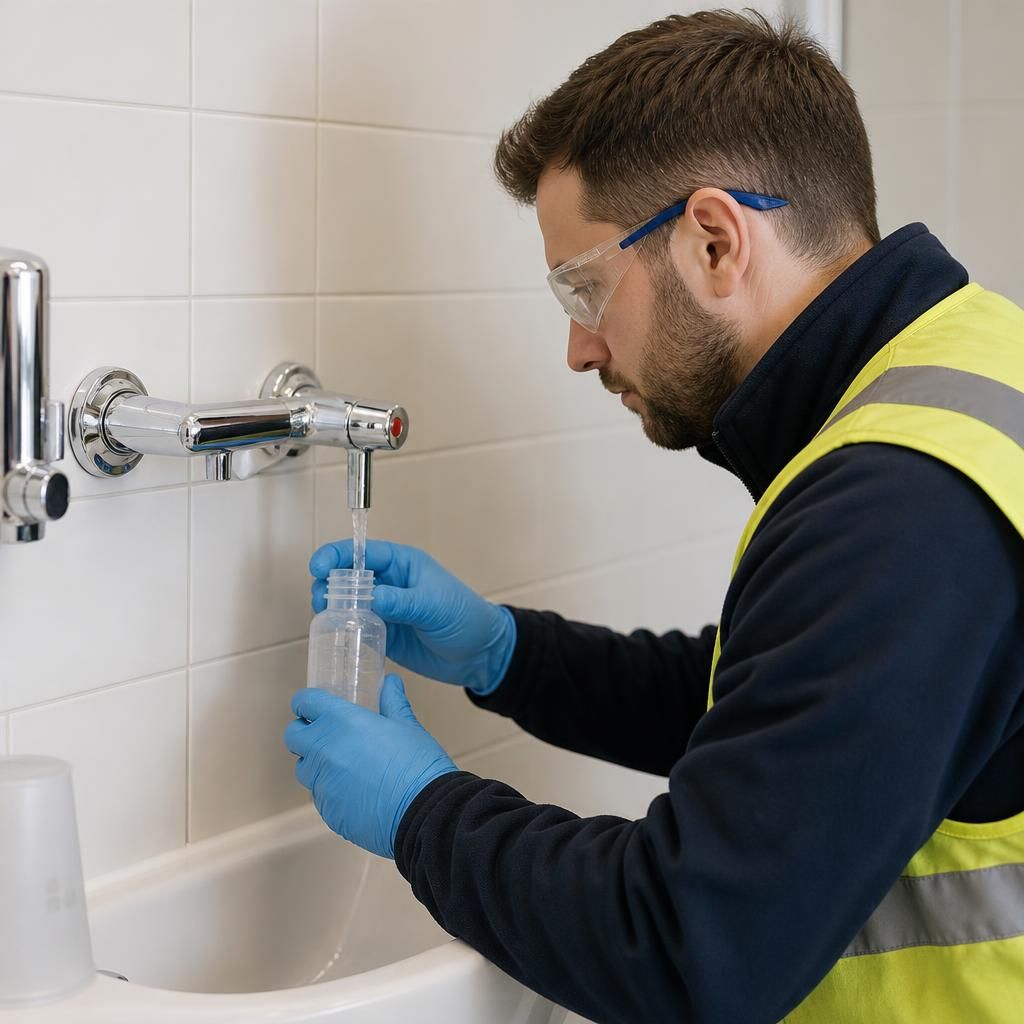
The type of sample collected matters as much as the system being tested. A sample taken before the outlet has been flushed can indicate conditions within the fitting or the immediately adjacent pipework, while a flushed sample can provide more information about water further back in the distribution system. For this reason, routine testing of a complex hot or cold water service may use different sample methods to help distinguish a localised issue from a wider system concern.
The sampling method should be recorded alongside the location and result so that findings can be compared accurately over time. A change in method can make results less directly comparable, even when the same outlet is tested. The risk assessment and sampling plan should therefore specify which outlets, sample types and test parameters are appropriate for each water system.
Discuss your routine water sampling needs
Discuss your routine water sampling needs with Blue Fish Water Management to review whether your current programme reflects the risks identified for each system and site.