
When should water samples be retested?
Water samples should be retested when previous results indicate contamination, after remedial work, or when changes to the water system, use or risk profile could affect water safety. The timing and scope of retesting should be set by the responsible person or competent water hygiene professional, based on the system’s risk assessment and any relevant compliance requirements.
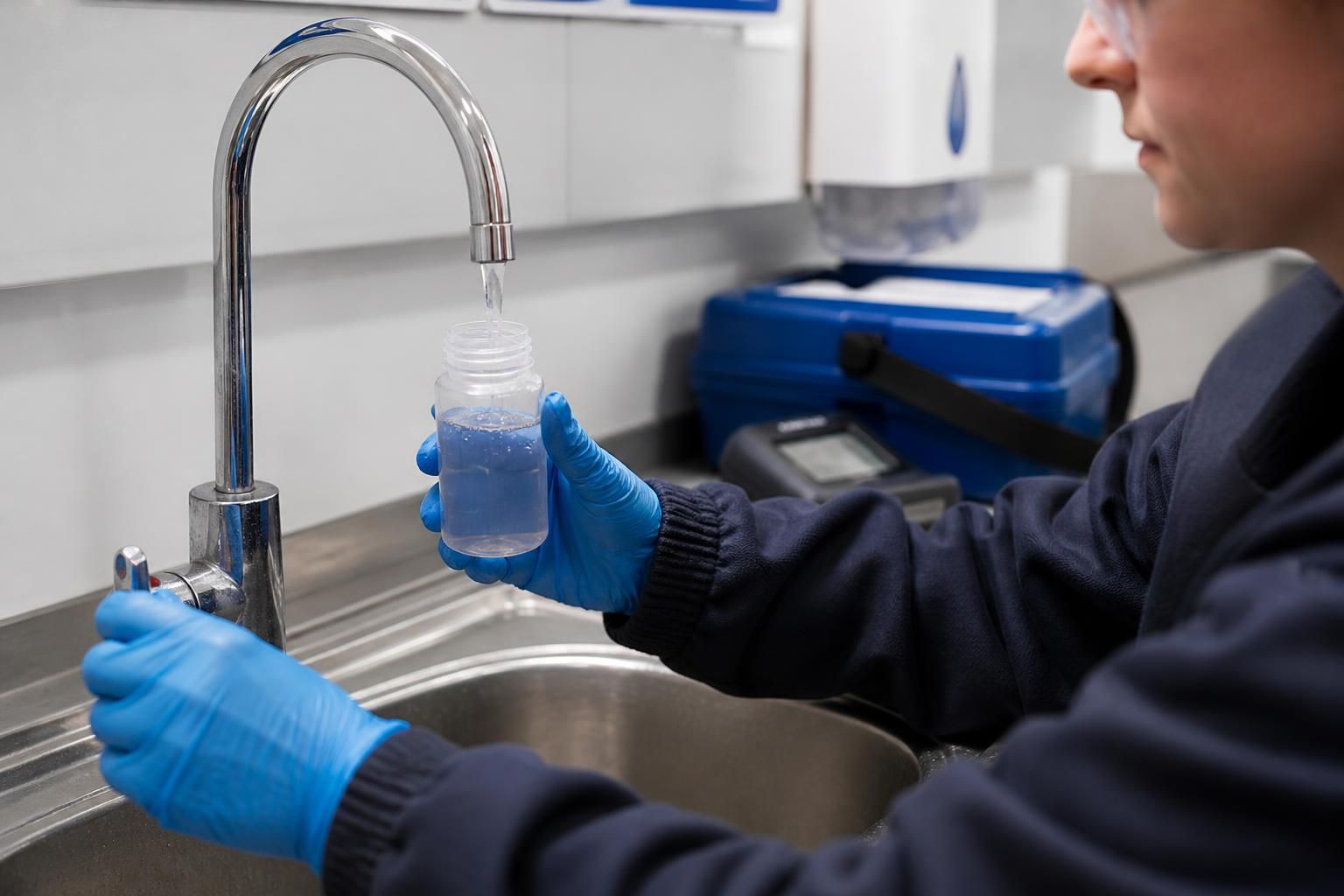
There is no single retesting interval that applies to every water system. Retesting should be scheduled according to the significance of the result, the effectiveness of corrective measures, the condition of the system and the findings of the legionella risk assessment. A competent person should decide whether testing is needed immediately, as part of enhanced monitoring, or at the next planned sampling point.
Retesting is normally appropriate in the following circumstances:
- A result requires confirmation: Where a result is unexpected, marginal, inconsistent with previous data or potentially affected by sampling or laboratory factors, further samples may be needed before a final compliance decision is made. The original report should be reviewed first to check the sample location, temperature, condition of the sample and any comments from the laboratory.
- Control measures have been introduced: Following actions such as cleaning, disinfection, temperature adjustment, flushing, dead-leg removal or changes to operating controls, repeat sampling can help establish whether the intervention has achieved the intended effect. Testing should not be treated as a substitute for confirming that the underlying control measures are operating correctly.
- Results show an adverse trend: A sequence of rising counts, recurring detections or deterioration at particular outlets may justify additional sampling before the next routine cycle. Trend analysis is often more informative than considering one result in isolation, particularly where earlier results were satisfactory.
- The system has been altered: New pipework, plant, storage arrangements, outlets or control equipment can change water movement and create different sampling requirements. The monitoring approach should be reviewed once the altered system has settled into normal operation.
- Use or occupancy has changed: Extended closure, low use, recommissioning, changes in occupancy or the introduction of higher-risk users may warrant a revised sampling plan. The responsible person should consider stagnation, turnover and the potential consequences of exposure when deciding how soon to sample.
After an unsatisfactory result, the first step is to assess its significance rather than automatically repeating the same sample. The review should consider the organism or parameter detected, the quantity reported, the sample point, whether other locations are affected, the system's history and the vulnerability of people who may be exposed. Depending on that assessment, the response may include wider investigation, interim precautions, remedial work and a programme of follow-up samples.
Follow-up sampling should be capable of showing whether the problem has been controlled throughout the relevant part of the system. That may mean sampling the original outlet as well as representative outlets upstream, downstream or in areas with different temperatures and patterns of use. Sampling only the location that produced the initial result can give false reassurance if the cause is more widespread.
The timing of follow-up samples also matters. A sample taken before a corrective measure has had a reasonable opportunity to take effect may not reflect the outcome. Conversely, waiting too long can leave an important control failure unverified. The sampling plan should therefore be linked to the work undertaken, operating conditions and the level of risk, with the rationale recorded in the water safety records.
Routine sampling and retesting are different activities. Routine sampling provides ongoing evidence that controls remain effective. Retesting is targeted at a particular concern, such as an abnormal result, a suspected failure or a change requiring verification. Once follow-up results are satisfactory, the system should normally return to its documented monitoring schedule only when the responsible person is satisfied that the risk has been adequately controlled.
Samples should be collected using a consistent, documented method wherever comparison with earlier results is important. Records should identify the date, exact outlet, sampling conditions, relevant system status, tests requested and laboratory findings. If the method or location changes, that difference should be noted because it can affect how results are compared.
Results should be interpreted alongside inspection findings, temperature records, maintenance information and the current risk assessment. A single satisfactory sample does not prove that every part of a complex system is controlled, just as one adverse result does not by itself explain the cause. Retesting is most useful when it forms part of a documented cycle of investigation, corrective action, verification and review.
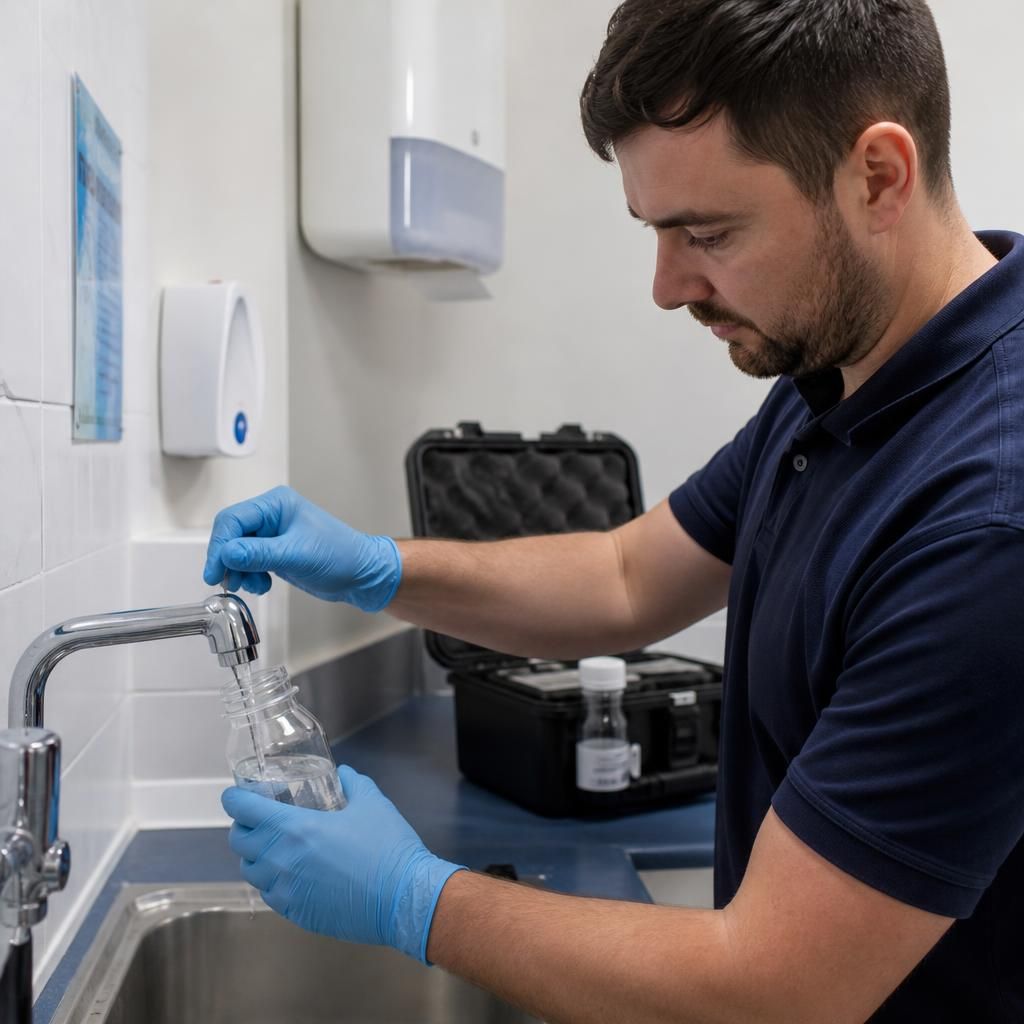
Before water samples are retested, the responsible person should define what decision the new results are intended to support. This may include confirming whether an initial finding is reproducible, verifying a specific corrective measure or deciding whether further investigation is needed. The sampling locations, tests requested and interpretation criteria should be agreed in advance rather than selected after the results are known.
The follow-up plan should also state what action will follow each possible outcome. For example, a satisfactory result may support continued monitoring, while a repeated or wider detection may require additional investigation or control measures. Recording this decision framework alongside the retest results helps demonstrate that water safety decisions were made consistently and on the basis of evidence.
Get advice on when water samples should be retested
Speak to Blue Fish Water Management Ltd for practical advice on reviewing your retesting approach and aligning follow-up sampling with your water safety records and risk assessment.