
What does a total hardness test of water reveal?
A total hardness test reveals the combined concentration of dissolved calcium and magnesium in a water sample, typically reported as calcium carbonate equivalent. The result indicates the water’s potential to form scale and helps determine whether treatment or closer monitoring may be needed.
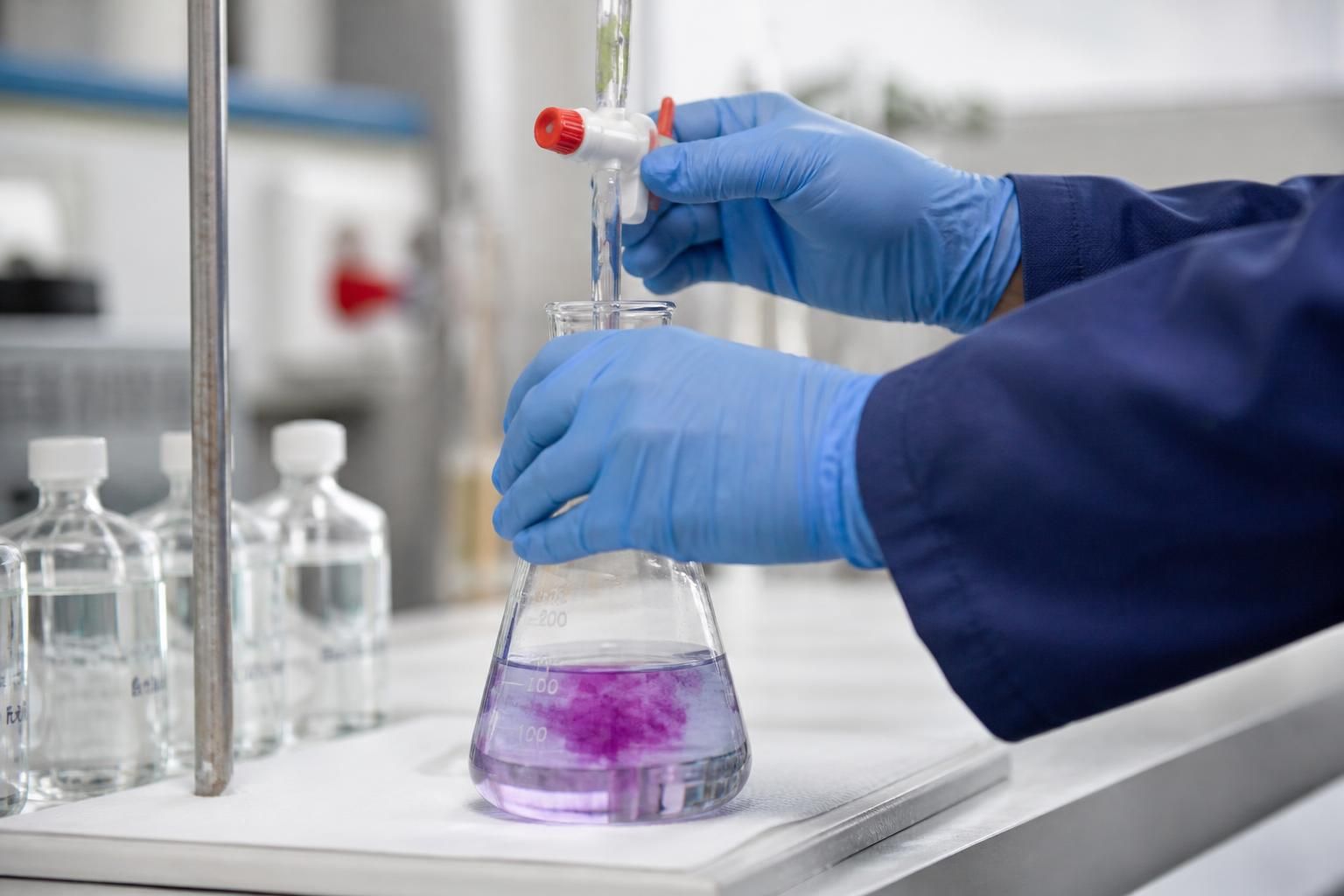
A total hardness result shows the overall mineral burden in a water sample that can affect equipment performance, treatment selection and maintenance requirements. It is primarily an operational water-quality measurement: it helps explain why deposits may develop, but it is not a complete assessment of water safety or system condition.
What the result can indicate
- Whether water is relatively soft or hard: the reported value can be compared with the classification system used by the laboratory, site water-quality plan or equipment specification. Descriptions such as soft, moderately hard or hard are useful for communication, but the numerical result is more informative when making technical decisions.
- The likelihood of mineral deposits: harder water generally presents a greater scaling challenge, particularly where water is heated, concentrated by evaporation or allowed to remain in contact with surfaces. Typical affected assets may include calorifiers, boilers, heat exchangers, hot-water pipework, taps, spray outlets and process equipment.
- Whether existing treatment may need review: a result from water downstream of a softener or other treatment process can help indicate whether the treatment is producing the intended change. A result that differs materially from previous readings may warrant checks on plant operation, salt supply, bypass settings, dosing, regeneration or sampling practice, depending on the treatment method.
- Changes in the incoming supply or site conditions: comparing results from the same sampling points over time can identify a change in source water, supply configuration, blending or treatment performance. A single result cannot establish the cause, but it can identify where further investigation is justified.
What total hardness does not reveal on its own
Total hardness does not normally show the separate contribution of each hardness-forming mineral. It also does not establish alkalinity, pH, conductivity, dissolved solids, chloride, sulphate, iron or other characteristics that can influence corrosion, deposition or treatment performance. In particular, it cannot by itself distinguish the portion of hardness associated with temporary, or carbonate, hardness from permanent hardness. An alkalinity test and other supporting analysis may therefore be needed to understand how the water is likely to behave when heated.
The result is not a microbiological test. It does not confirm the presence or absence of Legionella or other microorganisms, and it does not replace temperature checks, sampling programmes, risk assessment or control measures used for water hygiene management. A water system can have a low hardness result and still require robust microbiological control, just as hard water is not automatically evidence of contamination.
Why the sampling context matters
Hardness belongs to the sample taken, not automatically to every part of the building's water system. Water collected before treatment may produce a different result from water collected after a softener, at a hot-water outlet or from a process loop. A representative sample point, clean sampling technique and consistent testing method are important if results are to be compared. The sample location, date, treatment status and whether the outlet supplied hot or cold water should be recorded alongside the result.
A laboratory method, such as a titration, can provide a more useful basis for compliance records and trend analysis than an indicative field test. The method, reporting units and any laboratory comments should be checked before comparing results from different sources. Results expressed using different units or calculation conventions may appear different even when the underlying water quality is similar.
How the result supports a practical decision
A hardness result should be considered with the purpose of the water system. For example, a commercial hot-water installation may need attention to scale control because deposits can restrict flow, affect valves and reduce heat-transfer efficiency. A process using softened water may have a specified operating range that differs from the requirement for incoming mains water. Catering, cleaning and manufacturing applications may also have their own water-quality criteria.
There is no universal hardness value that automatically means a system is safe, unsafe or requires a particular treatment. The appropriate response depends on the equipment, operating temperature, water chemistry, treatment already installed and relevant site requirements. Where the result is unexpected, useful follow-up may include:
- Confirming the sample point, collection method, reporting units and test method.
- Repeating the test where the sample may not have been representative.
- Comparing untreated and treated water, where both points are available.
- Reviewing alkalinity, pH, conductivity or other parameters relevant to the suspected problem.
- Inspecting treatment equipment and checking its operating records.
- Comparing the findings with equipment specifications and the site's water management arrangements.
In short, total hardness testing provides an important indication of mineral-related operating conditions and helps identify potential scaling and treatment issues. Its value is greatest when the result is interpreted with the sampling location, system design, supporting chemistry and historical results rather than treated as a standalone pass-or-fail measure.

A total hardness result indicates the water’s potential to contribute to mineral scale; it does not measure how much scale is already present in the system. A high reading may be associated with greater scaling potential, but deposits also depend on factors such as heating, evaporation, flow conditions and how long surfaces have been exposed to the water.
Conversely, a low result does not prove that pipework, calorifiers or heat-transfer surfaces are free from existing deposits. Inspection, maintenance records and system performance should be considered alongside the hardness result when determining whether scale has already affected an asset.
Need help interpreting a total hardness test?
Need help interpreting a total hardness test? Speak to Blue Fish Water Management Ltd about the appropriate next steps for your commercial water system and water management arrangements.