
When should a water hardness test be repeated?
A water hardness test should be repeated at intervals defined by the site’s risk assessment, system requirements and the consistency of previous results. Retest sooner after changes to the water supply or treatment equipment, an unexpected result, operational problems or other conditions that could alter mineral levels.
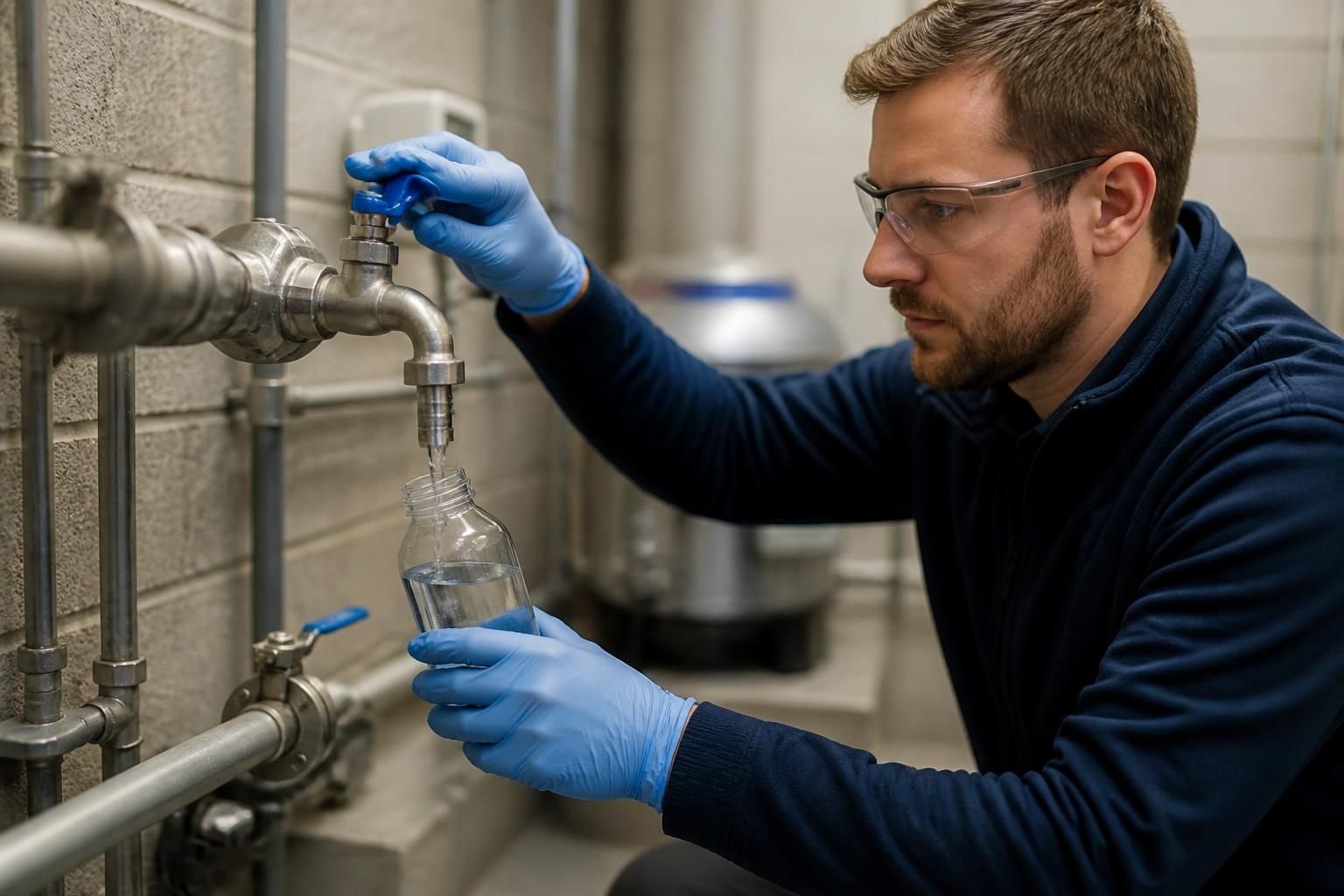
A water hardness test should be repeated according to a documented monitoring programme that reflects the supply, equipment and consequences of a change in mineral content. A single result is a snapshot; repeat testing establishes whether it represents a stable condition or a temporary variation.
There is no universal retesting interval for every commercial water system. The appropriate frequency depends on factors such as:
- whether the property receives mains water, private water or a blended supply;
- the hardness range normally recorded at the site;
- whether water softeners, reverse osmosis, demineralisation or other treatment equipment is installed;
- how sensitive boilers, process equipment, cooling systems or other assets are to scale;
- the reliability of previous results and the quality of the sampling records; and
- the effect that a change in hardness could have on operations, maintenance or water safety controls.
For a stable system, repeat samples should be taken at the intervals specified in the site’s water management arrangements. The schedule should be reviewed rather than treated as permanent. A history of consistent results may support a routine programme, while variable results or a higher-consequence application may justify closer monitoring.
Additional testing is appropriate when the result may no longer represent the established baseline. This includes commissioning or recommissioning treatment equipment, replacing filter media, changing a softener setting, altering a chemical dosing arrangement, switching supply sources, carrying out significant plumbing work or investigating a scale-related fault. Testing after the system has returned to normal operation can help confirm that the intended water quality has been achieved.
A repeat sample is also useful where the original result is unexpected or does not fit the site’s previous records. Before drawing conclusions, check the sample location, flushing method, container, preservation requirements, laboratory method and recording of units. Hardness may be reported in different units, such as milligrams per litre as calcium carbonate or degrees of hardness, so results must be converted consistently before they are compared. A sampling or reporting error can otherwise appear to be a genuine change.
Results should be compared with the operating requirement for the relevant system, not simply with a general description of the water as hard or soft. For example, a small change may be important for a scale-sensitive heat-transfer system but less significant for another use. Where treatment is installed, compare the incoming water with the treated outlet where this is part of the monitoring plan. Testing both points can help distinguish a change in the supply from declining treatment performance.
Repeated results should be reviewed as a trend. One isolated reading may warrant confirmation, whereas a sequence moving in the same direction can indicate changing source water, treatment exhaustion, incorrect adjustment, leakage, bypassing or inadequate maintenance. Keep the date, time, sampling point, operating conditions, treatment status, test method and result with the site records. This makes it easier to set a defensible interval and identify deterioration early.
Where a result could affect equipment protection, process control or a wider water management plan, the competent person responsible for the system should decide whether testing should be repeated, expanded to other sampling points or supported by a technical inspection. Retesting should verify the condition of the system; it should not be used to disregard an unusual result without investigating why it occurred.

Repeating a water hardness test confirms the mineral content of the sample; it does not demonstrate that the water is microbiologically safe. A satisfactory hardness result cannot confirm effective Legionella control, adequate temperature management or the absence of contamination.
If the reason for retesting is a wider concern about water safety, the hardness result should therefore be considered alongside the site’s water management arrangements and any appropriate microbiological monitoring. This distinction prevents a chemical result from being treated as evidence that all water safety controls are operating effectively.
Discuss when your water hardness test should be repeated
If you need help setting a suitable repeat-testing programme, speak to Blue Fish Water Management Ltd about your commercial water system and monitoring requirements.