
What should a business do after an unexpected water hardness result?
After an unexpected water hardness result, check the sample, test method and equipment before treating it as a confirmed change. If the result is valid, investigate the cause, review any water treatment or operational settings affected, document the finding and arrange a repeat test or specialist assessment where needed.
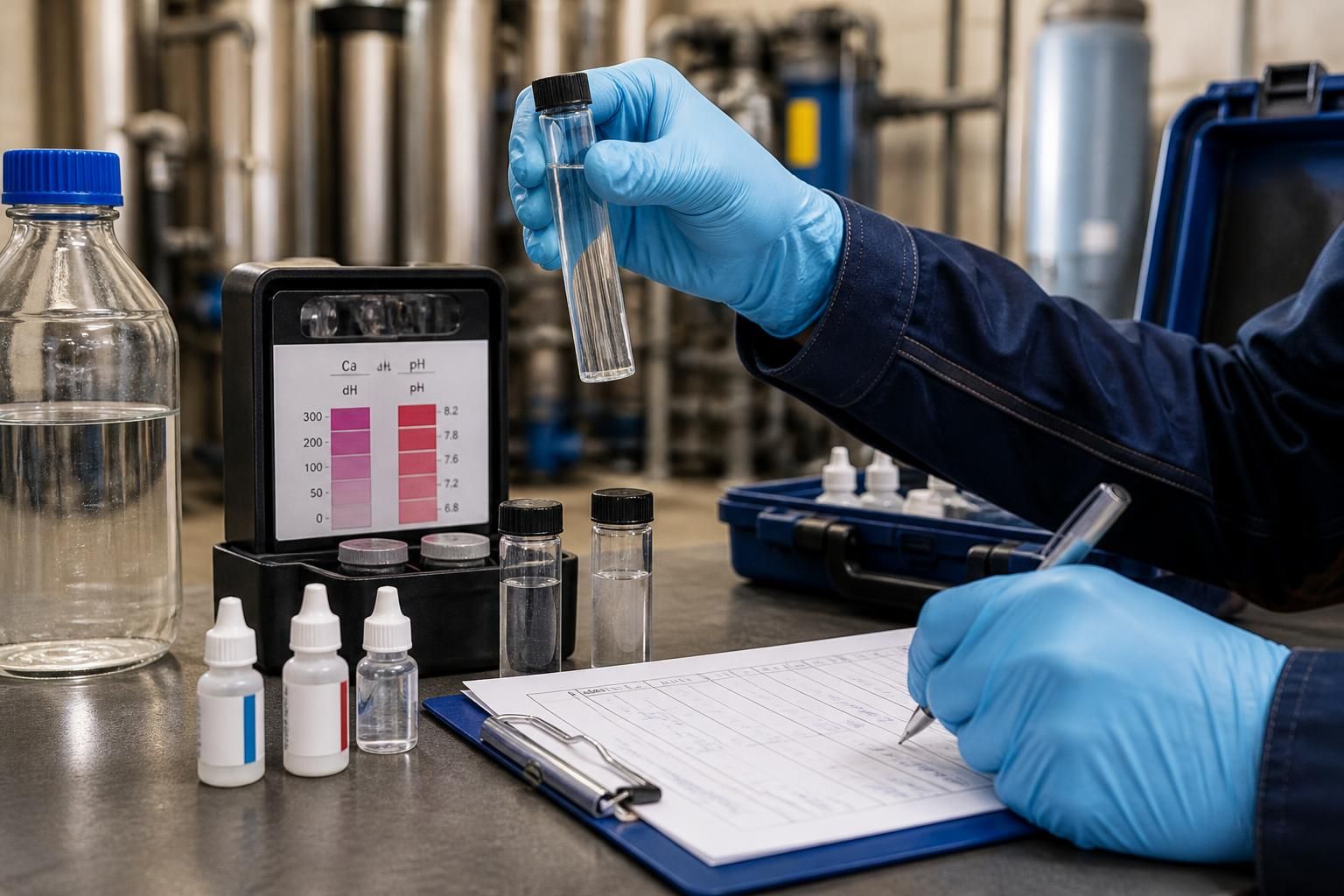
An unexpected water hardness result should be treated as a potential change in water chemistry, not as proof of a fault by itself. Once the result has been accepted as reliable, the business should assess its significance against the system’s normal baseline, determine which assets or processes may be affected, and apply a proportionate corrective action through its water management arrangements.
Interpret the result in context
Compare the finding with the water quality expected at that location, the specification of any connected equipment and previous results from the same sampling point. A higher result may indicate greater mineral loading and an increased likelihood of scale. A lower result may reflect softened or blended water, but it can also prompt consideration of whether the water is more corrosive to particular materials. Hardness should not be interpreted in isolation from pH, alkalinity, conductivity, temperature and other relevant parameters.
Total dissolved solids (TDS) should also be considered separately. TDS represents the combined concentration of dissolved substances, whereas hardness mainly relates to calcium and magnesium. A change in TDS does not necessarily mean that hardness has changed by the same amount, so one result should not be used as a substitute for the other.
Assess the possible operational effects
- Check whether water-using equipment, heat exchangers, calorifiers, boilers, humidifiers, cooling systems or process plant could be affected by scale or altered water chemistry.
- Consider whether the result could affect detergents, cleaning processes, production requirements or the performance of equipment that has a defined water-quality specification.
- Look for associated symptoms such as deposits, reduced heat transfer, blocked small-bore components, changes in pressure or unusual appearance at outlets.
- Where the result is substantially outside the system’s expected range, obtain competent technical advice before adjusting plant settings or introducing additional treatment.
Do not assume that a hard water result demonstrates a microbiological problem. Hardness alone does not confirm or rule out Legionella, and it does not replace routine control of temperatures, stagnation, cleanliness, flushing and other measures within a water safety plan. Any effect on a risk assessment should be considered by the person responsible for water hygiene rather than inferred from hardness alone.
Decide whether immediate controls are needed
Most unexpected results do not require an automatic shutdown of the water system. The appropriate response depends on the size of the change, the use of the premises, the equipment connected to the supply and any evidence of damage or unsafe conditions. A responsible person may need to restrict use of affected equipment, place it under observation or arrange an engineering inspection where continued operation could create a safety, compliance or reliability concern.
Any temporary measure should be clearly assigned and monitored. For example, if a process relies on water within a specified hardness range, the operator should establish what happens to product quality or plant performance while the issue is being assessed. If a change could affect vulnerable building occupants or a regulated process, it should be escalated through the organisation’s existing risk and incident procedures.
Check the management arrangements
The finding should be entered into the site’s water quality records with the sampling point, date, result, relevant units and interpretation. Record the decision taken, the person responsible, any affected assets and the conditions for closing the action. This creates an auditable link between the result and the response, which is important where water quality is controlled under a written management plan.
Where treatment equipment is involved, confirm that its service records, maintenance requirements and capacity remain appropriate for the incoming water and the demand placed on it. Changes should be made by a competent person and followed by an appropriate check that the intended water quality has been achieved. Avoid making repeated adjustments without a defined target, because this can create further instability and make the source of the variation harder to identify.
Use the result to improve future control
If the result represents a genuine change, consider whether the monitoring schedule, control limits or escalation criteria need updating. Trend results from relevant points rather than relying on a single isolated value. A pattern can help distinguish a gradual change in supply conditions from a local issue affecting one part of a building.
For complex commercial systems, an appropriately competent water hygiene or water quality specialist can help interpret the result alongside the site risk assessment, treatment arrangements and asset requirements. The objective is to establish whether the change affects compliance, equipment performance or water safety, then implement and record a corrective action that addresses the actual risk rather than the number alone.
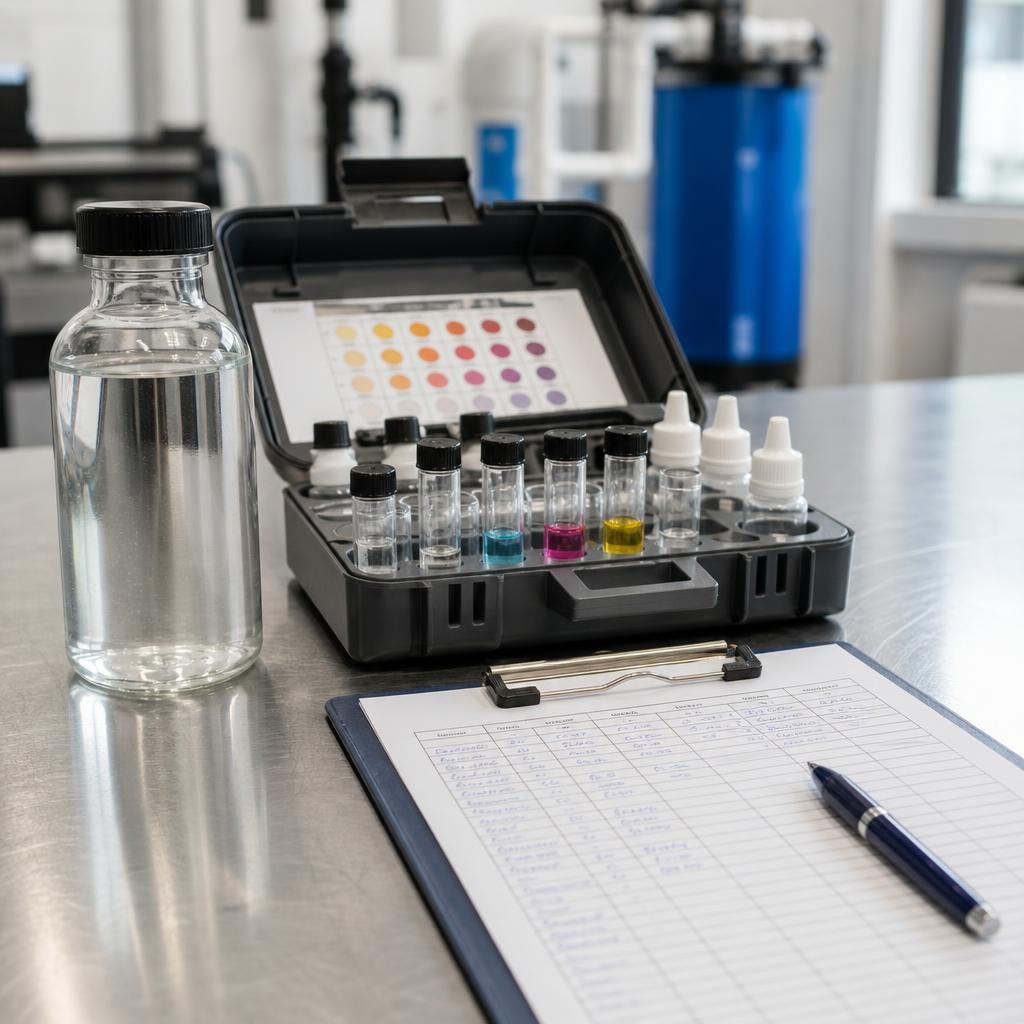
Before treating an unexpected hardness result as a genuine change, confirm that it is being compared on the same reporting basis as earlier results. Hardness may be expressed as milligrams per litre (mg/L) as calcium carbonate, millimoles per litre, or degrees of hardness. These units are not interchangeable without conversion, and a result reported as calcium hardness should not be compared directly with a result for total hardness.
Check the laboratory or test-kit report for the determinand, units, detection range and any dilution or conversion notes. The sample location should also be identified precisely, particularly where a building has softened, blended or untreated supplies. A like-for-like comparison reduces the risk of escalating an apparent change that is actually caused by different reporting conventions or sampling points.
Need help interpreting an unexpected water hardness result?
If an unexpected hardness result remains unclear after your initial checks, speak to Blue Fish Water Management Ltd about independent interpretation and appropriate follow-up testing. Their specialists can help relate the finding to your water management arrangements, treatment equipment and operational requirements.