
When should commercial RO and UV systems be retested?
Commercial RO and UV systems should be retested at intervals set by the site’s water safety risk assessment, system requirements and manufacturer guidance. Retesting is also appropriate after installation, significant maintenance, equipment changes, contamination events or results that indicate the treatment system may not be performing as intended.
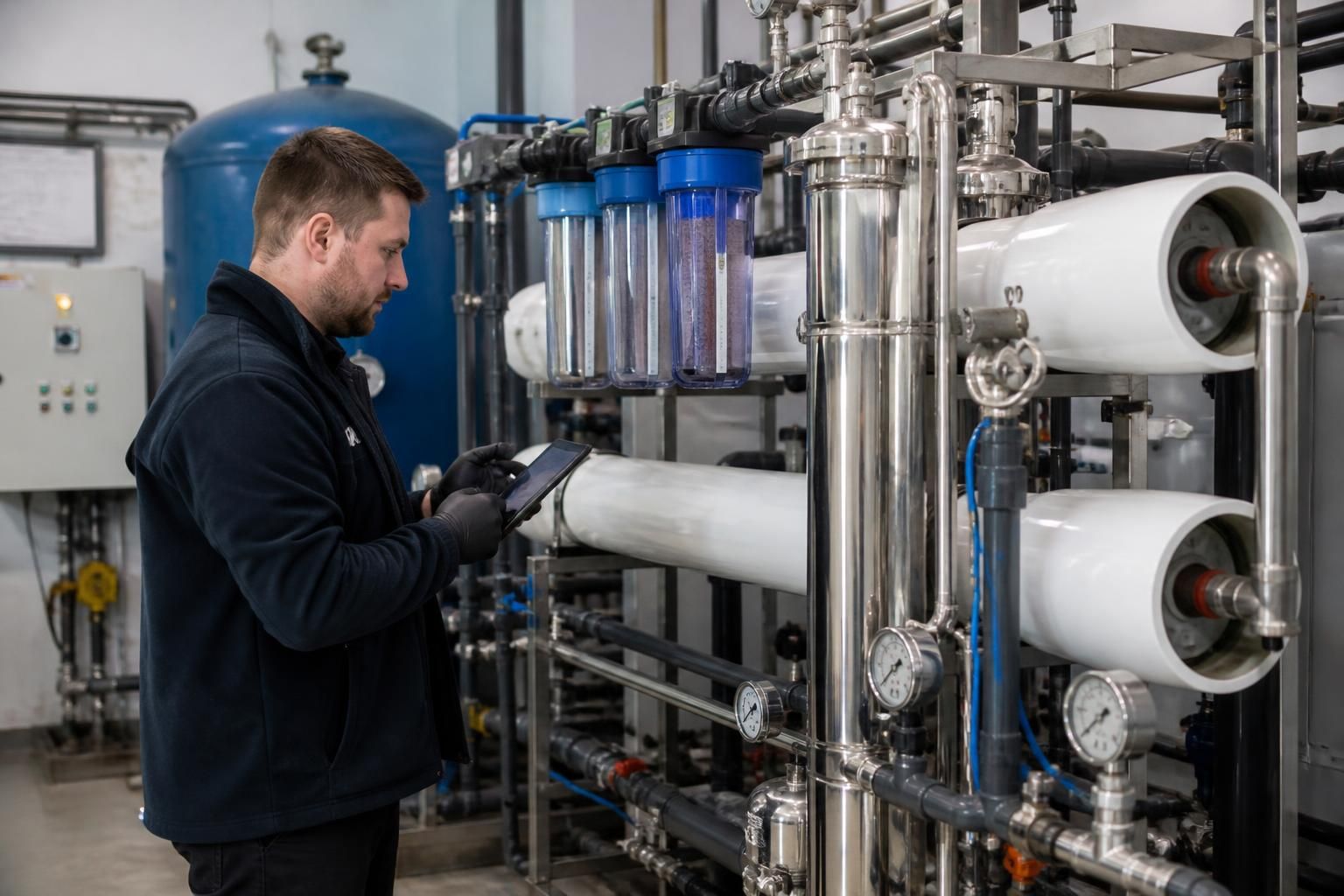
There is no single retesting interval that applies to every commercial reverse osmosis (RO) and ultraviolet (UV) system. The appropriate timing is determined by the documented water safety risk assessment, the system’s duty, the quality of water required, operating conditions, manufacturer instructions and previous test results. A written rationale should explain both the routine frequency and the events that require testing sooner.
Routine retesting should be scheduled at intervals that provide sufficient evidence that treatment remains effective between checks. Higher-risk applications may require more frequent verification, particularly where treated water is used in healthcare, food production, laboratories, manufacturing or other processes where a change in water quality could affect people, products or operations. A lower-risk installation may support a less frequent programme, provided this is justified by the assessment and supported by satisfactory performance records.
Routine retesting should normally consider both the treatment equipment and the quality of the water it produces. For an RO system, relevant checks may include:
- feed-water and treated-water quality;
- conductivity or another suitable indication of dissolved contaminant removal;
- flow, pressure and recovery performance;
- membrane rejection and evidence of membrane deterioration;
- the condition and replacement history of pre-filters, membranes, storage vessels and distribution components; and
- microbiological results where the system’s use and risk assessment make them relevant.
For a UV system, retesting should establish that the required dose is still being delivered under actual operating conditions. This can involve checking UV intensity monitoring, lamp condition, operating hours, quartz sleeve cleanliness, flow rate, alarms and any automatic shutdown or diversion functions. Water clarity and upstream filtration are also important, because suspended matter or scaling can reduce UV transmission even when the lamp is operating.
Testing should take place after significant work rather than waiting for the next planned date. Examples include membrane or lamp replacement, changes to pre-treatment, alterations to flow or pipework, control-system modifications, repairs to storage or distribution equipment, and recommissioning after a prolonged shutdown. The system should be allowed to stabilise in accordance with the relevant procedure before samples or performance readings are taken, so that the results represent normal operation rather than the immediate effects of maintenance.
Additional retesting is appropriate when results, alarms or operating trends suggest a loss of control. This includes a rise in treated-water conductivity, reduced UV intensity, repeated low-flow or high-pressure alarms, unexpected changes in microbial results, failure of a critical component, or a result outside an agreed acceptance criterion. A single unexpected result should be investigated rather than ignored; repeat testing may help distinguish a sampling issue from a genuine treatment failure, but it should not delay proportionate corrective action where water quality may be affected.
Retesting should also be considered following changes that affect the risk, even if the treatment equipment itself has not been altered. These may include a new water source, changes in production or occupancy, increased demand, extended periods of inactivity, contamination affecting the supply, or the introduction of a new process that depends on treated water. The risk assessment should be reviewed when such changes occur and should determine whether the existing test frequency remains suitable.
After an adverse result or failed performance check, testing should form part of a controlled investigation. The process should identify the affected water, assess whether it has been used, check recent operating and maintenance records, inspect relevant components and establish whether corrective work has restored performance. Follow-up results should demonstrate that the problem has been resolved before the normal monitoring programme is resumed. Where appropriate, samples should be submitted for testing by a suitably competent laboratory and interpreted alongside on-site readings.
It is useful to separate day-to-day monitoring from formal retesting. Operators may record pressure, flow, conductivity, UV intensity, alarms and consumable changes during routine checks. Formal retesting provides a more structured review of treatment performance and water quality. Both are needed: routine readings can identify deterioration early, while periodic testing verifies that the system continues to meet its intended purpose.
Blue Fish Water Management can help establish a documented retesting programme for commercial RO and UV installations, combining risk-based review, system performance checks and water testing where required. The resulting schedule should be revised whenever operational conditions, equipment, water quality or risk changes.
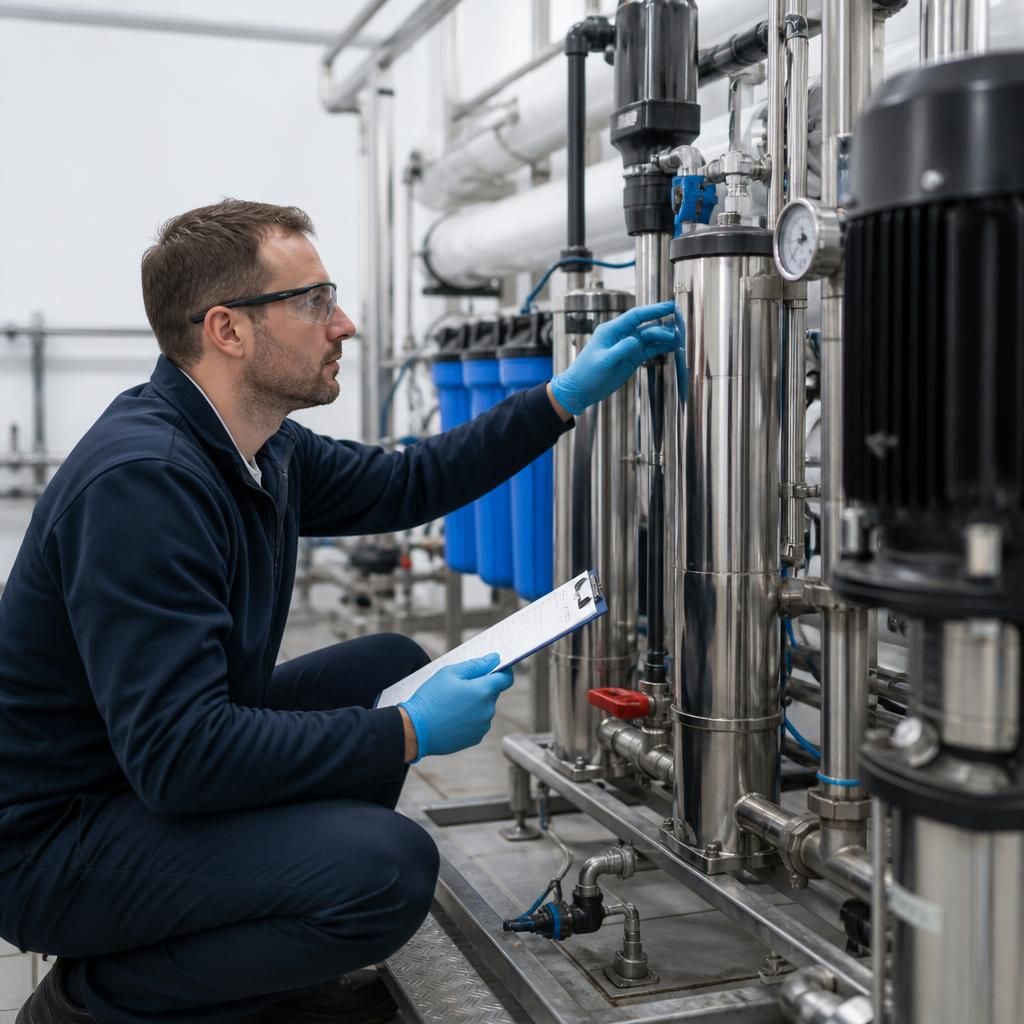
The timing of a commercial RO or UV retest should reflect how the system operates in practice, not just a calendar date. Testing is most informative when the equipment is running under representative demand and the results can be compared with an established performance baseline.
Where operating conditions vary, the test plan should identify whether readings need to be taken during higher demand, after extended operation or at another defined point in the duty cycle. For RO systems, this helps assess performance when feed-water conditions, pressure and throughput are representative. For UV systems, flow rate and water clarity should reflect the conditions under which the required dose must be delivered.
The sampling location also matters. Testing at the treatment outlet may confirm equipment performance, while a point-of-use sample can provide additional information where treated water passes through storage or distribution pipework before use. The chosen locations, operating conditions and acceptance criteria should be recorded so that future retests provide a meaningful comparison rather than isolated results.
Discuss your commercial RO and UV retesting requirements
Discuss your commercial RO and UV retesting requirements with Blue Fish Water Management to review your current arrangements and identify any gaps in evidence, documentation or ongoing verification.