
Does your commercial RO and UV system need compliance testing?
Yes. Commercial reverse osmosis (RO) and ultraviolet (UV) systems should undergo proportionate compliance testing to confirm that water quality, treatment performance and control measures remain suitable for the identified risks. The required checks depend on the system design, water use and findings of the relevant risk assessment.
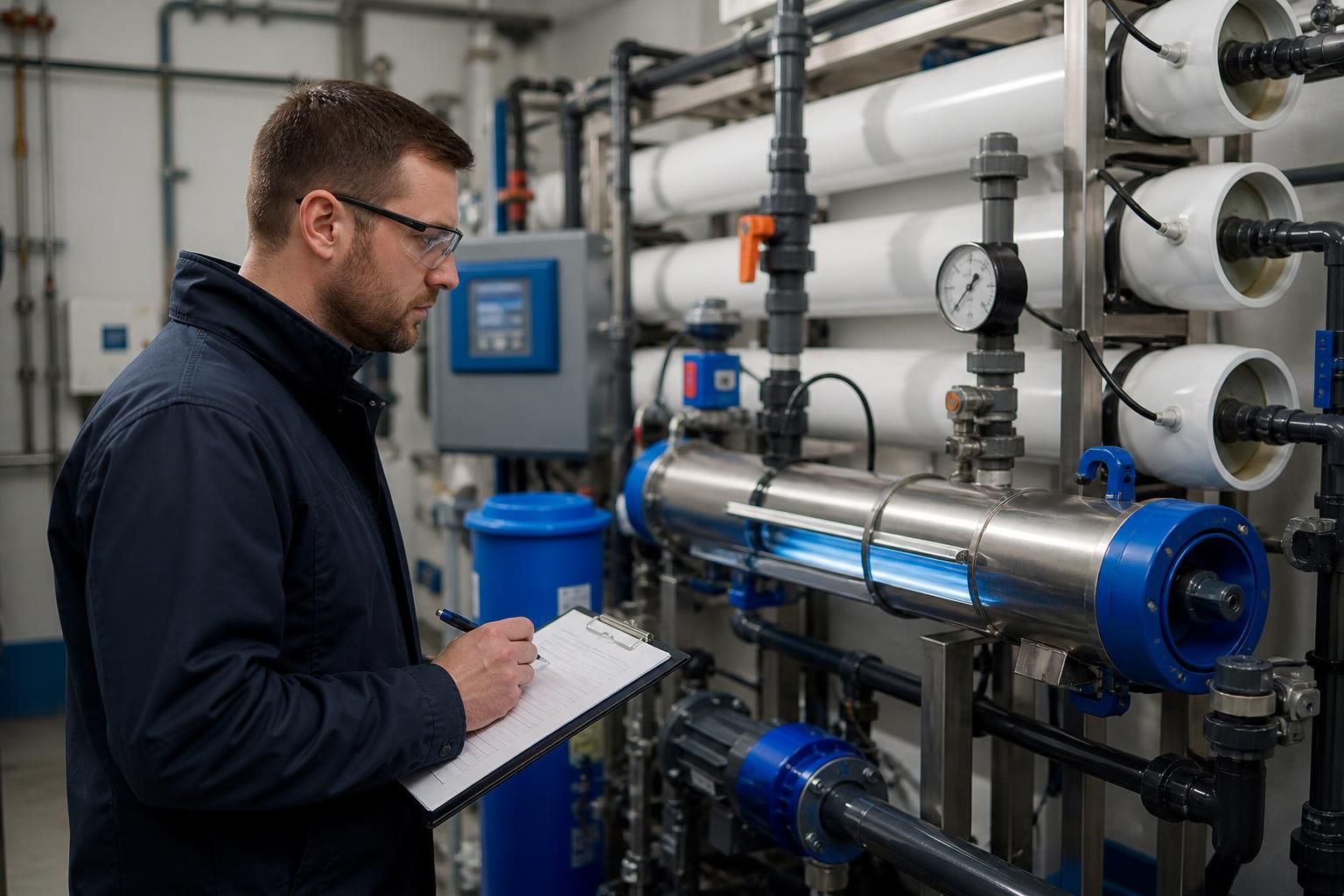
Commercial RO and UV compliance testing is the documented process of checking that treatment equipment is correctly controlled, operating as intended and producing water that is suitable for its identified use. It should be based on the system’s risk assessment rather than a generic checklist, because an RO and UV installation supplying drinking water presents different control requirements from one supplying a manufacturing process, laboratory or other technical application.
The starting point is the system assessment. This should identify the water source, treatment stages, storage tanks, pipework, outlets, operating patterns and people who may be exposed to a water safety risk. It should also establish whether the treated water is used directly, stored before use, blended with another supply or distributed through a wider network. These details determine which tests are relevant and where samples or measurements should be taken.
Typical compliance checks may include:
- Reviewing the RO design, treatment stages, operating limits and maintenance arrangements.
- Checking pre-filters, membranes, pumps, control panels, non-return devices, storage vessels and distribution pipework for condition and correct operation.
- Testing treated water for relevant microbiological and chemical parameters, with the test suite selected according to the water’s intended use and the risk assessment.
- Verifying UV performance, including lamp condition, sleeve cleanliness, flow rate, sensor readings, alarms and any recorded dose or intensity information available from the equipment.
- Confirming that UV units cannot continue to be relied upon without an appropriate warning or control where performance falls outside the required operating range.
- Checking that RO reject water, drain connections and air gaps are arranged appropriately, helping to prevent backflow or cross-connection risks.
- Examining storage and distribution arrangements for stagnation, unsuitable temperatures, dead legs, poor turnover and access for cleaning or inspection.
- Comparing monitoring results with the limits, actions and escalation procedures set for the system.
RO testing and UV testing address different control points. Reverse osmosis reduces dissolved substances and other contaminants through a membrane process, so assessment may focus on membrane performance, conductivity or other parameters relevant to the application. A conductivity result alone does not demonstrate that the complete installation is microbiologically controlled. UV treatment inactivates suitable microorganisms when the water receives the necessary exposure, but it does not remove contaminants and does not provide a continuing residual in downstream pipework or storage. A compliant review therefore considers the complete treatment train, not one result in isolation.
Microbiological sampling must be interpreted in context. Samples may be taken from the feed supply, post-RO water, post-UV water, storage and representative outlets where those points are relevant. Sampling locations should be selected to distinguish between a treatment failure and contamination introduced later in the system. Results should be assessed alongside operating records, recent maintenance, cleaning activity, changes in demand and any evidence of stagnation. A single acceptable sample does not replace ongoing control, while an adverse result should trigger a documented investigation and proportionate corrective action.
Testing should also examine management controls. A commercial system may be technically sound but poorly controlled if there is no clear ownership, planned maintenance schedule, alarm response procedure or record of faults and remedial work. A compliance review should therefore consider whether staff know what to monitor, how often readings are taken, what constitutes an abnormal result and who is authorised to isolate equipment or arrange investigation.
Records normally form an important part of the evidence. Keep the current system description, risk assessment, commissioning information, calibration evidence where relevant, laboratory reports, UV and RO monitoring results, maintenance certificates, cleaning records, fault logs and records of corrective action. Results should be traceable to the sampling point, date, test method and person or organisation carrying out the work. Testing through a UKAS-accredited laboratory can provide appropriate confidence in the reported analytical results where the required test is within the laboratory’s accredited scope.
There is no universal test panel or retesting interval for every commercial installation. The appropriate approach depends on the water’s purpose, system complexity, population or process affected, previous results, equipment specifications and changes to the supply or treatment arrangement. Retesting may be needed after commissioning, alteration, prolonged shutdown, significant maintenance, a failed result or a change in use. The risk assessment and applicable guidance should explain the rationale for the chosen programme.
Where results or inspections identify a problem, remedial work may involve replacing filters or a UV lamp, cleaning a quartz sleeve, servicing or replacing a membrane, correcting a flow or alarm setting, cleaning a tank, removing an unnecessary dead leg or improving monitoring and records. The action should address the cause rather than simply repeating a sample. Follow-up testing can then help demonstrate whether the control measure has been effective.
Blue Fish Water Management Ltd can support commercial duty holders with proportionate assessment, water sampling, compliance review, system monitoring and remedial recommendations. The resulting programme should leave a clear audit trail showing what was checked, why it was checked, what the findings mean and what action is required to keep the RO and UV system under effective control.
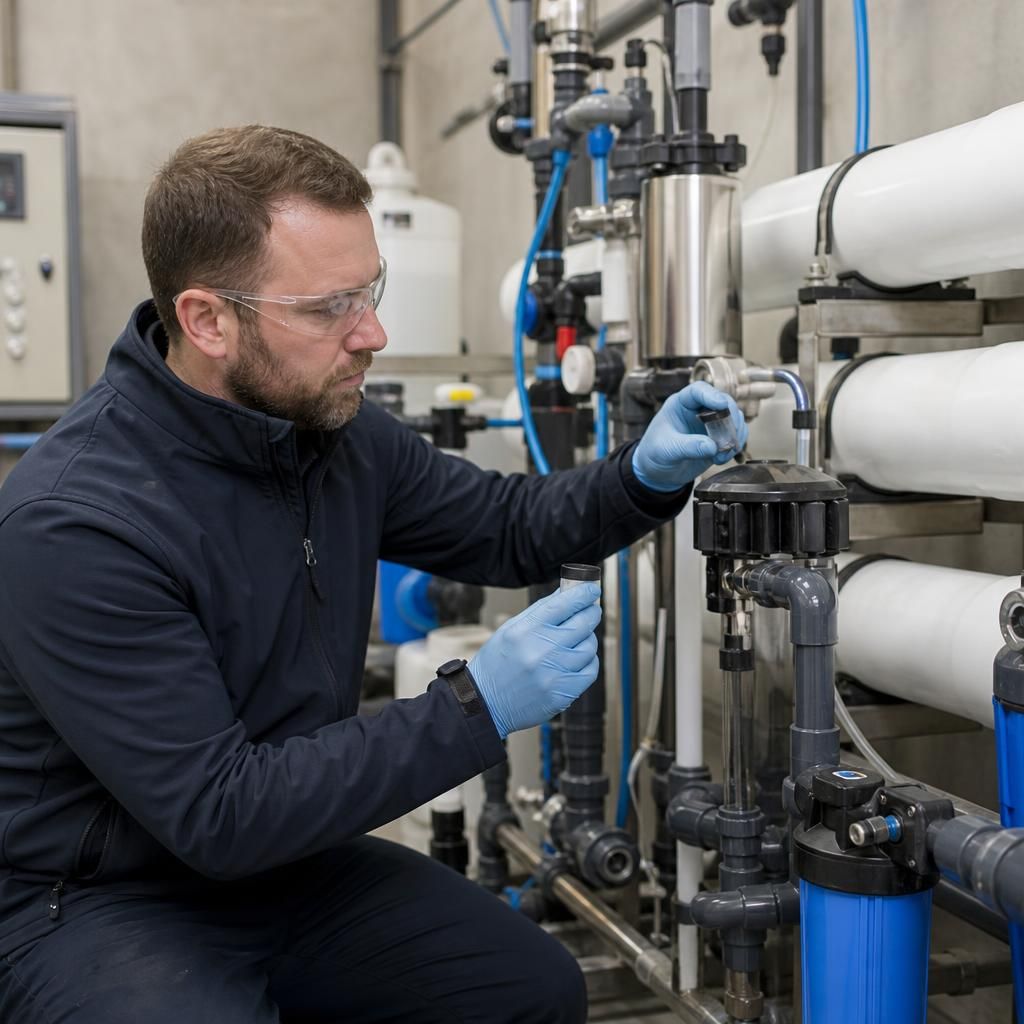
Discuss your commercial RO and UV system compliance testing
If you need to establish whether your commercial RO and UV system has appropriate compliance evidence, Blue Fish Water Management Ltd can review the installation and testing arrangements. Contact the team to discuss a proportionate assessment and the next steps for your system.