
When should a water tank be cleaned rather than replaced?
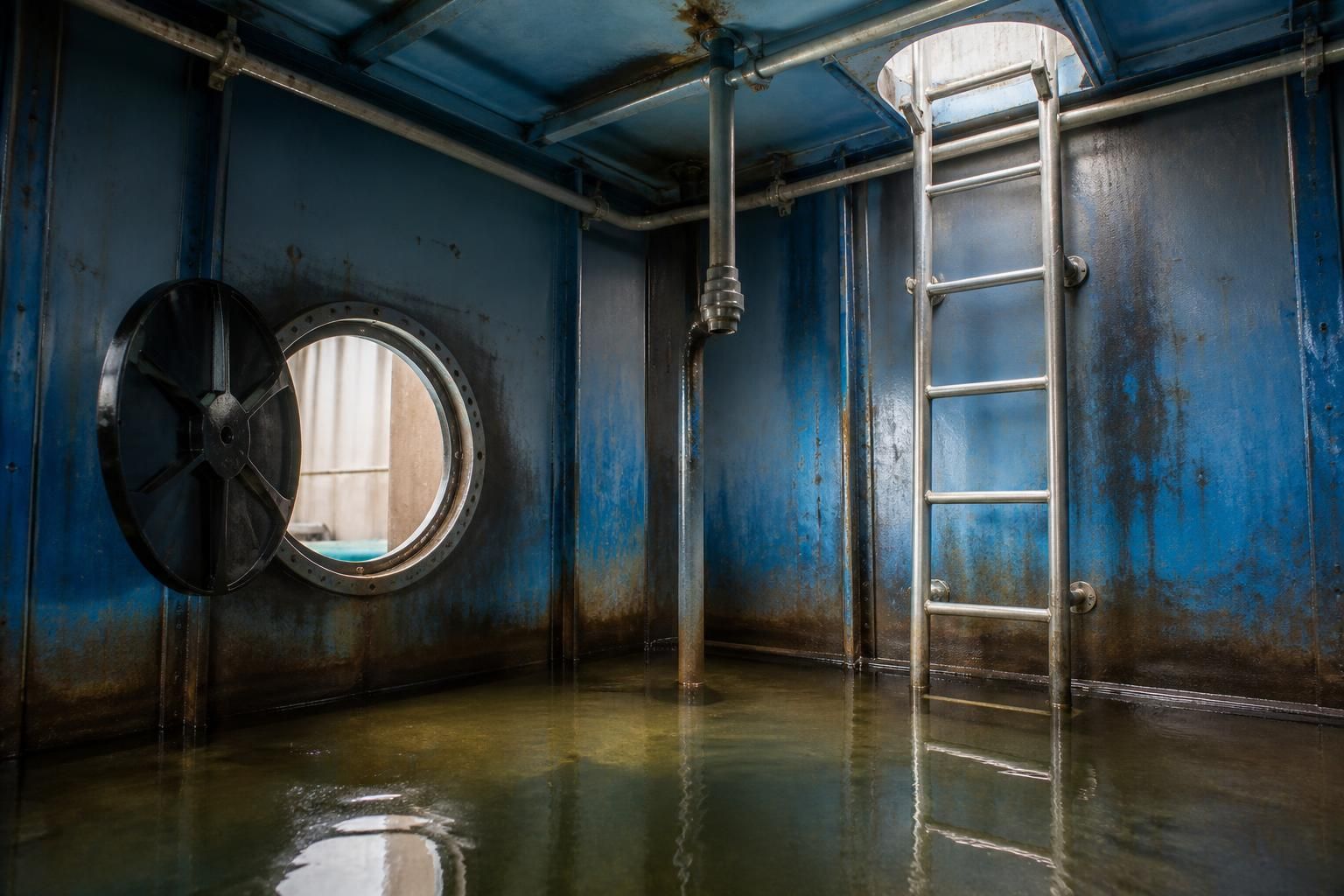
The decision should be based on the tank’s condition, cleanability and suitability for the water system, rather than its age alone. Cleaning is usually the proportionate intervention where the defect is confined to removable sediment, scale, contamination or biofilm. Replacement should be considered when the tank cannot be restored to a hygienic, watertight and serviceable condition through cleaning and reasonable remedial work.
A competent assessment should consider more than what can be seen through the access cover. The inspection should examine the tank interior, lid and seals, inlet and outlet arrangements, overflow, warning pipe, insulation, supports and surrounding area. It should also consider whether the tank can be safely drained, accessed and disinfected without leaving inaccessible areas where deposits or microbial growth may remain.
Age is not, by itself, a sufficient reason to replace a tank. An older tank made from a suitable material may remain serviceable if it is structurally sound, correctly supported and capable of being cleaned effectively. Conversely, a relatively new tank may require replacement if it has been poorly installed, damaged, incorrectly sized or exposed to conditions that have caused premature deterioration.
Replacement becomes more justifiable where one or more of the following apply:
- the tank body, base or fittings have damage that affects watertightness or structural stability;
- corrosion, cracking, distortion or material breakdown is extensive or recurring;
- the internal surfaces cannot be cleaned adequately because of their condition or the tank’s design;
- repairs would be temporary, difficult to verify or likely to create further hygiene risks;
- the tank has inadequate access, ineffective covers or arrangements that permit avoidable ingress of dirt, insects or other contaminants;
- its capacity, configuration or connections are no longer suitable for the building’s water demand and usage pattern; or
- the tank forms part of a system whose design presents an ongoing risk that cleaning alone cannot remove.
Cleaning is more defensible when inspection confirms that deposits are superficial, the surfaces remain intact and the tank can be fully emptied and reached. The work should normally include removal of accumulated material, cleaning of accessible internal surfaces, disinfection using an appropriate method and inspection of the tank and associated components before the system is returned to service. Where contamination has been suspected or identified, water testing may help determine whether further investigation or remedial work is needed.
The financial comparison should include more than the immediate contractor’s charge. For a tank that can be restored, cleaning may avoid the cost and disruption associated with removal, new supports, altered pipework and recommissioning. However, repeated cleaning of a tank that is deteriorating can become poor value. The relevant comparison is the expected cost and risk of continued maintenance against a properly specified replacement, including access, isolation, disposal and any changes required to the surrounding system.
Operational constraints also influence the decision. A replacement may require a planned interruption, temporary storage or changes to pipework, while cleaning may still require the tank to be taken out of use. The selected approach should therefore be coordinated with the building’s water demand and critical activities. Any temporary measures must maintain safe water arrangements and should not introduce stagnant sections or uncontrolled connections.
Before work begins, the responsible person should receive a clear explanation of the inspection findings, the limitations of cleaning and the reasons for any recommendation to replace. Following cleaning, records should identify the tank inspected, the work completed, the disinfection method, relevant test results, defects found and any actions still outstanding. If replacement is chosen, the specification should address material suitability, access for future inspection and cleaning, protection against contamination, correct capacity and safe connection to the wider system.
Blue Fish Water Management can assess the condition and hygiene requirements of water storage arrangements as part of a wider water hygiene programme. The appropriate outcome is not automatically a clean or a new tank: it is the intervention that leaves the system demonstrably maintainable, hygienic and suitable for its intended use.
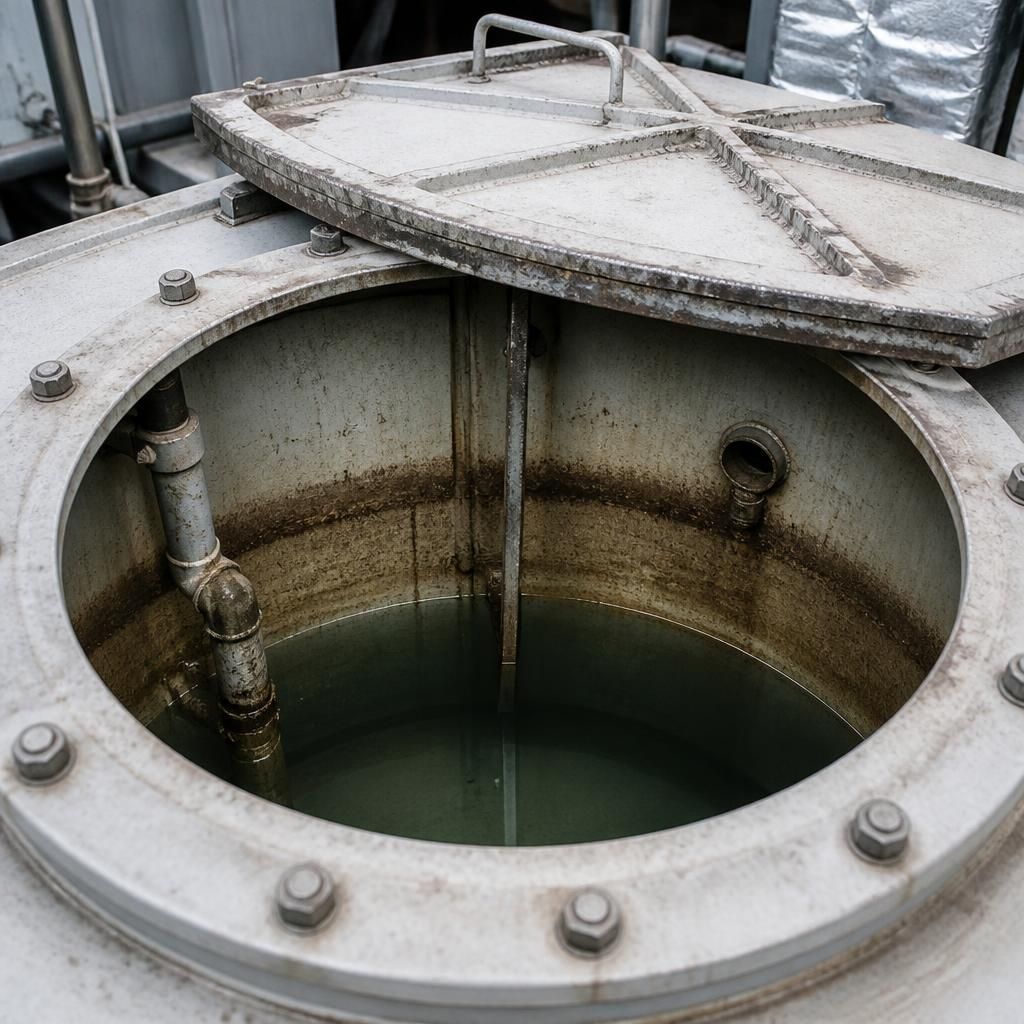
A poor water sample does not, by itself, prove that a storage tank needs replacing. Microbiological results indicate a water quality problem, but they do not establish whether the tank is structurally defective. The result should be considered alongside the inspection findings, sampling point, system conditions and any evidence of recurring contamination.
Where the tank is sound, cleaning and disinfection may be the appropriate response, followed by investigation of how contamination entered or persisted. If unsatisfactory results continue despite suitable cleaning and corrective action, the case for replacement becomes stronger—particularly where the tank’s design or condition prevents the underlying cause from being controlled. This distinction helps prevent unnecessary replacement while avoiding repeated cleaning that does not resolve the problem.
Request a water tank condition assessment
Request a water tank condition assessment to establish whether cleaning, remedial work or replacement is the most appropriate option for your system.