
What competence should a water tank cleaning contractor demonstrate?
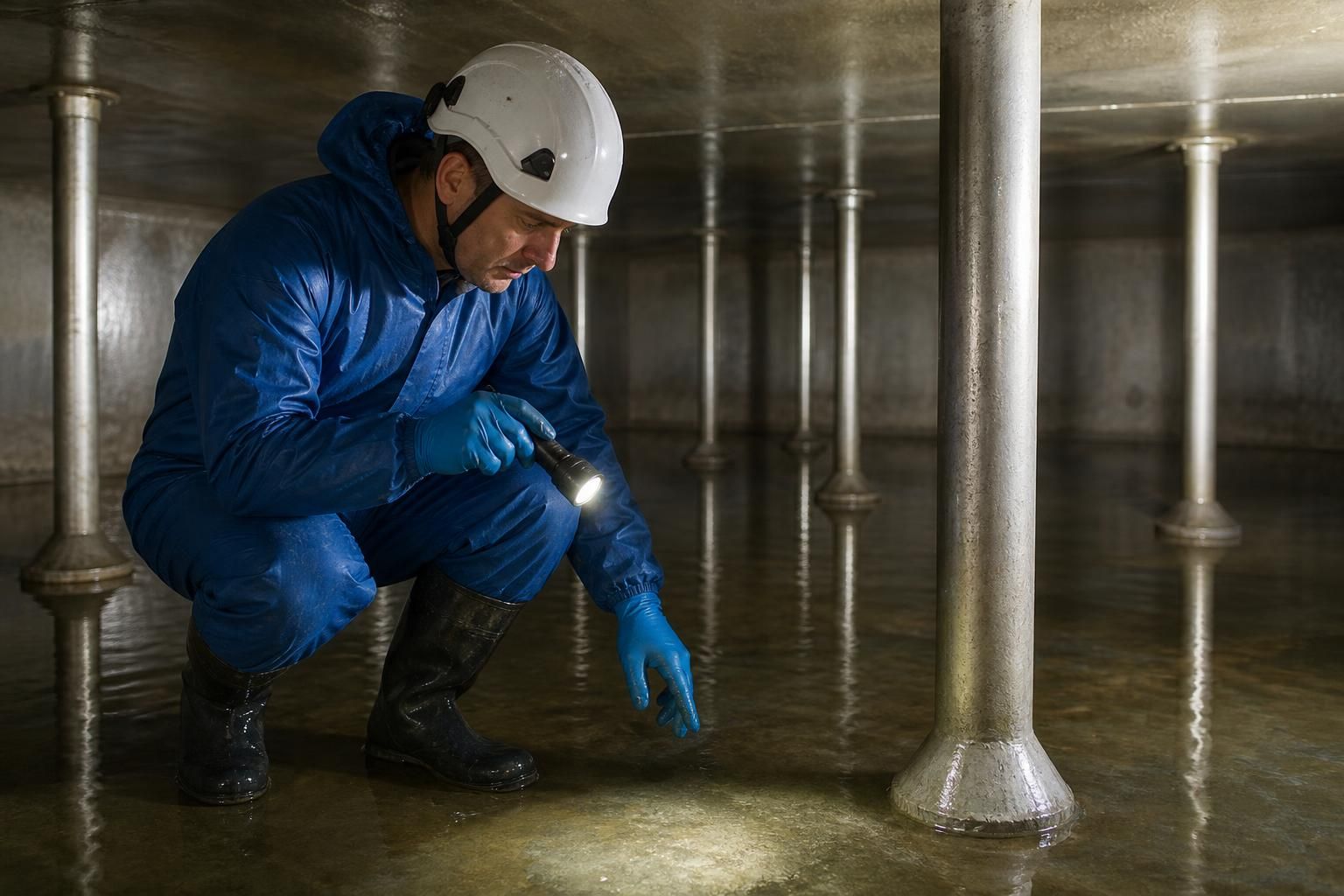
A competent water tank cleaning contractor combines practical cleaning ability with a sound understanding of water systems, legionella risk and UK compliance expectations. Their competence should be evident in the judgements they make before, during and after the work, rather than inferred from a certificate or a basic cleaning checklist alone.
Relevant technical knowledge is the starting point. The contractor should understand how cold water storage tanks, associated pipework, valves, overflows, lids and access arrangements affect water quality. They should be able to recognise conditions that may support contamination or stagnation, such as sediment accumulation, damaged internal surfaces, poor-fitting covers, ineffective turnover or unused connections. They should also understand how the tank interacts with the wider domestic water system, so that cleaning work does not address one component while leaving a related risk unidentified.
They should be able to apply the principles in relevant UK guidance, including the Health and Safety Executive's Approved Code of Practice L8 and HSG274, where applicable to the premises and system. This means understanding that the appropriate approach depends on the tank's condition, construction, use, supply arrangement and the people who may be exposed. A competent contractor does not treat every tank as an identical job or select a method solely because it is routinely used.
Evidence of practical competence may include:
- Training and experience relevant to water hygiene, tank cleaning, disinfection and legionella control.
- Personnel who understand the equipment, chemicals and protective controls used for the specific task.
- Suitable arrangements for supervision, particularly where work involves restricted access, complex systems or several operatives.
- Knowledge of when specialist support is needed instead of attempting work beyond the contractor's capability.
- Effective control of subcontractors, with the same expectations for competence and work quality applied throughout the supply chain.
Competence also involves planning the work around the building's operational risks. The contractor should be able to identify which water services may be affected, what isolation is required, how alternative arrangements will be managed and how the system will be returned to service. For commercial and industrial premises, this may require coordination with facilities teams, responsible persons, occupants and other contractors. Clear communication is important because an otherwise technically correct cleaning process can create avoidable risk if valves, outlets or equipment are operated incorrectly afterwards.
The contractor should demonstrate a disciplined approach to chemical and physical hazards. This includes selecting products appropriate to the system, understanding relevant safety information, controlling exposure, preventing cross-contamination and ensuring that residues are not left in the water supply. Where access is difficult or the work involves a confined-space hazard, the contractor should recognise the additional controls required and explain any limitations before work begins. Competence is shown by refusing an unsafe approach and proposing a suitable alternative where necessary.
Sampling and verification skills are another important indicator. The contractor should know when water samples are appropriate, where samples should be taken, how they should be handled and what limitations apply to the results. A laboratory result is only useful when the sample is representative and the findings are interpreted in the context of the system. The contractor should be able to distinguish between evidence of a current issue, an indication requiring further investigation and a result that does not by itself demonstrate that the entire system is satisfactory.
A professional contractor should also recognise defects that cleaning cannot resolve. Heavy corrosion, degraded coatings, defective lids, damaged insulation, inaccessible areas or unsuitable tank design may require repair, replacement or further engineering advice. Recommending additional work should be based on an observed condition and its effect on water safety, not on an assumption that cleaning will correct every problem.
When comparing contractors, ask for evidence that their staff are appropriately trained, that their methods are matched to the system, and that they can explain the decisions made for a particular tank. It is reasonable to ask how they manage isolation, chemical safety, sampling, access restrictions, defects and coordination with the site's responsible person. The strongest evidence of competence is a coherent technical explanation supported by suitable risk controls, consistent supervision and findings that relate specifically to the tank and connected system.
Blue Fish Water Management applies this wider water hygiene perspective to tank cleaning and legionella control work. Its services include risk-based advice, water testing, compliance support, monitoring, training and remedial works, allowing tank condition and cleaning requirements to be considered alongside the broader management of the water system.
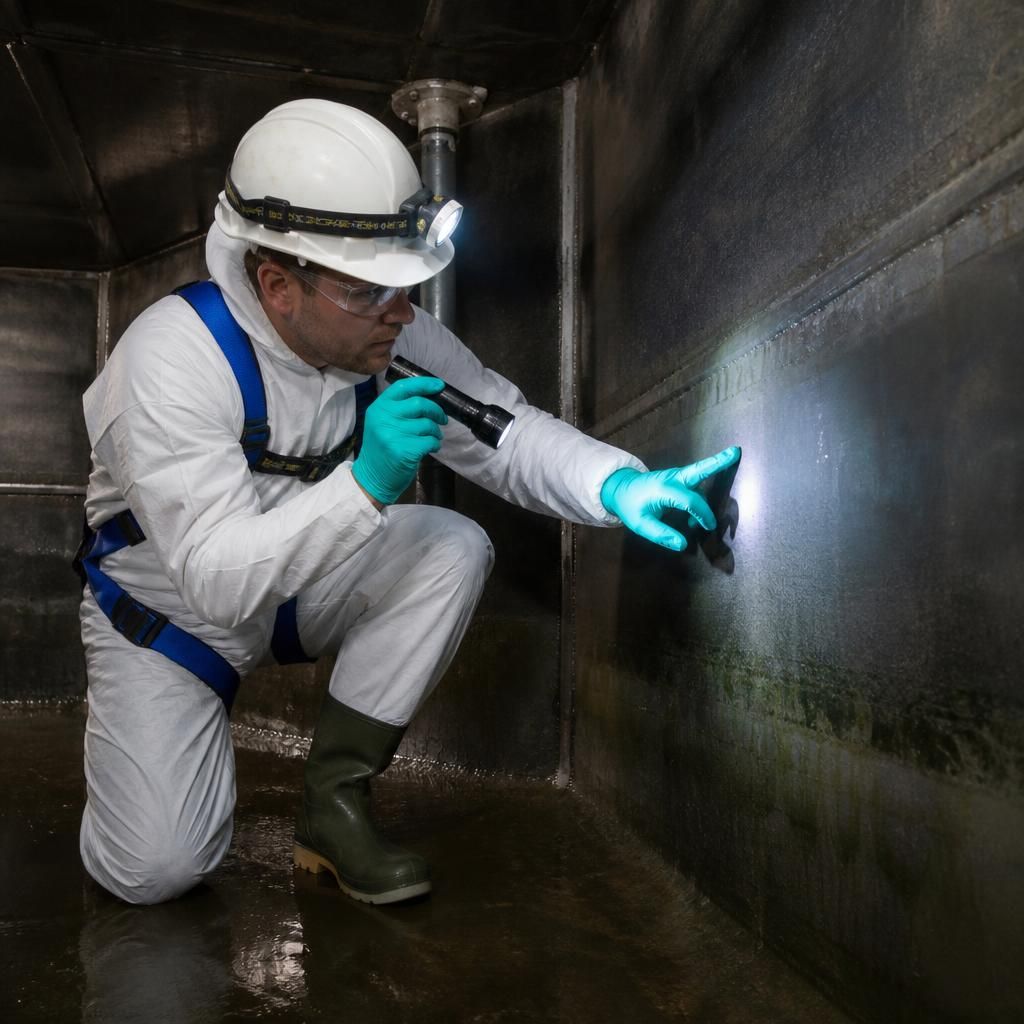
A competent water tank cleaning contractor should define what a satisfactory result looks like before work begins. The standard should cover the condition of the tank after cleaning, the removal of deposits, the integrity of internal surfaces and the safe return of the connected water system to service. This prevents a job being judged successful simply because the tank appears cleaner.
Inspection should be systematic rather than limited to the easiest visible areas. The contractor should check corners, seams, outlets, inlet arrangements and any sections where sediment or biofilm may remain concealed. If construction or access prevents a complete inspection, that limitation should be identified and considered when deciding whether further investigation or remedial work is needed.
This approach demonstrates professional judgement: the contractor is assessing whether the cleaning objective has actually been met, not merely carrying out a standard sequence of tasks.
Discuss your water tank cleaning requirements
Discuss your water tank cleaning requirements with Blue Fish Water Management to establish the appropriate scope, controls and records for your premises.