
What records should potable water chlorine monitoring produce?
Potable water chlorine monitoring should produce a dated, traceable record for each sample, including the sampling point, test method, result, tester and relevant equipment or calibration details. It should also document abnormal findings, investigations, corrective actions and follow-up results so the monitoring history demonstrates how risks were managed.
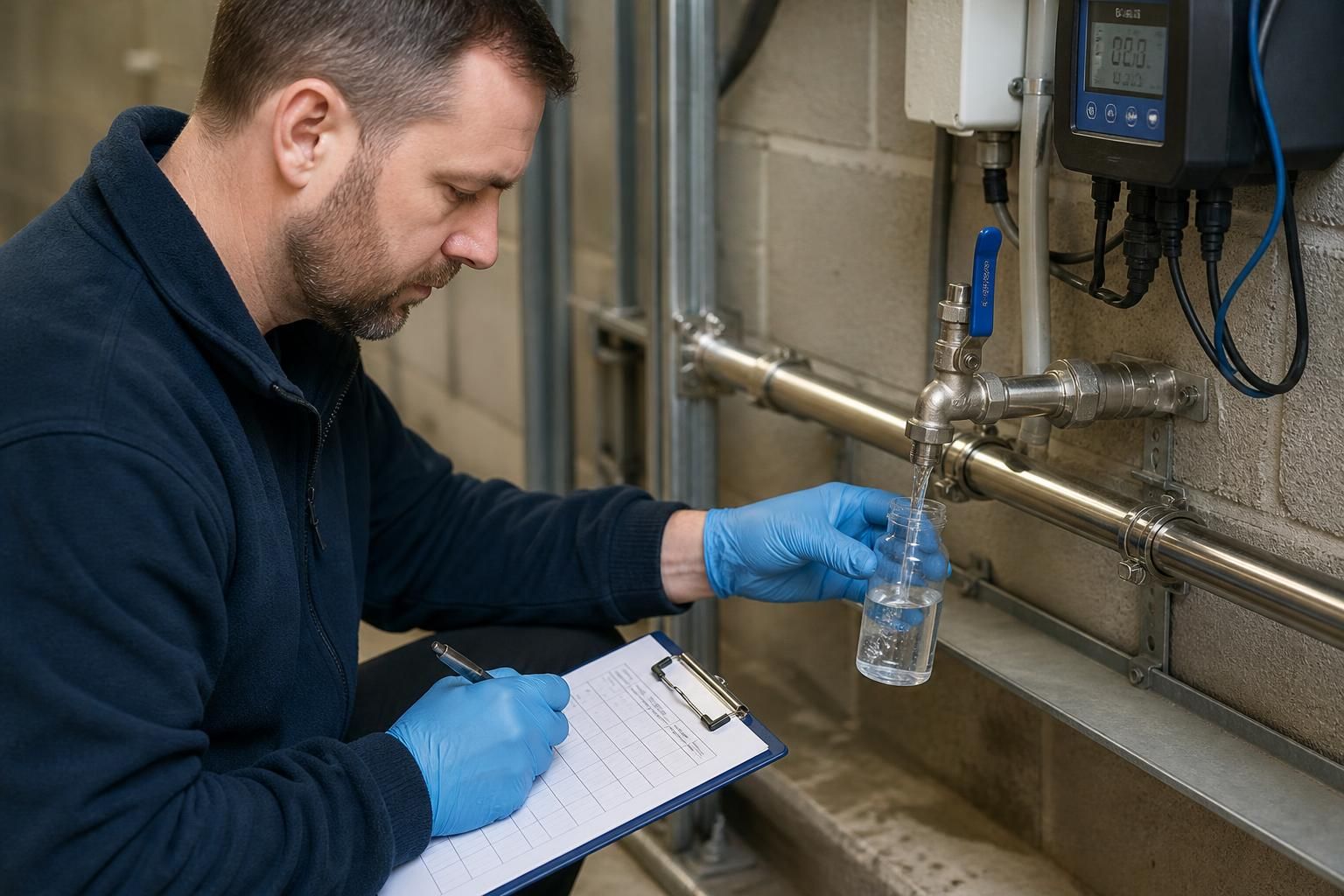
A complete potable water chlorine monitoring record should show the control system as a whole: what was meant to be monitored, how the programme was managed, what conditions applied at the time, and how the information was reviewed. Individual readings are only one part of the evidence needed to demonstrate that the monitoring programme was suitable and consistently applied.
Monitoring programme records should set out the basis for the programme. This normally includes:
- the areas, outlets or assets included in the monitoring plan;
- the reason each monitoring location was selected;
- the planned monitoring frequency;
- the operating range, target or action threshold used by the organisation;
- the person or role responsible for carrying out the checks;
- the approved test procedure and any relevant sampling instructions; and
- the date the programme was introduced, reviewed or amended.
Keeping this information with the monitoring records allows a reviewer to establish whether the sampling programme reflects the potable water system and its risks. It also prevents a series of results from becoming detached from the decisions that determined where, when and why monitoring took place.
System and site information should provide enough context to understand the results. Useful supporting records may include an up-to-date schematic, the location of storage tanks or treatment equipment, known low-use areas, changes to the distribution system, and details of any temporary arrangements affecting water quality. Where a monitoring point has been added, removed or relocated, the reason and approval for that change should be recorded.
Sampling condition records can be important when results need to be compared over time. Depending on the system and the monitoring procedure, the record may note whether the outlet had been used recently, whether flushing was undertaken, whether there was unusual demand, and whether maintenance or an interruption to supply had occurred. These details help distinguish a genuine change in water quality from a result influenced by the sampling conditions.
Responsibility and competence records should identify who was authorised to perform the monitoring and who was responsible for reviewing it. Training, instruction and competency assessments should be retained where they form part of the control arrangement. If an external organisation undertakes any part of the work, the business should retain the relevant scope of work, service reports and communication needed to show how responsibilities were divided.
Review and trend records are needed to show that results were not merely filed without assessment. A periodic review might record:
- whether monitoring was completed as scheduled;
- patterns at particular outlets or areas;
- repeated results near an action threshold;
- gaps, cancelled checks or missed samples;
- changes in demand, occupancy, system use or configuration; and
- the reviewer’s conclusion and any agreed change to the monitoring programme.
Trend review is particularly useful where no single result appears critical but several comparable results indicate deterioration. The record should make clear whether the reviewer accepted the existing controls, requested further investigation or changed the monitoring approach.
Communication records should be retained when findings are referred to other people or organisations. This may include notifications to the responsible person, facilities or estates teams, water system contractors, building users, landlords, tenants or relevant authorities, where appropriate. The record should identify the information shared, the date, the recipient and any decision or instruction that followed.
Document control helps preserve the reliability of the record set. Electronic records should have controlled access, a clear amendment history and protection against untracked deletion. Paper records should be legible, signed or otherwise attributable, and stored so that pages cannot be lost or altered without detection. Superseded procedures, plans and forms should be identifiable rather than silently overwritten.
Records should be retained for the period required by the organisation’s compliance arrangements and any applicable legal, contractual or regulatory requirements. They should be readily retrievable for internal review, audits, inspections and investigations. A practical record structure usually links the monitoring plan, site information, completed checks, review notes, communications and supporting service documents so that the history can be followed from planned control through to management decision.
The strongest record set therefore answers five questions: what control was planned, where did it apply, what conditions existed, who reviewed the information, and what decision was made. That structure gives potable water chlorine monitoring a defensible audit trail without relying on isolated test results.

Each chlorine result should identify exactly what was measured, rather than recording only a number. The record should state whether the reading relates to free or total chlorine, include the unit of measurement, and distinguish the sample time from the time the result was entered or reviewed. If a result was calculated, transcribed from another record or obtained through laboratory analysis, that source and any relevant sample reference should also be retained.
This level of detail prevents results from being misread when records are compared later. It also allows a reviewer to trace an unusual value back to the original observation and establish whether the correct chlorine parameter and measurement basis were used.
Need help reviewing your potable water chlorine monitoring records?
If you need to assess whether your potable water chlorine monitoring documentation supports your compliance arrangements, contact Blue Fish Water Management Ltd to discuss a structured review.