
What potable water chlorine level should a monitoring programme target?
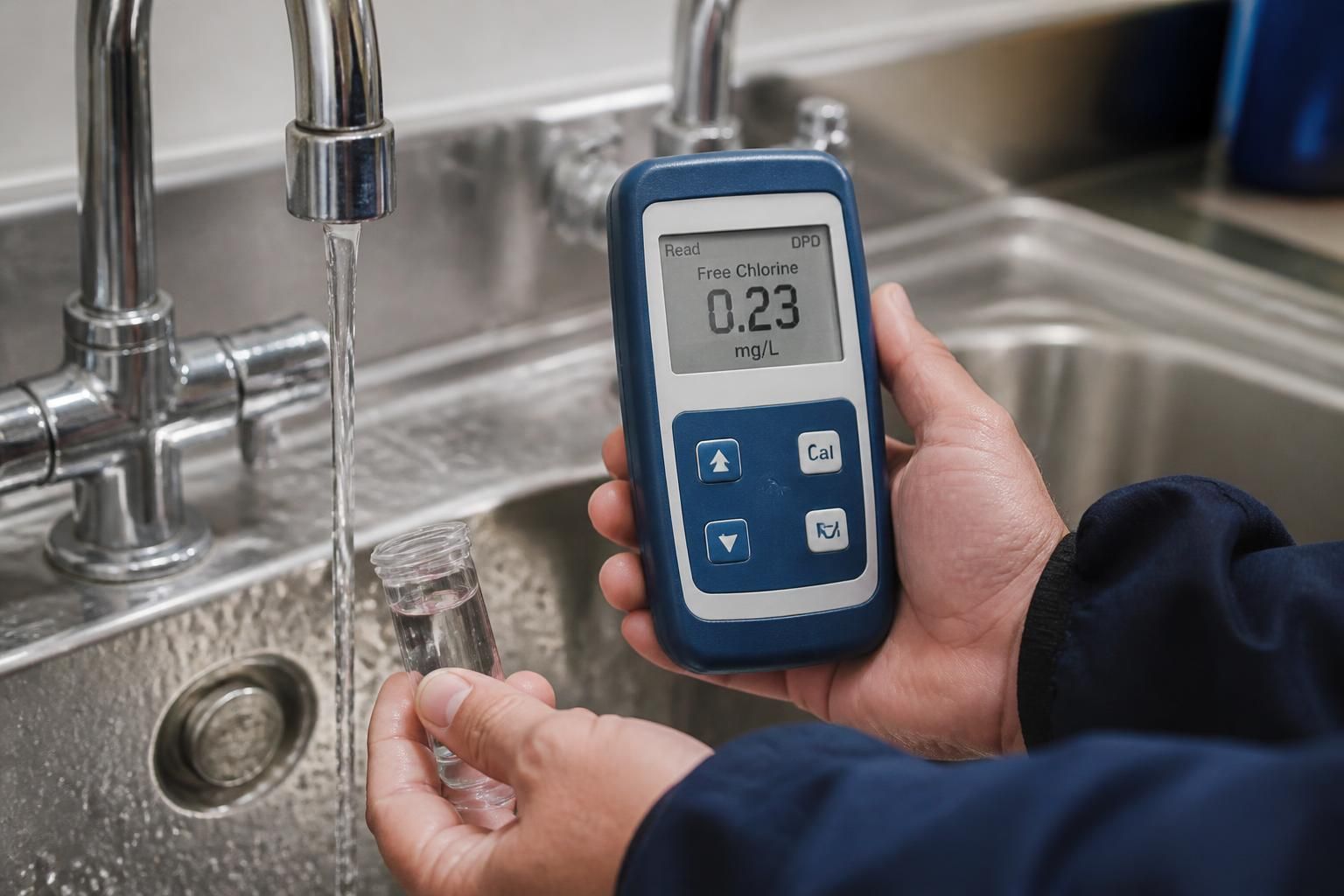
The appropriate potable water chlorine target is a free chlorine residual established through the site’s risk assessment, supply conditions and monitoring history. It should provide effective control at representative points of use without creating unnecessarily high concentrations, and should be recorded as an operational target with defined investigation and corrective-action levels.
For most premises, the target is assessed at the outlet rather than only where water enters the building. Chlorine can be consumed as water passes through storage tanks, pipework, filters, heaters and little-used branches. A satisfactory reading at the incoming supply therefore does not demonstrate that the same residual is present throughout the distribution system.
Free chlorine is the key measurement for routine control. It is the portion available to provide continuing disinfectant action. Total chlorine includes free chlorine together with chlorine compounds that have reacted with substances in the water, so it should not be used as a substitute unless the monitoring method and interpretation specifically require it. Test results should identify the determinand, unit, sampling location and test method.
A written programme should normally define three levels:
- Target level: the preferred operating residual under normal conditions.
- Action or alert level: a result that prompts checks, repeat sampling or investigation before the system is considered uncontrolled.
- Minimum acceptable level: a result requiring proportionate corrective action, particularly where it is confirmed at a representative point of use.
These levels should not be selected in isolation. The responsible person should consider the water supplier’s normal residual, the building’s pipework materials, storage arrangements, turnover, temperature controls, treatment equipment, known dead legs and the consequences of contamination. A target that is appropriate for a short, well-used distribution system may be unsuitable for a large building with tanks, long runs or intermittent occupancy.
Higher chlorine readings are not automatically safer. Excessive dosing can cause taste and odour complaints, accelerate corrosion, affect fittings and contribute to the formation of disinfection by-products. If a low result is found, simply increasing chlorine may conceal the underlying cause. The investigation should first consider stagnation, poor tank condition, biofilm, excessive demand, treatment faults, inaccurate test equipment and whether the sample was collected correctly.
Monitoring should include representative outlets and any locations where chlorine loss is likely. Depending on the risk assessment, this may include the incoming supply, storage tank outlets, distant or infrequently used outlets, and branches serving vulnerable users or critical processes. Results should be compared by location over time, rather than judged only as individual pass-or-fail readings.
Sampling technique has a direct effect on the usefulness of the target. The sampler should use a clean, suitable container, avoid contaminating the outlet, allow the sample to represent the intended condition and test it promptly in accordance with the equipment instructions. Where a tap is disinfected or flushed before sampling, the procedure should be documented because it may not represent normal user conditions.
Testing frequency should reflect the risk and stability of the system. A new, altered or problematic installation generally needs closer observation until reliable baseline data are available. Stable systems can be reviewed against their documented risk assessment, but a reduction in sampling should be justified and should not remove checks at vulnerable or poorly used points.
Results that fall outside the programme’s limits should be confirmed where appropriate, checked against the water supplier’s conditions and assessed alongside temperature, occupancy, usage and any recent maintenance. The record should state the result, location, date, sampler, method, action taken and whether follow-up testing demonstrated recovery. A pattern of declining residuals is significant even when individual results have not yet crossed the formal action level.
For UK premises, the chlorine target should sit within the wider water safety plan and relevant legal, regulatory and technical guidance. The water supplier’s responsibilities for the public supply do not remove a building operator’s responsibility to manage risks within the premises. Where the system is complex, results are persistently abnormal or remedial dosing is being considered, interpretation should be undertaken by a suitably competent water hygiene professional.
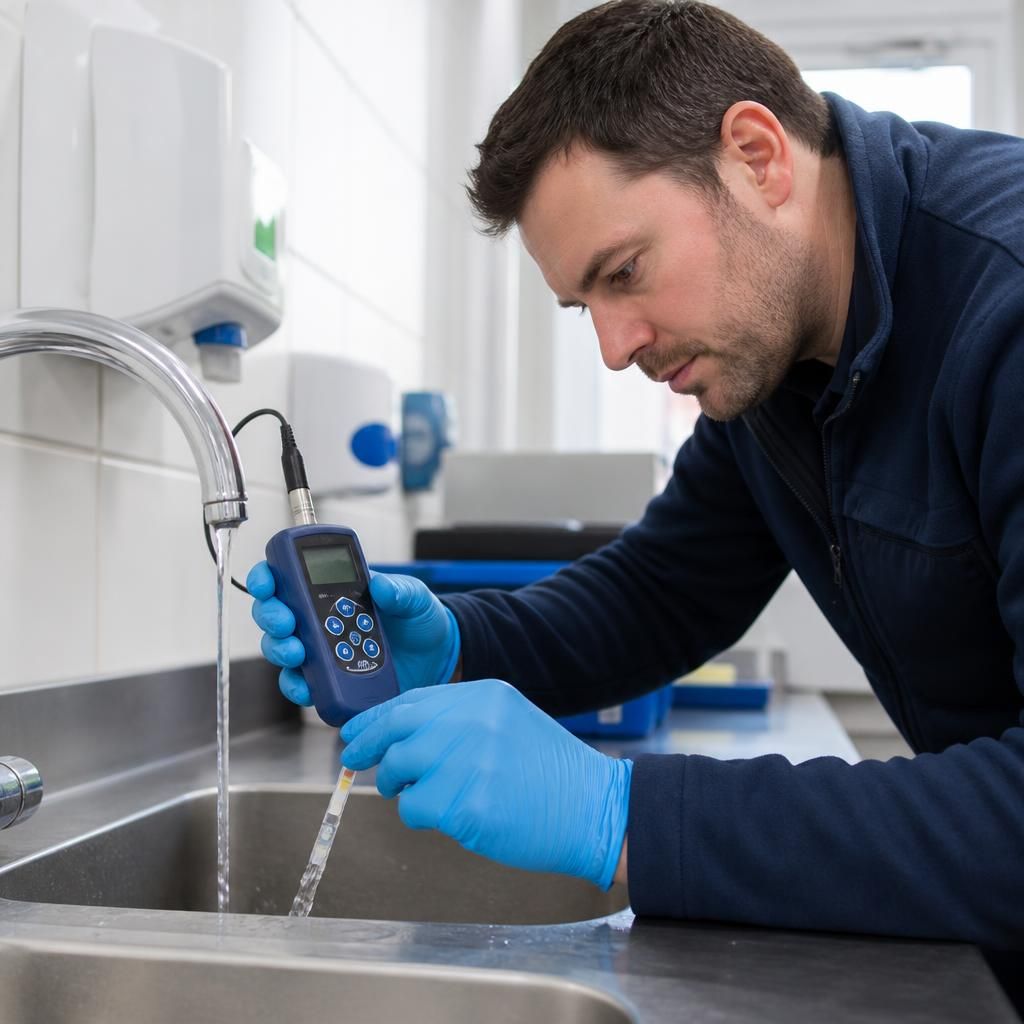
A potable water chlorine target is an operational control, not proof that the system is free from contamination. A satisfactory free chlorine result shows that measurable disinfectant residual is present at the sampling point, but it does not by itself confirm good system condition or eliminate the need for other controls.
Interpret the result alongside temperature records, system usage, storage-tank condition and any microbiological testing required by the risk assessment. This prevents chlorine readings being treated as a substitute for managing stagnation, poor circulation, contamination or other factors that can affect potable water safety.
Review Your Potable Water Chlorine Monitoring Target
If your monitoring programme needs a documented, site-specific chlorine target, speak to Blue Fish Water Management Ltd about reviewing the risk assessment, sampling approach and action thresholds.