
What indicates that chlorine swimming pool controls need review?
Chlorine swimming pool controls need review when monitoring identifies repeated or unexplained changes in chlorine levels, pH, water clarity or microbiological results. A review is also appropriate after changes to the pool system, operating practices, usage or control equipment, particularly where existing records no longer demonstrate consistent water quality and compliance.
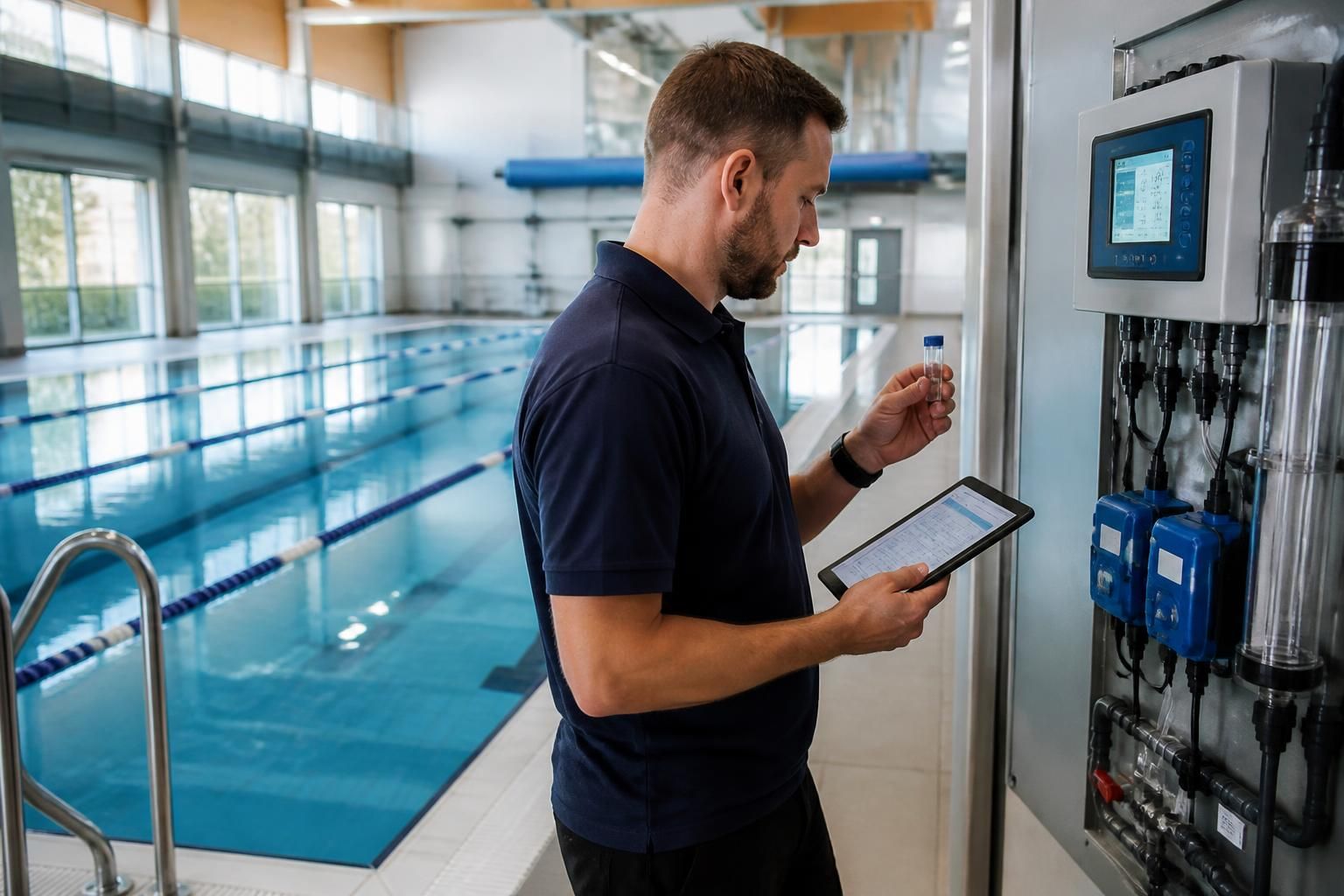
A review of chlorine swimming pool controls is indicated when the available evidence no longer demonstrates that disinfection is being managed reliably and consistently. This can occur even where individual test results appear acceptable, particularly if records are incomplete, control measures are not being followed as designed, or staff cannot explain how a result was achieved.
Warning signs often arise from the way the system is operated rather than from a single water test. The following should prompt a structured review:
- Inconsistent records: missing entries, identical readings recorded repeatedly, unexplained gaps, or results entered retrospectively can make it difficult to demonstrate that required checks took place.
- Disagreement between measurements: material differences between manual test results, automatic readings and control panel displays may indicate sampling, calibration, sensor or instrumentation problems.
- Frequent alarm conditions: recurring alarms relating to dosing, flow, tank levels, circulation or equipment faults suggest that the control system is not operating reliably, even if staff reset the alarm successfully.
- Repeated corrective action: regular manual dosing, repeated flushing, frequent filter intervention or other short-term adjustments may be compensating for an underlying fault rather than resolving it.
- Unclear responsibility: a review is needed where staff are unsure who carries out testing, who authorises corrective action, or what escalation procedure applies when a control falls outside its operating parameters.
- Equipment maintenance concerns: worn dosing components, blocked injection points, damaged sample lines, neglected calibration or unreliable chemical storage arrangements can undermine otherwise suitable procedures.
- Changes in operating demand: extended periods of low use, unusually intensive use, changes to programming or altered pool availability can affect how control measures perform and whether existing routines remain suitable.
- Evidence from incidents or complaints: reports of irritation, unusual odour, visible deposits, suspected contamination or illness should be assessed alongside the control records rather than treated as isolated events.
The condition of the records is particularly important. A compliant-looking result has limited value if there is no reliable information about when the sample was taken, where it was taken, which method was used, whether the test equipment was suitable, and what action followed an abnormal finding. A review should therefore examine the complete control trail, including test sheets, automatic monitoring data, chemical deliveries, maintenance records, alarm logs, staff instructions and evidence that corrective actions were closed out.
The review should also test whether the documented procedure reflects the actual pool operation. Differences may develop between written instructions and day-to-day practice when personnel change, equipment is modified or informal workarounds become established. Examples include testing at a convenient location rather than the defined sampling point, recording a combined reading without investigating its cause, or relying on an automatic controller without checking that the sample line and sensor remain serviceable.
Where a concern is identified, the response should be proportionate to the risk. A minor documentation weakness may require clearer forms, retraining or improved supervision. A control failure involving dosing, circulation or measurement may require technical investigation, equipment servicing, additional verification testing and a documented decision on whether the pool can continue operating. The important point is to distinguish the immediate correction from the underlying cause.
A practical review should establish:
- which control measures are critical to safe operation;
- what evidence confirms that each measure is working;
- which results or events require escalation;
- who is responsible for taking and checking action;
- how equipment faults and corrective work are recorded; and
- when the controls will be reassessed to confirm that the problem has been resolved.
Independent review or specialist input becomes especially useful when internal records conflict, the cause of a recurring problem is uncertain, corrective actions have not been effective, or the pool operator needs objective evidence for a compliance audit. The outcome should be a clear set of findings and prioritised actions, not simply another set of test results.
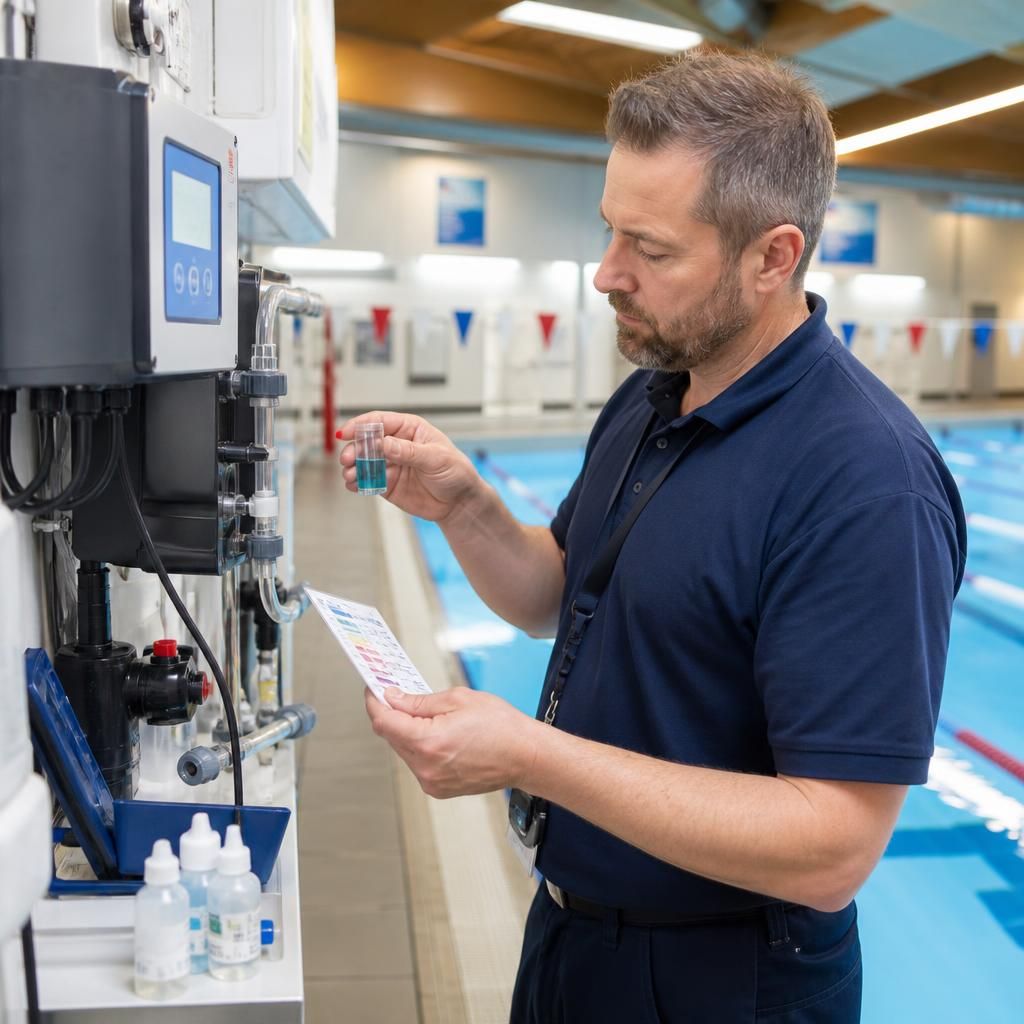
Discuss your chlorine swimming pool control review
If your chlorine swimming pool controls no longer provide a clear, consistent evidence trail, discuss the findings with Blue Fish Water Management Ltd to determine whether a focused review is appropriate. The next step can then be matched to the specific control concern and information available.