
Should chlorine swimming pool management be a review or an ongoing service?
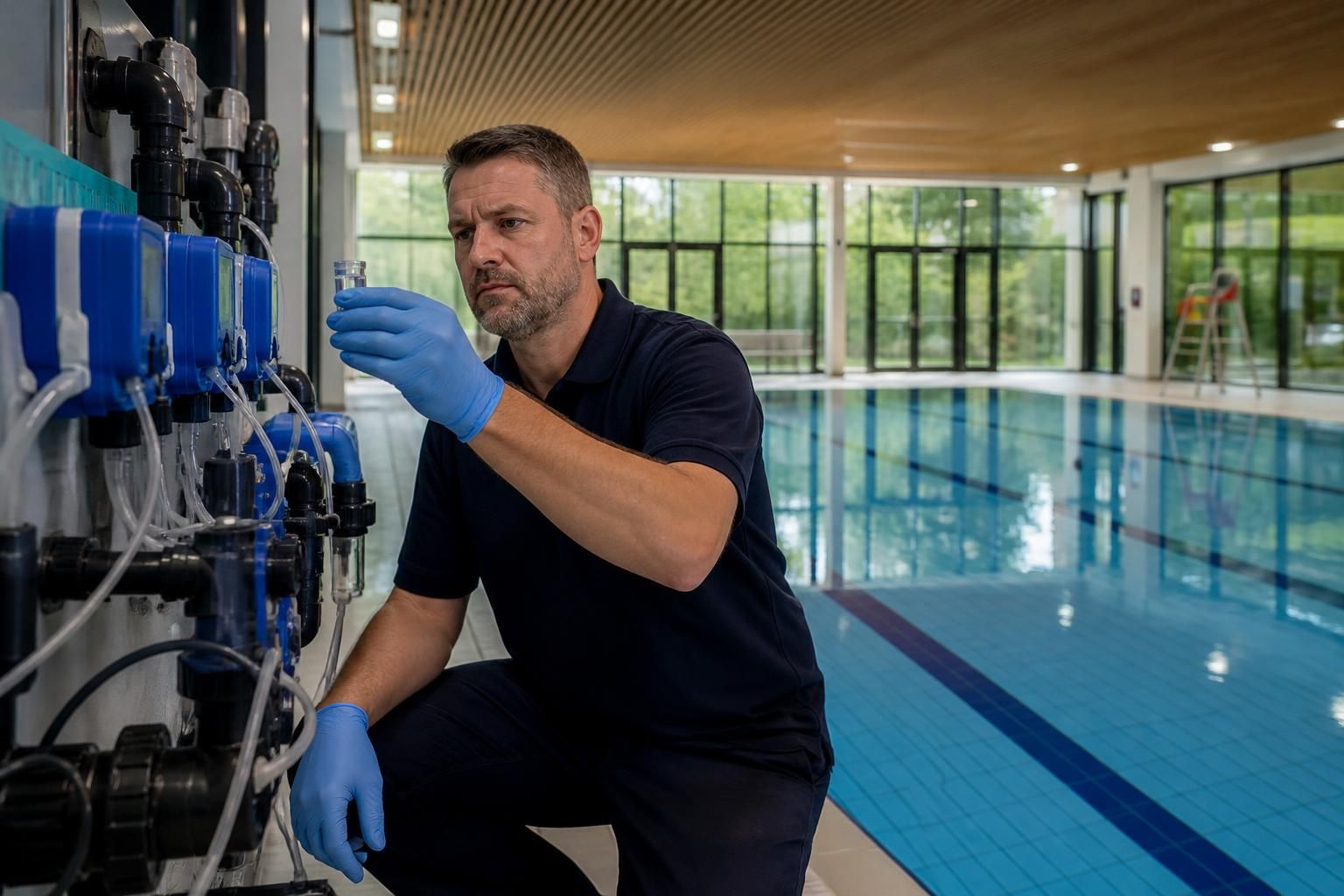
For most operational swimming pools, chlorine management is best treated as an ongoing control programme with formal reviews at defined points. A one-off review can be appropriate where the pool is being commissioned, responsibilities are changing, or a specific concern needs investigating, but it does not replace the routine control of disinfection, water quality, equipment and records.
What a one-off review can establish
A review provides a structured assessment of how chlorine is being managed at a particular point in time. It may examine the dosing arrangement, circulation and filtration, chemical storage, testing methods, operating procedures, staff competence, maintenance records and the way abnormal results are handled. The reviewer can compare the arrangements with the pool's risk assessment, operating requirements and applicable water hygiene expectations.
This type of work is useful when an organisation needs to understand why results are inconsistent, whether existing procedures remain suitable, or what must be addressed before reopening, handover or a significant change to the facility. It can also provide a prioritised action plan rather than a collection of isolated observations.
However, a review is inherently a snapshot. It may identify that testing is being performed correctly without demonstrating that the same standard is maintained on every operating day. It may also identify suitable equipment without confirming how it performs under changing bather loads, temperature conditions, make-up water quality or periods of reduced use.
Why ongoing management is usually necessary
Chlorine control depends on conditions that change during normal pool operation. Bather numbers, water temperature, contamination, chemical demand, circulation performance and plant condition can all affect the disinfectant residual and overall water quality. A compliant procedure on paper is therefore not enough; it must be applied, checked and acted on consistently.
An ongoing service can provide a defined framework for reviewing test results, checking trends, maintaining records and identifying deterioration before it becomes a significant control failure. It may include scheduled sampling, review of site records, inspection of plant and dosing arrangements, verification of testing practices, compliance audits, staff guidance and recommendations for remedial work where needed.
The value lies in connecting individual results with the wider operating picture. A single acceptable reading does not explain a pattern of falling residuals, repeated pH instability, unexplained water loss or recurring plant alarms. Trend information and regular review make it easier to distinguish an isolated result from a developing problem.
When a review may be sufficient
A standalone review may be suitable when:
- the pool is not yet in regular operation and the organisation needs its proposed controls assessed;
- a new operator or responsible person is taking over an established system;
- there has been a refurbishment, plant alteration or change in operating arrangements;
- an incident, complaint or unusual test result requires an independent examination;
- the organisation already has capable staff and effective monitoring but needs an impartial compliance check; or
- the purpose is to create or update procedures, training requirements or a remedial action plan.
Even in these circumstances, the review should define what happens afterwards. Actions need named ownership, suitable timescales, evidence of completion and a method for checking that the corrective measure has worked. Without that follow-through, a well-written review can remain an unimplemented document.
When an ongoing service is more appropriate
Continued support is more appropriate where the pool has complex plant, variable use, limited in-house expertise, repeated control issues or several people involved in testing and record-keeping. It is also sensible where the organisation needs independent oversight of its arrangements rather than relying solely on occasional internal checks.
The service should be proportionate to the risk. It does not necessarily mean transferring every operational duty to an external provider. The pool operator may continue to carry out daily checks and routine actions, while a specialist supports sampling, audits, trend analysis, staff training, procedure reviews and escalation of technical issues. The division of responsibilities should be documented so that no important control is assumed to belong to someone else.
How the two approaches work together
A practical arrangement usually combines routine site controls with periodic technical review. Day-to-day personnel carry out the checks required by the operating procedures, record the findings and report exceptions. A specialist then examines whether the controls remain effective, whether records are complete and whether changes in the pool or its use require the risk assessment or procedures to be revised.
The timing of formal reviews should be risk-based rather than chosen only for convenience. A review may be brought forward after alterations to dosing equipment, changes in water treatment chemicals, extended closure, a serious deviation, repeated failed results or a change in the pool's use. It should also be considered when staff turnover means that the people applying the controls no longer have the same training or understanding.
Evidence from the ongoing programme should inform each review. Useful information can include test records, laboratory results, calibration and maintenance documentation, incident reports, chemical usage, plant alarms, corrective actions and training records. Looking at these sources together gives a more reliable assessment than examining the written procedure alone.
In short, a review answers whether the arrangements are suitable and what needs to change. Ongoing management answers whether those arrangements continue to work in practice and whether emerging issues are being controlled. For an organisation responsible for an operating swimming pool, using both functions provides a more dependable basis for water safety, compliance and informed maintenance decisions.
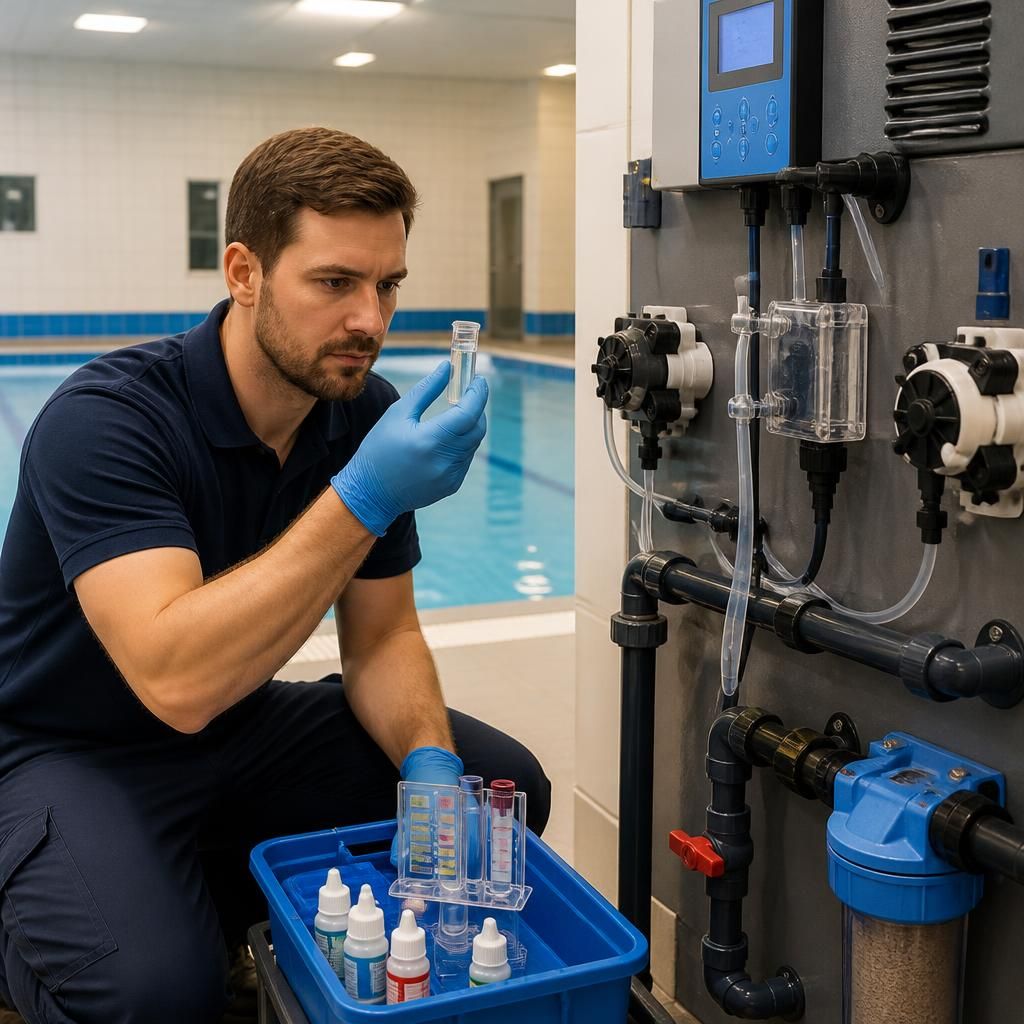
The clearest way to distinguish a chlorine swimming pool management review from an ongoing service is to consider the evidence produced between formal assessments. A review describes the condition of the arrangements at a defined point; an ongoing service should show how deviations are identified, investigated and closed during normal operation.
When assessing the right approach, consider whether the available records demonstrate more than individual chlorine and pH readings. Useful evidence may include explanations for abnormal results, confirmation that testing equipment remains suitable, documented decisions about corrective action and verification that those actions addressed the underlying issue. This helps separate a genuinely controlled system from one that appears compliant only when records are viewed selectively.
For this reason, the scope of any support should state what information will be examined, which findings require escalation and how unresolved actions will be tracked. That gives the organisation a clearer basis for deciding whether it needs a defined review, continuing technical oversight or a combination of both.
Discuss whether your pool needs a review or ongoing management
If you are unsure whether your current arrangements are sufficient, discuss your pool’s operating responsibilities, records and control requirements with Blue Fish Water Management Ltd to identify the most appropriate next step.