
What information is needed to scope chlorine swimming pool management?
Scoping chlorine swimming pool management requires information about the pool and treatment system, how the facility is used, existing water testing and monitoring, and the applicable compliance arrangements. Details of any known control issues, current records, planned changes and the level of ongoing support required help define a suitable management approach.

Scoping chlorine swimming pool management means defining the pool systems, operating conditions, control responsibilities and evidence needed to keep disinfection effective and demonstrable. A sound scope should establish which activities are required, who will carry them out, what will be monitored, how results will be recorded and when further action is needed.
Start with the physical and technical profile of the facility. Useful information includes:
- the number and type of pools, including learner pools, hydrotherapy pools, plunge pools and associated water features;
- pool dimensions, approximate water volumes, operating temperatures and any unusual construction features;
- the circulation route, filtration equipment, turnover arrangements, balance tanks and make-up water provisions;
- the chlorine dosing method, chemical storage arrangements, injection points, controllers, probes, alarms and automatic safeguards;
- the location and condition of plant, access restrictions, ventilation arrangements and any known defects or modifications; and
- details of linked equipment, such as water features or pipework sections that may affect circulation or disinfectant distribution.
Plant drawings, equipment schedules, commissioning information, manufacturer instructions and maintenance records can help confirm how the system is intended to operate. Where documentation is incomplete, a site inspection may be needed to verify the installation rather than relying on assumptions.
Operating information is equally important. The scope should reflect how the pool is actually used, not only its design capacity. Relevant details include typical and peak bather numbers, session patterns, swimming lessons, clubs, public use, school use and any periods of low occupancy. The frequency of water features, backwashing, filter cleaning, tank cleaning and partial water replacement should also be recorded. These factors affect disinfectant demand, circulation performance and the frequency of checks required.
Information about users may also influence the management approach. Pools used by children, people receiving clinical treatment or other potentially vulnerable groups may require particular attention to supervision, operating procedures, incident recording and escalation arrangements. The scope should identify these considerations without treating them as a substitute for a site-specific assessment.
Existing control evidence should be reviewed in enough detail to identify patterns. Rather than considering isolated test results only, provide available records showing:
- free and combined chlorine results, pH and any other parameters already monitored;
- the method, location and timing of each test;
- instrument calibration, verification and maintenance information;
- records of excursions, dosing interruptions, cloudy water, odour, irritation complaints or pool closures;
- chemical deliveries, stock levels, spills and storage checks; and
- filter, pump, probe and dosing equipment servicing.
Trend data can help distinguish a one-off variation from a recurring issue. It may show, for example, that readings change after busy sessions, backwashing, chemical replenishment or plant adjustments. The scope can then specify whether routine operational checks are sufficient or whether more detailed investigation, sampling or remedial work is appropriate.
The management arrangements need to be defined alongside the technical controls. Identify the duty holders, pool operators, facilities teams, contractors and managers involved in day-to-day control. The information should show who takes readings, who checks automated systems, who authorises chemical deliveries, who responds to alarms and who decides whether the pool should be restricted or closed. Written procedures, staff training records, handover arrangements and escalation routes are useful evidence of how the system is managed in practice.
Compliance information should include the relevant risk assessments, internal policies, inspection findings, audit actions and any conditions imposed by the organisation, premises owner or other authority. It is also helpful to state which guidance, procedures or contractual standards the management arrangements are expected to address. This allows the scope to separate legal or policy requirements from optional improvements and to identify any evidence that is missing.
The required form of support should then be described precisely. A client may need a one-off technical review, defined testing and reporting, periodic compliance checks, operational monitoring, staff training, assistance with procedures, or investigation of a particular control failure. The scope should state the intended frequency of visits or reviews where known, the information to be reported, the people who will receive it and the process for agreeing further work. If remedial works may be required, the scope should distinguish diagnosis and recommendations from implementation.
Before work begins, agree the practical boundaries: which pools and plant areas are included, what records will be supplied, whether access equipment or escorts are needed, which tasks remain with the site team and what is outside the assignment. The finished scope should identify assumptions, information gaps, deliverables, reporting arrangements and priorities. This gives the management plan a clear basis and makes it easier to review whether the controls remain suitable when the facility, equipment or pattern of use changes.
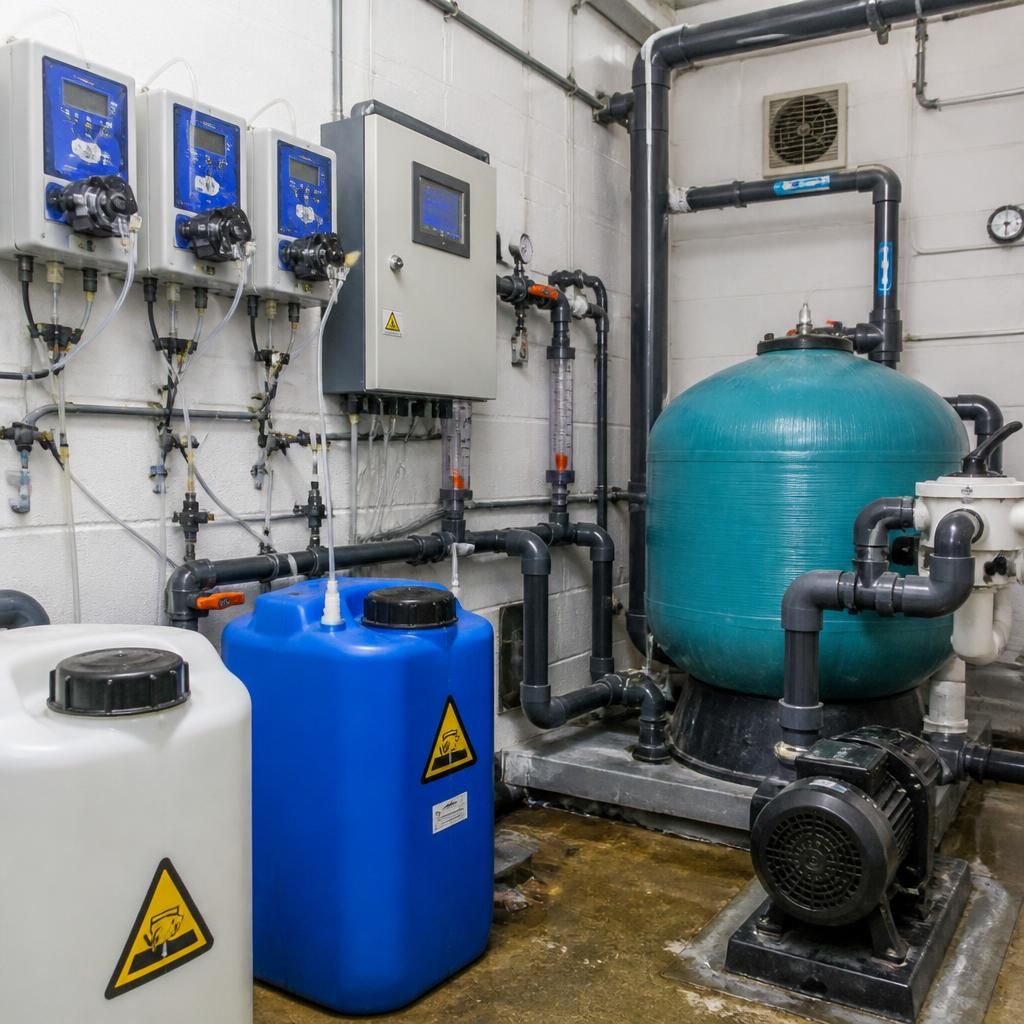
A chlorine swimming pool management scope should also cover the safety arrangements for handling treatment chemicals. Relevant information includes the chemicals held on site, their storage and segregation, safety data sheets, COSHH assessments, dosing-room ventilation, personal protective equipment and procedures for dealing with leaks, incorrect deliveries or accidental mixing. Records of chemical exposure incidents, odour complaints or emergency interventions may indicate that the scope needs to address more than routine water-quality control. This information helps distinguish safe chemical management requirements from the separate task of maintaining disinfectant levels in the pool.
Discuss Your Chlorine Pool Management Scope
If you are defining the information needed for a chlorine swimming pool management scope, discuss the proposed boundaries, evidence requirements and reporting arrangements with Blue Fish Water Management Ltd. This can help clarify the appropriate level of technical and compliance support before work is commissioned.