
How is chlorine swimming pool management support matched to compliance needs?
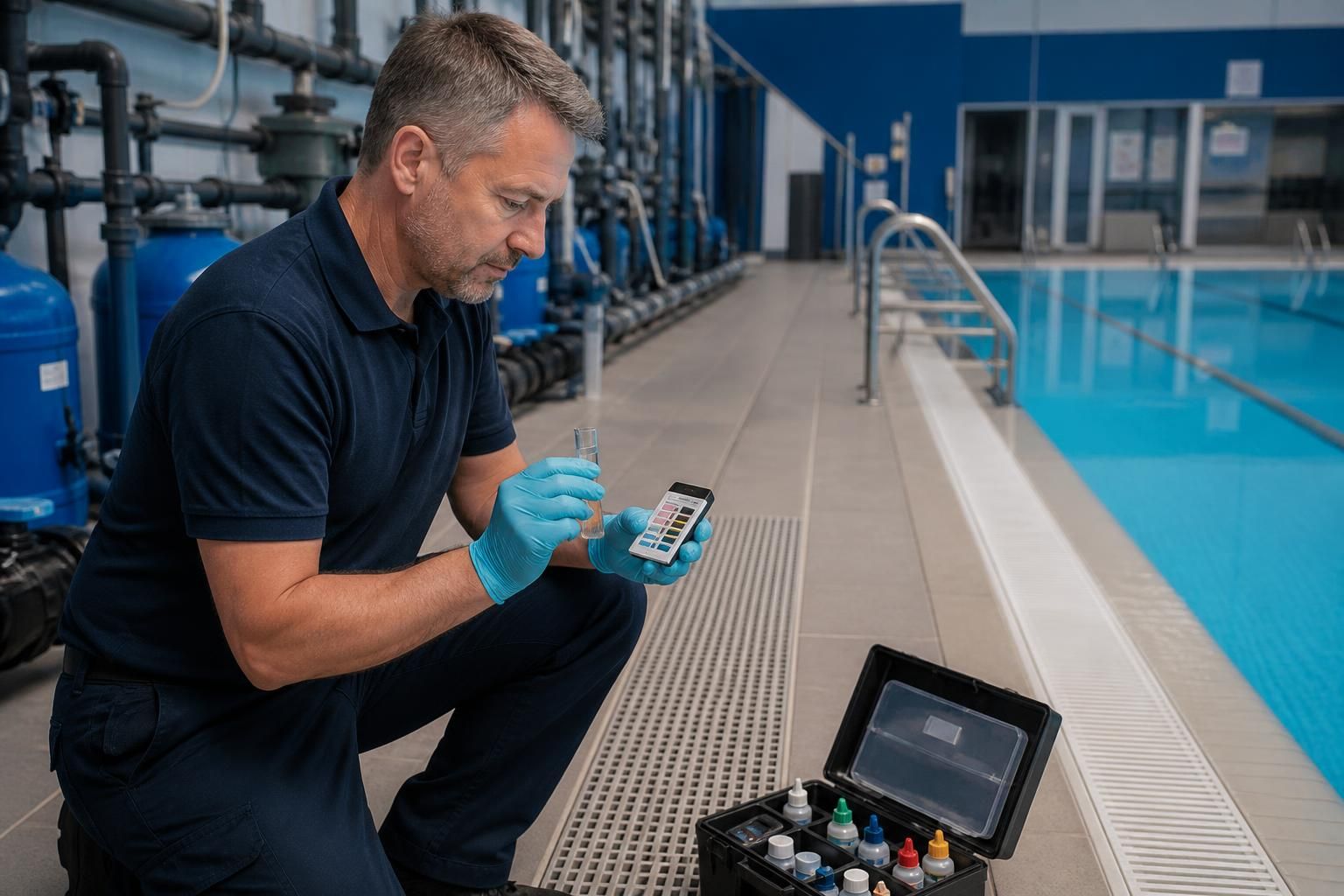
Chlorine swimming pool management support is matched to compliance needs by translating the pool’s operating risks into a proportionate programme of control, evidence and follow-up. The right level of support depends on how the pool is used, who may be exposed, the complexity of the plant, the competence of the operating team and the quality of the existing management arrangements. A facility used by the public, residents, pupils, patients or employees may require a different approach from a lightly used private or specialist pool.
The assessment should begin with the intended standard of control and the responsibilities of everyone involved. This includes the duty holder, site management, pool operators, maintenance contractors and any person responsible for health and safety. Their roles should be clear enough to show who checks the water, who responds to abnormal results, who maintains equipment and who authorises remedial work.
Compliance-focused support usually considers the following areas:
- Risk profile: the pool’s users, frequency of use, bathing load, operating pattern and any groups who may be particularly vulnerable to poor water quality.
- Water treatment arrangements: the type and condition of filtration, circulation, dosing and control equipment, together with the relationship between plant performance and water quality.
- Operational controls: how chemical levels, pH, circulation, filtration and plant alarms are checked, recorded and acted upon.
- Premises and user management: hygiene rules, supervision, access controls, cleaning arrangements, ventilation and the handling of incidents that could affect water quality.
- Competence and procedures: whether staff understand the equipment, the required checks, safe chemical handling and the escalation process when results or plant conditions are outside the defined limits.
- Evidence: whether records demonstrate that checks have been completed, results have been reviewed and corrective actions have been closed effectively.
The compliance requirement is not met simply by recording a chlorine result. Results need to be meaningful, taken at suitable points and interpreted alongside pH, circulation, filtration and pool usage. A result that appears acceptable in isolation may not demonstrate effective control if sampling is inconsistent, the dosing system is unstable or the record does not show what happened after an abnormal reading.
Support can therefore be scaled according to the condition of the system and the strength of the existing arrangements. A well-managed pool with competent operators and reliable records may need independent verification, targeted testing or periodic review. A site with inconsistent records, recurring water-quality problems, ageing equipment or unclear responsibilities may need a more structured improvement programme, additional monitoring and closer review of corrective actions.
Documentation is a central part of the match between support and compliance. A suitable management system should normally bring together the risk assessment, operating procedures, testing results, maintenance information, staff training records, incident reports and evidence of remedial work. Documents should be practical for the people using them. Procedures that do not reflect the actual plant or cannot be followed during routine operation are unlikely to provide reliable control.
Where testing identifies a problem, the response should be proportionate to the risk rather than limited to repeating the test. The investigation may need to consider dosing faults, blocked filters, inadequate turnover, contamination, poor cleaning, inaccurate instruments or weaknesses in staff practice. Actions should identify an owner, a required completion point and the evidence needed to confirm that the underlying issue has been addressed.
Compliance needs can also change when the pool or its use changes. Relevant triggers include alterations to treatment equipment, refurbishment, changes in occupancy, a new operating contractor, repeated adverse results, an incident involving users, or a change in the site’s risk profile. These events may justify a revised assessment rather than relying on an existing document that no longer describes the facility accurately.
For a business seeking external guidance, the most useful support is one that connects findings to the decisions the duty holder must make. This may involve an independent review of current arrangements, verification of testing and records, practical advice for operators, recommendations for plant or procedural improvements, and a clear distinction between immediate control measures and longer-term remedial work. The outcome should provide an auditable explanation of how risks are controlled and what remains to be done.
Blue Fish Water Management can tailor its input to the level of assurance required, from reviewing specific compliance concerns to helping establish a structured chlorine swimming pool management programme. The appropriate scope is determined by the pool’s risks, existing evidence and the actions needed to maintain safe, demonstrable control.
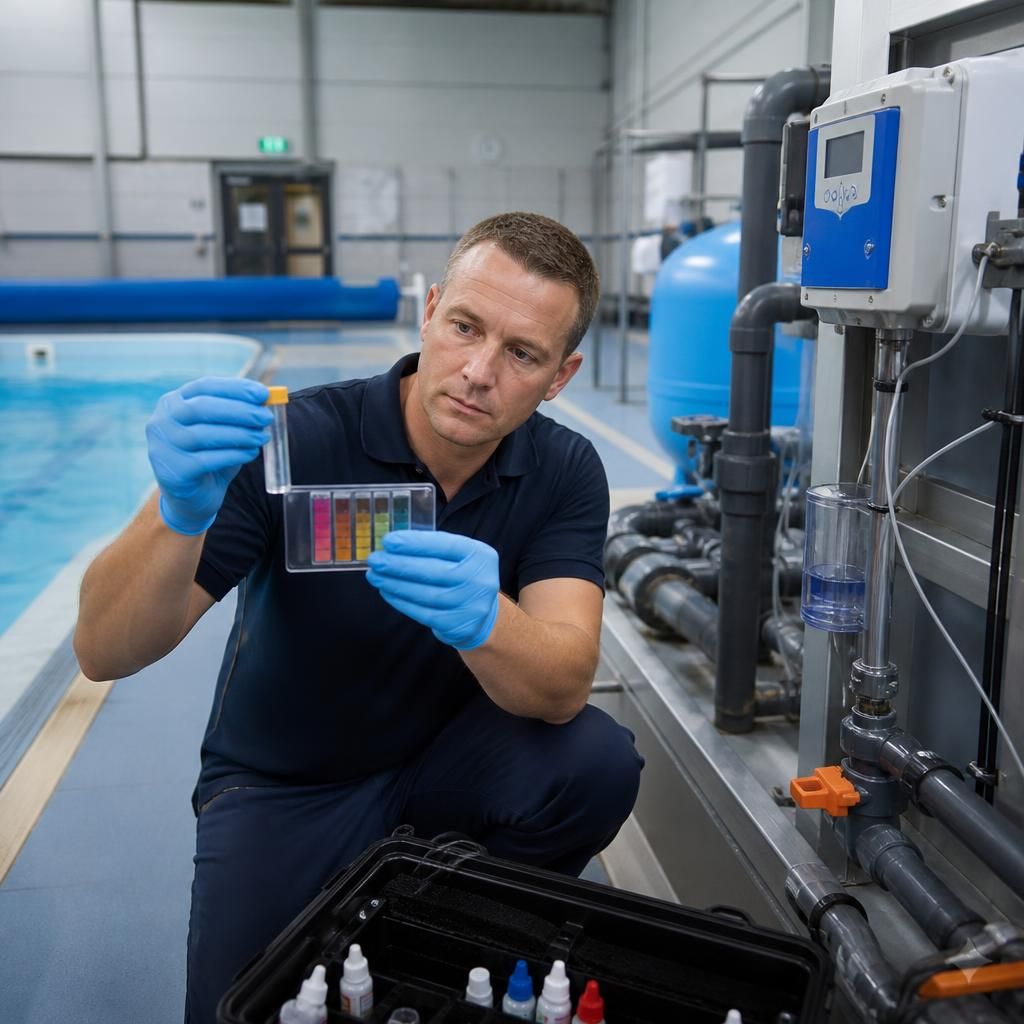
Chlorine swimming pool compliance support must consider how samples are collected, not only which results are recorded. A suitable sampling approach reflects the pool’s layout, circulation pattern, dosing points, operating cycle and periods of higher use, so that results provide a meaningful view of the water being presented to bathers.
Reviewing the sampling method may include checking whether sample locations represent different parts of the system, whether equipment is used correctly and whether results are recorded with enough context to explain unusual readings. Timing can also matter: a result taken immediately after an adjustment may not show the same conditions as one taken during normal operation.
This helps distinguish an isolated reading from evidence of sustained control. Where the sampling approach does not reflect how the pool operates, support may focus first on improving the monitoring plan before recommending a wider programme of testing or remedial work.
Discuss Your Chlorine Swimming Pool Compliance Requirements
Discuss your chlorine swimming pool compliance requirements with Blue Fish Water Management and identify the level of support suited to your facility. Sharing your current procedures, records and areas of concern will help clarify the next practical step.