
When is mains chlorination required?
Mains chlorination is generally required for a newly installed, extended or substantially altered drinking-water main before it is connected to the existing network or brought into service. It may also be required after repairs, contamination or other work that could compromise water quality, subject to the relevant water supplier’s requirements and testing procedures.
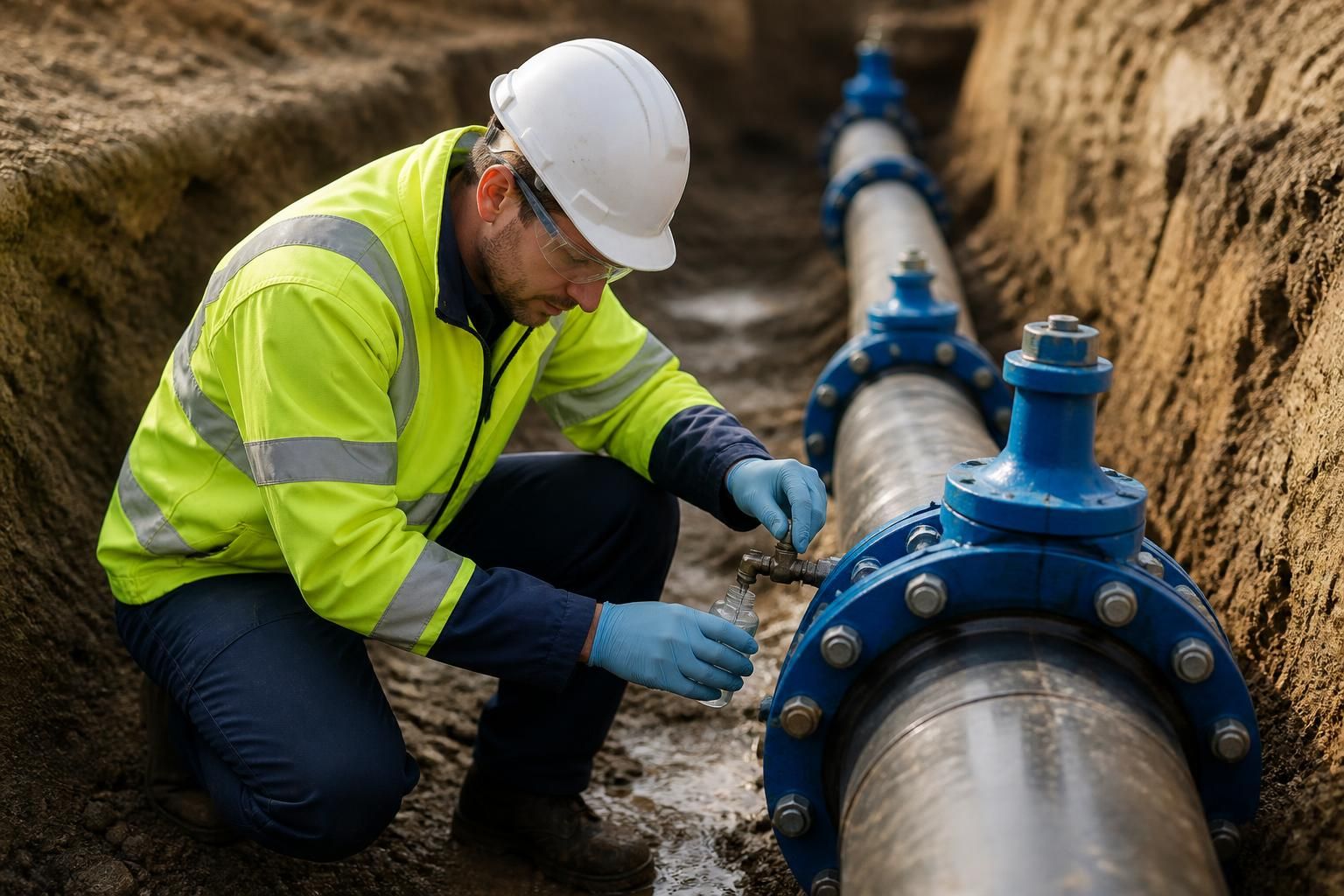
In UK practice, mains chlorination is a commissioning and reinstatement control for drinking-water infrastructure. The requirement is determined by the water supplier’s technical standards, the adoption or connection agreement, the nature of the work and the risk that the activity has introduced microbiological contamination. It is not simply a matter of choosing chlorination because a pipe is new; the completed work must also satisfy the required inspection, flushing and water-quality testing arrangements.
The requirement should be confirmed during the design and approval stage, before excavation or installation begins. The project specification may state:
- which sections of main must be disinfected;
- the method and concentration to be used;
- how contact time and neutralisation are to be managed;
- which samples must be taken and where they must be collected; and
- which laboratory and reporting requirements apply before the main can be accepted.
This is particularly important on adoptable infrastructure, where the water supplier may require evidence of compliance before taking responsibility for the asset. A contractor should not assume that a standard site practice will be accepted if the supplier has specified a different procedure.
Chlorination is more likely to be required where the work has created a direct pathway for contamination or has affected the cleanliness of the pipework. Relevant considerations include the length and diameter of the main, the type of fittings used, how long the pipe has been open or out of service, site conditions, the source of any introduced materials and whether the affected section can be isolated from the wider network. A risk-based decision may therefore apply differently to a short controlled connection and a larger installation exposed to construction activity.
It is also important to distinguish a water main from internal building services. Mains chlorination relates to infrastructure conveying drinking water, commonly before it is connected to or accepted into the distribution network. A building’s cold-water storage, hot-water system or other domestic water services may require a separate cleaning, disinfection and verification regime. The appropriate method depends on the system design, the reason for the work and the responsible water supplier or competent water hygiene professional.
Where the requirement follows a suspected contamination event, the decision should be based on the incident circumstances and the advice of the relevant water supplier or responsible person. Disinfection may be necessary, but it does not replace investigation of the source, isolation of the affected section, suitable flushing or microbiological examination. The system should not be returned to normal use solely because a chlorination step has been completed.
Timing also matters. Chlorination is normally planned as part of the commissioning sequence, after the physical installation has been checked and with enough control over the section to allow safe dosing, contact and discharge. Sampling arrangements need to be agreed in advance because the main may remain out of service until results have been reviewed and accepted. Unplanned chlorination can create delays, access problems and uncertainty over whether the evidence will meet the project’s acceptance criteria.
Before arranging the work, the person responsible for the project should establish:
- whether the water supplier or adopting authority has made disinfection a condition of connection or handover;
- which pipework and fittings fall within the scope;
- what pre-treatment checks, flushing arrangements and safety controls are required;
- how chlorine residuals will be measured and safely reduced before discharge;
- which samples are required, who will take them and which laboratory will analyse them; and
- what records must be submitted for approval and retained for the project file.
Blue Fish Water Management Ltd can support organisations with the practical water hygiene aspects of mains chlorination, including planning, testing, compliance evidence and advice on remedial action where the required standard has not been demonstrated. The precise requirement should always be confirmed against the applicable water supplier specification and the circumstances of the individual installation.
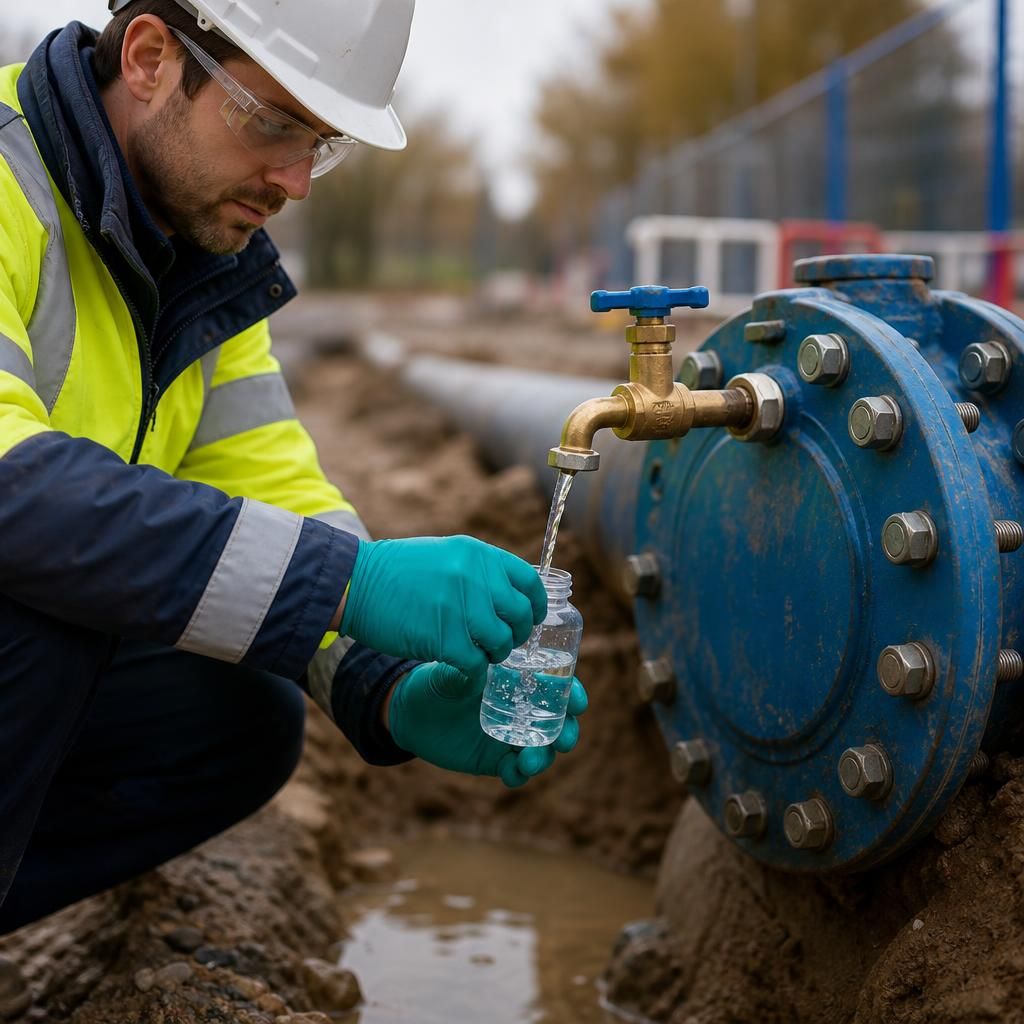
Mains chlorination may also be required for temporary mains, bypasses and diverted sections used during construction or network repairs. Although these arrangements may only remain in place for a limited period, they can introduce new pipework, fittings and connection points into a drinking-water system. The relevant water supplier or adopting authority should confirm whether disinfection and verification are required before the temporary arrangement is put into service.
This requirement should be considered before the temporary system is assembled, particularly where it will supply occupied premises or connect directly to an existing potable-water network. The project specification should define the section covered and the evidence needed before use, rather than leaving the decision until the temporary main is ready to operate.
Discuss when mains chlorination is required
If you need to clarify the disinfection evidence for a planned water-main project, speak to Blue Fish Water Management Ltd about the relevant testing, compliance and remedial considerations.