
What does mains chlorination involve?
Mains chlorination involves preparing and isolating the new or altered water main, introducing a controlled chlorine dose, and allowing sufficient contact time to disinfect the pipework. The main is then flushed with wholesome water and tested to confirm that chlorine levels and microbiological results meet the applicable requirements before it is brought into service.
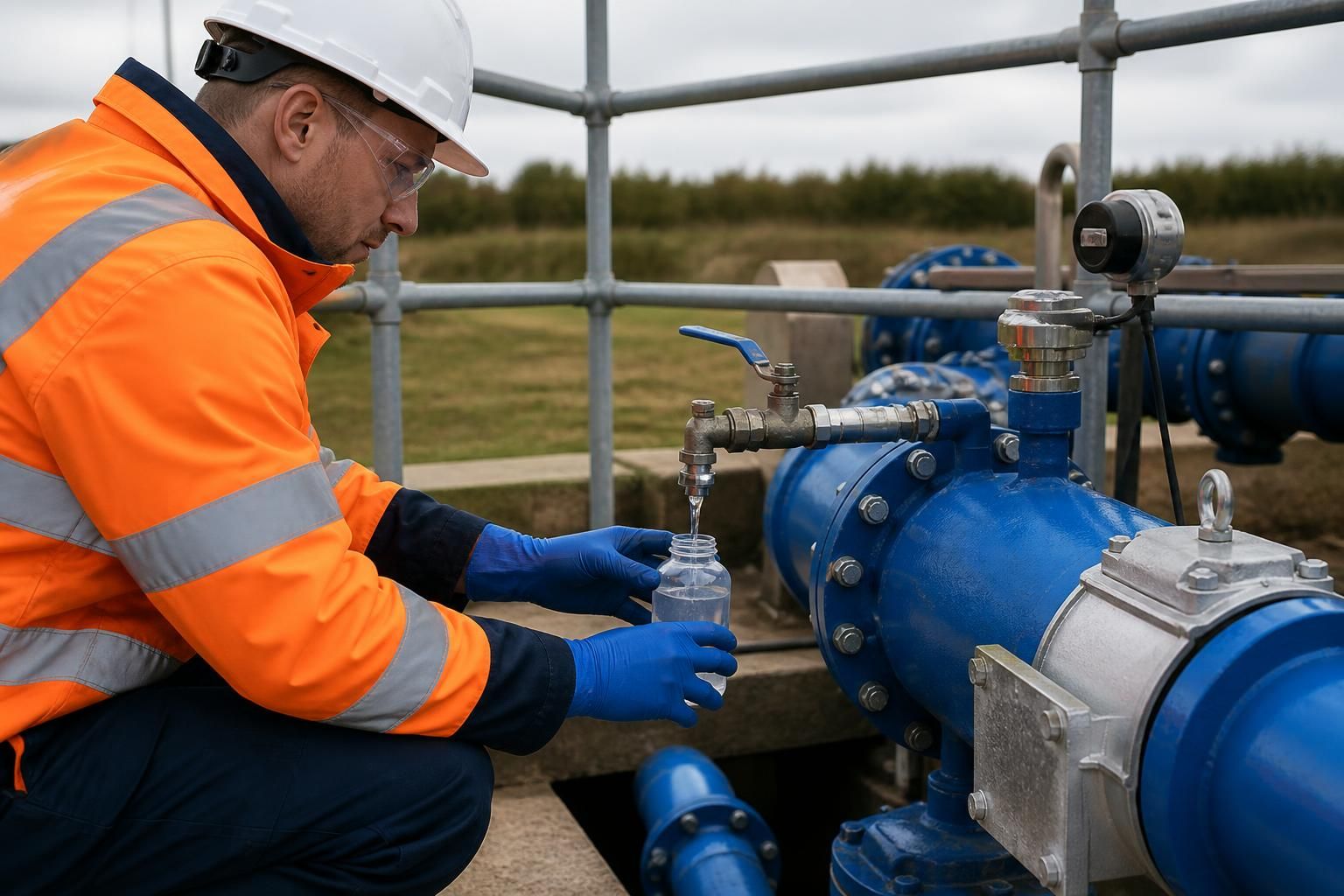
Mains chlorination is a documented commissioning procedure used to verify that newly installed, extended or modified water-main pipework is suitable for connection to a wholesome water supply. It combines preparation, controlled chemical treatment, verification and formal release, rather than relying on chlorine addition alone.
The work normally begins with a review of the main’s design and installation records. The responsible contractor or water hygiene specialist considers the pipe material, configuration, volume, connection points, fittings and any sections that could retain stagnant water. The main should be complete, accessible for inspection and free from construction debris before treatment starts. Valves, hydrants and sampling points are checked so that the procedure can be carried out without compromising connected systems.
Before dosing, the affected section is separated from the live supply and arrangements are made to prevent treated water entering occupied premises or other parts of the network. Any temporary connections, hoses, pumps or dosing equipment should be suitable for use with drinking-water systems and handled hygienically. The method should also account for safe handling of the disinfectant, including appropriate protective equipment, chemical storage and controls for discharge water.
A measured disinfectant solution is introduced through an agreed dosing point. The amount and distribution of the chemical are determined from the characteristics of the pipework and the approved method statement; they should not be estimated by simply adding an arbitrary quantity. Personnel monitor the treatment using suitable test equipment to establish that the disinfectant has reached the intended section and remains present for the required period.
During the treatment stage, the main must remain under controlled conditions. Unauthorised use of outlets, accidental valve operation or an interruption to the treatment can invalidate the procedure. If the process is disturbed, the responsible person may need to assess the effect and repeat part or all of the work. This is why valve status, dosing details, contact conditions and relevant observations should be recorded as the work progresses.
Once treatment has been completed, the disinfected water is discharged safely and the main is flushed until the water is suitable for sampling and eventual use. Flushing arrangements need to consider discharge location, flow, pressure and the risk of causing damage or contamination. The main should not be connected to the wider supply simply because the chemical has been introduced; release depends on the evidence obtained from the subsequent checks.
Verification commonly includes:
- checking disinfectant residuals at representative points;
- confirming that the water is visually acceptable and free from abnormal colour, odour or particulate matter;
- taking microbiological samples using hygienic sampling techniques; and
- sending samples to a suitably competent laboratory where laboratory analysis is required.
Sampling points should represent the treated section, particularly its extremities and areas where water movement or stagnation could produce a misleading result. Samples must be correctly identified, preserved and transported in accordance with the laboratory’s requirements. Results are assessed against the acceptance criteria applicable to the project, the water supplier’s requirements and the relevant regulatory or industry guidance. A satisfactory chlorine reading by itself does not demonstrate microbiological acceptability.
If a result is unsatisfactory, the main should not be placed into service without an appropriate review. Possible causes include inadequate cleaning, contamination introduced during installation, incomplete flushing, sampling error or a problem affecting a particular section. Further investigation, remedial cleaning or repeat disinfection may be necessary, followed by additional sampling. The corrective action should be proportionate to the evidence rather than treated as an automatic substitute for identifying the cause.
On completion, the records should show what section was treated, the date and method used, equipment or chemicals involved, relevant measurements, sampling locations, laboratory findings, flushing and discharge arrangements, and the decision to release the main. These documents provide the evidence needed for handover, future maintenance and compliance checks. Blue Fish Water Management can advise on the practical planning, testing and documentation requirements for mains chlorination as part of a wider water hygiene programme.
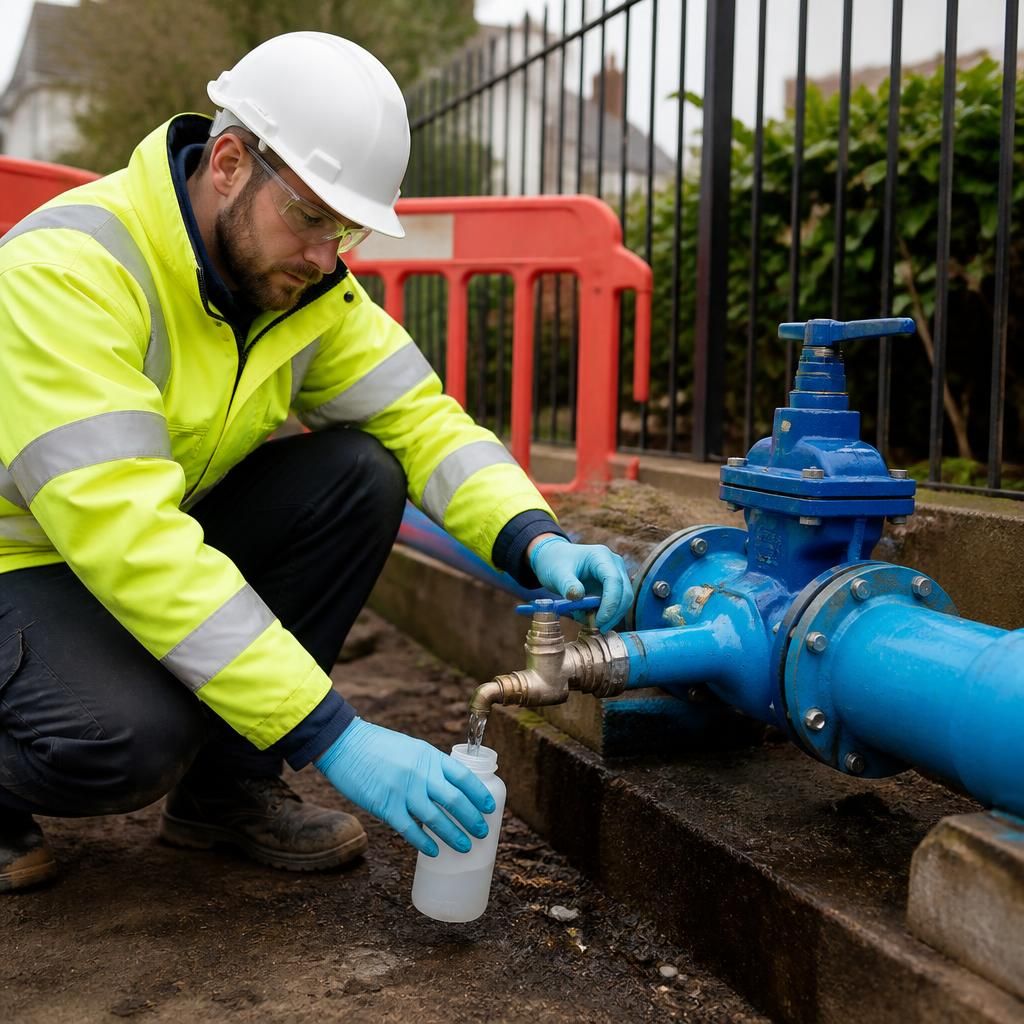
Where a new water main includes branches, loops or several tie-in points, mains chlorination may need to be planned in separate sections. Each section must be capable of being isolated and treated effectively; otherwise, an untreated branch or poorly circulated area could remain outside the disinfection process.
This sectional approach also helps establish which parts of the installation are covered by the test evidence. The pipework layout, valve positions and connection sequence should therefore be understood before work begins, particularly where the new main will connect to an existing supply or serve multiple buildings.
Discuss your mains chlorination requirements
If you are planning a new or altered water main, speak to Blue Fish Water Management about the project-specific requirements for chlorination, verification and handover documentation.