
What competence should a provider demonstrate for mains water chlorination?
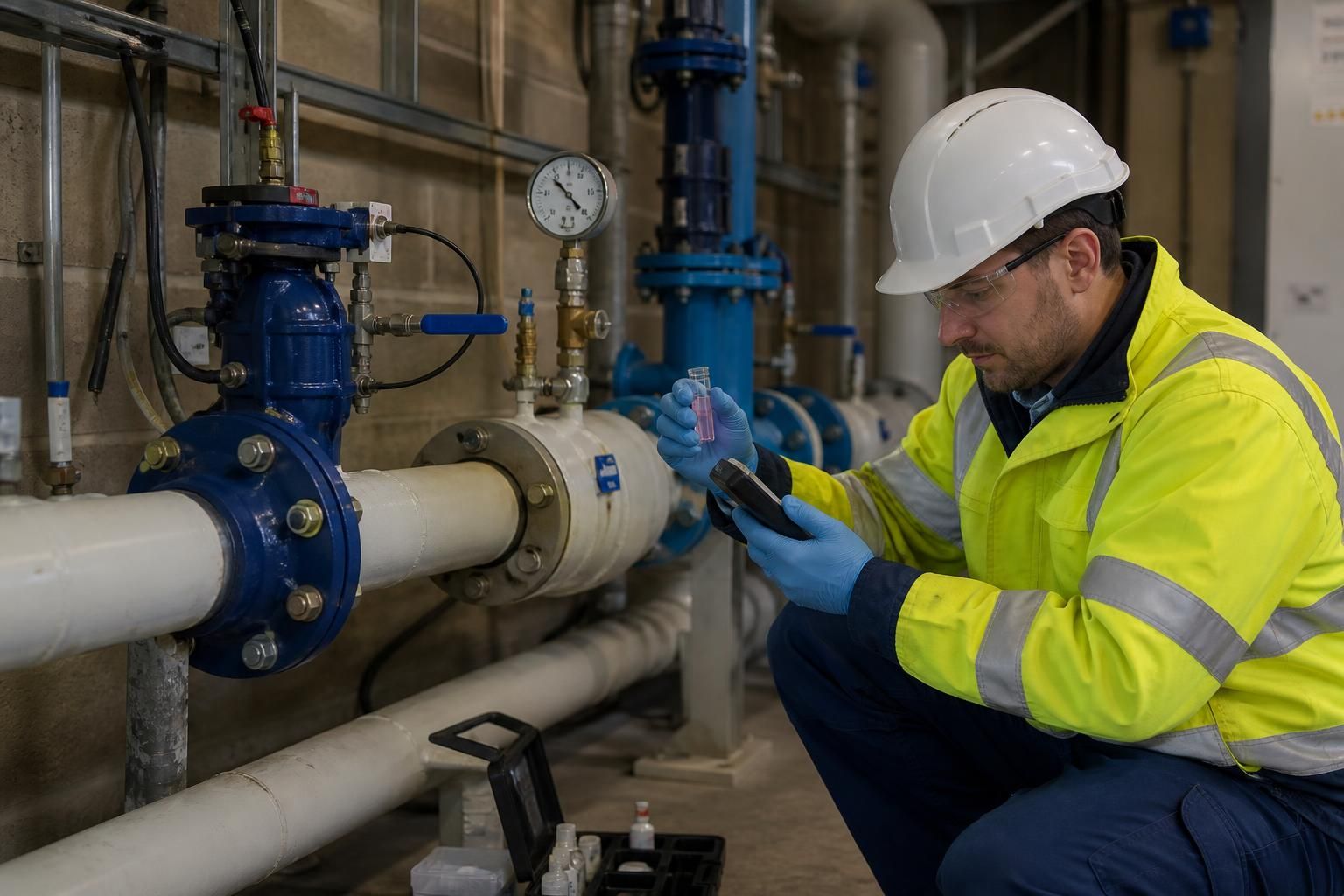
A competent mains water chlorination provider should be able to demonstrate technical knowledge, safe chemical control, understanding of water regulations, and a verifiable quality-assurance process. Competence is not established by carrying out a chlorine dose alone; it depends on whether the provider can select an appropriate disinfection approach, control its effects on the water system, and provide objective evidence that the work was suitable and effective.
Relevant technical knowledge
The provider should understand the purpose and limitations of mains chlorination, including how the method applies to new installations, extensions, repaired pipework and systems returning to service. Its personnel should be able to interpret the design, materials, pipe configuration, storage arrangements and intended use of the system before recommending treatment. They should also distinguish between disinfection for commissioning or remedial purposes and routine water hygiene management. Chlorination is not a substitute for identifying and correcting dead legs, stagnation, contamination sources, unsuitable materials or other system defects.
A suitable provider should work with the relevant project requirements and recognised guidance, such as the Water Supply (Water Fittings) Regulations, applicable British or European standards, and current health and safety guidance. It should be able to explain which requirements apply to the particular installation rather than presenting a generic procedure as suitable for every site.
Safe chemical and site controls
Chlorine-based treatment involves risks to people, building materials, the environment and the wider water supply. Competence therefore includes documented controls for:
- safe storage, handling and transport of treatment chemicals;
- appropriate personal protective equipment and emergency arrangements;
- preventing unauthorised use of outlets during treatment;
- protecting connected equipment and sensitive components where necessary;
- preventing treated water from entering an occupied supply before clearance; and
- neutralising or disposing of chlorinated discharge in a controlled manner.
The provider should identify these issues during planning and coordinate with the principal contractor, building operator or water undertaker where the work could affect other parts of the supply.
Controlled verification rather than assumption
A competent organisation should define how treatment will be verified before work starts. This normally includes confirming that the disinfectant has reached the intended parts of the system, that the required exposure conditions have been achieved, and that flushing has reduced residual disinfectant to an acceptable level before the system is returned to use. It should also explain what happens if results do not meet the agreed acceptance criteria. A failed result should lead to investigation of likely causes, such as incomplete circulation, contamination, damaged pipework or inadequate flushing, rather than an unexplained repeat of the same treatment.
Measuring instruments used for chemical checks should be appropriate to the task, maintained and subject to suitable calibration or verification arrangements. Test methods should be consistent and traceable, with samples identified by location and collection point. Where laboratory analysis is required, the provider should be able to identify the laboratory used, the scope of its competence and the basis on which results are assessed. This allows the client to distinguish a meaningful clearance decision from an informal visual or on-site check.
Planning and communication
Competence is also shown through the quality of the pre-work information. Before treatment, the provider should clarify the system boundaries, available drawings, access arrangements, isolation points, outlets, storage tanks, connected users and any restrictions on discharge. It should identify assumptions and state where the client or another contractor must provide information or carry out preparatory work.
The method should be explained to relevant site personnel, including isolation requirements, warning notices, access restrictions and the conditions for recommissioning. If the installation changes during construction or a previously unknown connection is discovered, the provider should reassess the procedure rather than continuing without reviewing the risks.
Evidence that can be checked
A client assessing a provider should look for evidence that goes beyond a general statement of experience. Useful checks include:
- training and competency arrangements for the people undertaking and supervising the work;
- examples of anonymised procedures or technical documentation;
- chemical safety information and environmental discharge controls;
- equipment maintenance, calibration and test-control arrangements;
- quality-control procedures for laboratory samples and results;
- clear escalation arrangements for failed tests, unexpected contamination or system defects; and
- appropriate insurance, health and safety documentation and site-specific method statements.
References from comparable projects can be useful, but they should not replace technical evidence. The important question is whether the provider can explain its decisions, adapt its controls to the actual system and support its conclusions with traceable test information.
For a commercial or industrial client, the strongest indication of competence is a consistent process from survey and planning through treatment, clearance and handover. A provider should be able to state what it will inspect, how it will control the disinfection, what evidence it will collect, who will review the results and what action will follow if the system does not pass. That level of transparency enables the responsible person or project manager to judge whether the work is technically defensible and suitable for the intended water system.

Competence is also demonstrated by an effective independent review before the mains water system is released for use. A suitably experienced person should check the treatment record, sampling points, test results, flushing information and any deviations from the agreed method, rather than relying solely on the technician who carried out the work.
This review should confirm that the evidence supports the decision to recommission the system and that outstanding defects or restrictions have been recorded clearly. A defined sign-off process helps identify transcription errors, incomplete records or results that have been interpreted without sufficient context, giving the client a clear basis for accepting the completed work.
Discuss your mains water chlorination requirements
If you are assessing a provider for mains water chlorination, discuss your system requirements with Blue Fish Water Management Ltd and establish what evidence, controls and handover information your project will need.