
What should a mains water chlorination completion report contain?
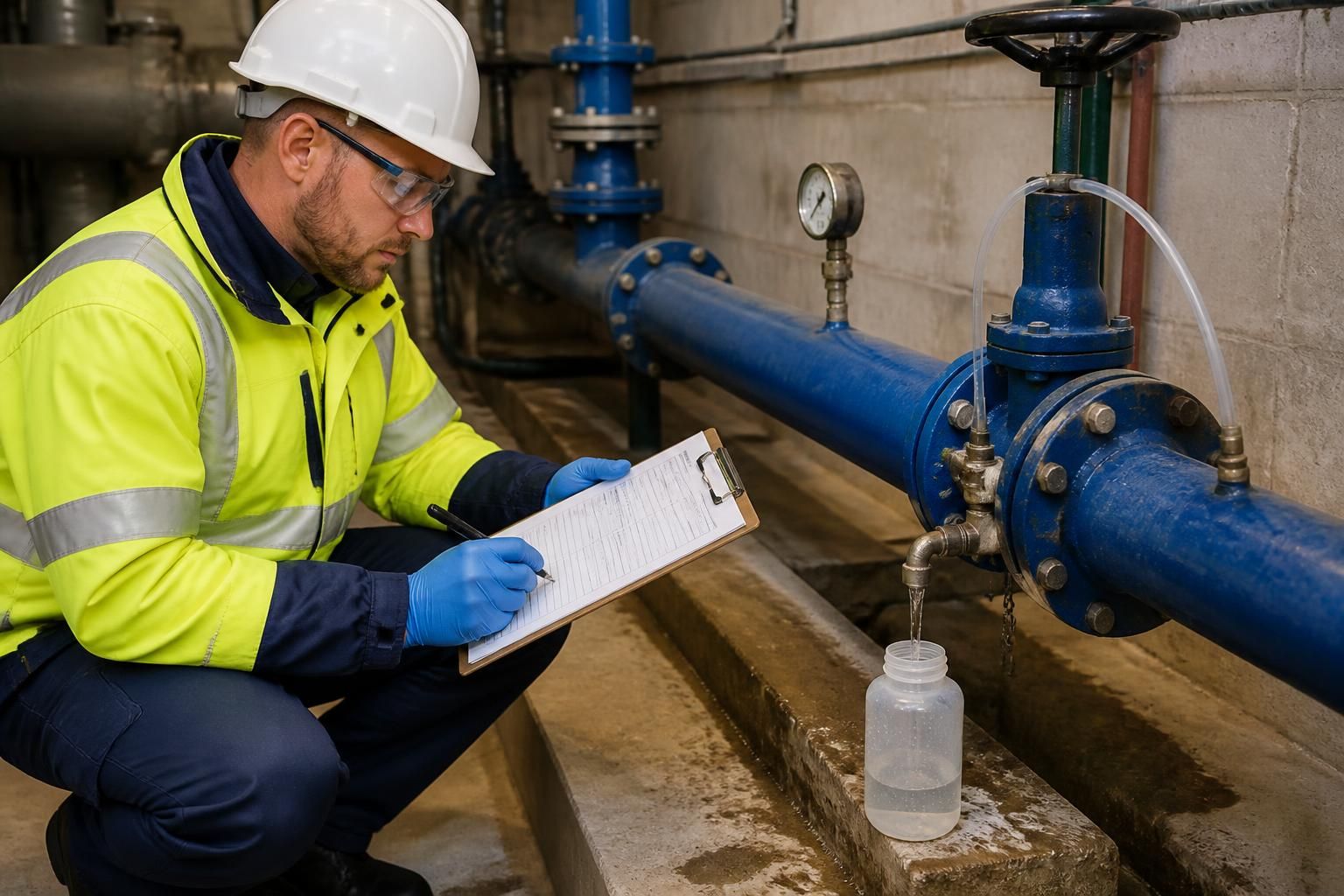
A mains water chlorination completion report should provide a clear, auditable record that the newly installed, altered or repaired water main has been disinfected and tested before being brought into use. It should allow the client, designer, contractor, water supplier or regulator to identify the assets concerned, understand the work carried out, verify the evidence obtained and determine whether the system is suitable for commissioning.
System identification and traceability
The report should identify the project, site and relevant parties, including the client, principal contractor, water hygiene provider and any other organisation responsible for the installation. It should reference the specific main or section treated rather than relying on a general site description. Useful information includes:
- the development, building or premises name and address;
- drawing, plot, zone or asset references;
- pipe material, nominal diameter and approximate length where relevant;
- the connection points, branches, storage arrangements, outlets or fittings included in the work;
- the location of sampling points and discharge points; and
- the person responsible for accepting the completed work.
A marked-up drawing, schematic or clearly annotated site plan can be valuable supporting evidence. It should show the treated route and help a future reader match the written report to the physical installation.
Disinfection record
The report should explain how the disinfection was controlled in practice. This normally includes the disinfectant used, its concentration or target residual, how it was introduced, and how distribution through the main was confirmed. Where relevant, the record should show calculations or measurements used to establish the volume treated and the quantity of disinfectant required.
It should also record the checks undertaken during the process, such as measurements at representative points, evidence that air was removed, and confirmation that the disinfectant reached the intended parts of the installation. If the treatment was divided into sections, each section should be identifiable so that results are not incorrectly attributed to the whole system.
Flushing and neutralisation evidence
After disinfection, the report should explain how the main was flushed and, where necessary, how chlorinated discharge water was managed or neutralised. The record may include the flushing route, discharge location, observations, residual disinfectant readings and confirmation that the system was left in the required condition for sampling or connection.
This information is important because a satisfactory disinfection record is not, by itself, evidence that concentrated chlorinated water has been removed from the installation. The report should distinguish between readings taken during treatment, after flushing and at final sampling.
Sampling information
Laboratory results are most useful when they can be linked to precise sampling information. For each sample, the report or attached laboratory record should identify:
- the sample reference and collection point;
- the date and time of collection;
- the person who took the sample;
- the type of sample and tests requested;
- any relevant sample condition or observation; and
- the laboratory reference used to report the result.
Where samples are transported to a laboratory, the supporting records should show enough information to establish continuity between collection, receipt and analysis. Any qualification affecting the result, such as a delay, damaged container or insufficient sample, should be visible rather than omitted.
Water quality results
The completion report should include the full relevant analytical report, not only a statement that the sample passed. It should identify the determinands tested, the units of measurement, the reported result and any applicable interpretation or laboratory comment. For microbiological testing, this commonly includes the organisms or indicators specified by the project or applicable procedure. Chemical or physical measurements, such as residual disinfectant, should be presented with the point and stage of testing clearly stated.
Results should be compared with the acceptance criteria applicable to the project. The report should make clear whether the criteria relate to commissioning, connection to an existing supply, a particular client specification or another documented requirement. If the laboratory has issued a qualified result, the qualification should be explained and assessed rather than hidden by a simple pass or fail label.
Supporting competence and quality records
A robust report should identify the people who carried out the work, took measurements and collected samples, together with their roles or relevant competence where this is required by the project. It should also include equipment details when they affect confidence in the readings, such as instrument identification, calibration status and the method used for measurement.
Photographs, field sheets, instrument records, laboratory certificates, delivery information for the disinfectant and contemporaneous site notes may be included as appendices. These documents should be cross-referenced to the relevant section of the report so that the evidence can be checked efficiently.
Variations and unresolved matters
Any departure from the planned procedure should be recorded with its reason and effect. Examples include an inaccessible outlet, a section that could not be dosed as planned, a changed sampling location, a failed initial sample or a requirement to repeat flushing. The report should state how the issue was addressed and whether any further action remains outstanding.
Where remedial work or repeat testing is required, the completion pack should link the original finding to the corrective action and subsequent evidence. A report should not describe a system as complete if a material condition of acceptance is still open; instead, it should identify the restriction and the person responsible for resolving it.
Final review and handover
The concluding section should bring together the evidence and state the status of the treated main in clear terms. It should confirm which documents have been reviewed, identify any limitations, and record the names, roles, dates and signatures of the person completing the report and the authorised client or project representative. Electronic approval is acceptable where the project’s document-control process supports it.
The completed report should be retained with the project handover and water-system records. Keeping the main’s identification, treatment evidence, laboratory results and approval together creates a defensible audit trail and gives future maintenance or compliance teams the information needed to understand what was disinfected and on what basis it was accepted.
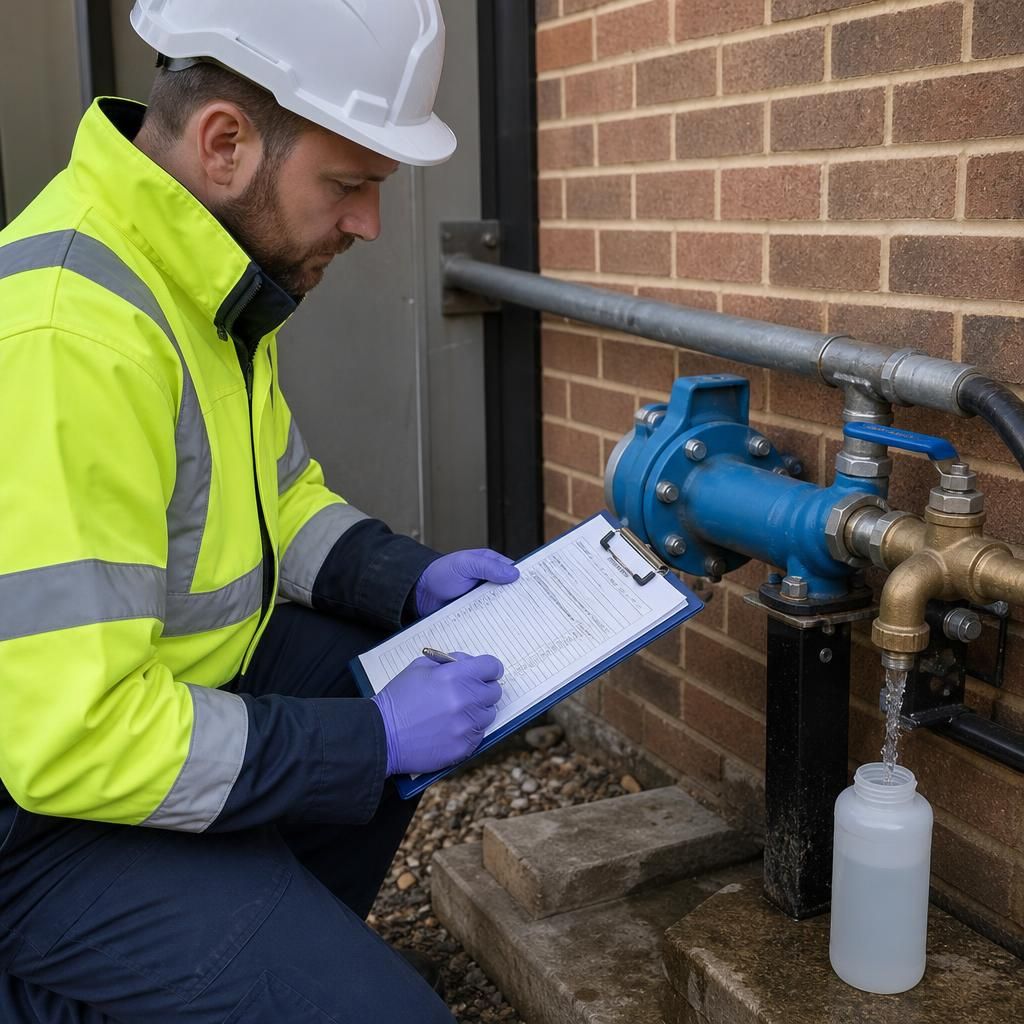
A mains water chlorination completion report should be controlled as a formal project record, not treated as an isolated test certificate. Its issue status, revision date and author should be clear, so the approved version can be distinguished from draft records or superseded results.
Document control should also show whether the report is complete, conditionally accepted or awaiting further evidence. If an updated report replaces an earlier issue, the revision should identify what changed and retain a clear record of the correction. This prevents outdated sampling results, drawings or acceptance decisions from being relied on during commissioning or future compliance reviews.
Need help reviewing a mains water chlorination completion report?
If you need help checking whether a mains water chlorination completion report contains the evidence required for handover, contact Blue Fish Water Management Ltd to discuss your documentation and compliance requirements.