
What follow-up support should a mains water chlorination provider offer after treatment?

Follow-up support after mains water chlorination should provide a controlled handover from disinfection to normal operation. It should cover the safe return of the installation to service, confirmation of the client’s operational responsibilities, advice on preventing recontamination and a clear route for dealing with any concern that arises after the work.
Safe return to service
Once the contact period and discharge arrangements have been completed, the provider should explain how the system is to be brought back into use. This may include guidance on flushing, reinstating valves and outlets, removing temporary dosing or sampling equipment and checking that outlets are correctly identified. The handover should make clear who is responsible for each step, particularly where the chlorination contractor is not the same organisation as the principal contractor, facilities team or water system operator.
The provider should also identify any restrictions that remain in place. For example, an installation may need to remain isolated until specified handover actions are complete, or certain outlets may need to be managed separately. Written instructions reduce the risk of a system being returned to service prematurely or of temporary equipment being left in place.
Practical operating guidance
Post-treatment advice should relate to the way the mains system will be used. A competent provider can explain measures such as:
- avoiding prolonged stagnation in newly commissioned or infrequently used sections;
- keeping access to valves, sample points and inspection areas clear;
- maintaining suitable housekeeping around tanks, plant and terminal fittings;
- recording changes to the installation that could affect water quality; and
- escalating leaks, dead legs, low-use areas or unusual water conditions for assessment.
This guidance is particularly important where the chlorinated main forms part of a larger building water system. Disinfection does not remove the need for suitable design, operation and maintenance after the treated section is put into use.
Clear allocation of responsibilities
The client should understand which duties remain with the site operator and which, if any, have been accepted by the chlorination provider. A useful handover identifies the responsible person, the documents that must be retained, the circumstances requiring professional input and the point at which a further site visit should be considered. This avoids the assumption that a completed disinfection exercise transfers ongoing water safety management to the contractor.
Where several parties are involved, the provider should help coordinate the handover between the client, principal contractor, plumbing or mechanical contractor, laboratory and relevant water company. This is especially useful on construction and refurbishment projects, where responsibility can change as the building moves from installation to commissioning and occupation.
Support when circumstances change
Follow-up provision should include a defined process for changes such as alterations to pipework, replacement of fittings, delayed occupation, extended shutdowns or connections to untreated sections. These events may affect whether the original disinfection remains representative of the system as finally operated. The provider should explain when a revised assessment, additional site work or a new chlorination exercise may be appropriate, rather than treating the original treatment as permanently valid regardless of later changes.
The same principle applies if a concern is raised after handover. The provider should be able to review the installation history, understand what has changed and advise on proportionate next steps. That may involve a site inspection, discussion with the responsible person or referral to another competent specialist where the issue falls outside the original scope.
Planned review rather than an automatic interval
There is no universal follow-up interval that suits every mains water project. The appropriate level of continuing support depends on factors such as system complexity, use of the premises, periods of inactivity, storage arrangements, changes made after commissioning and the client’s existing water safety arrangements. A provider should therefore recommend a review approach based on the risk profile and project requirements, not offer a standard date without considering how the system is used.
For larger or higher-risk premises, follow-up may form part of a wider water hygiene programme. In that situation, the chlorination provider can help ensure that the treated main is incorporated into the site’s water safety procedures, contractor controls and future maintenance planning. For a straightforward installation, a concise handover and clearly defined escalation arrangements may be sufficient.
In practical terms, good post-treatment support is evidenced by an orderly handover, usable operating instructions, clear responsibilities and advice that remains relevant if the installation or its use changes. The provider’s role should extend beyond carrying out the chlorination itself by helping the client maintain control of the system once treatment has finished.
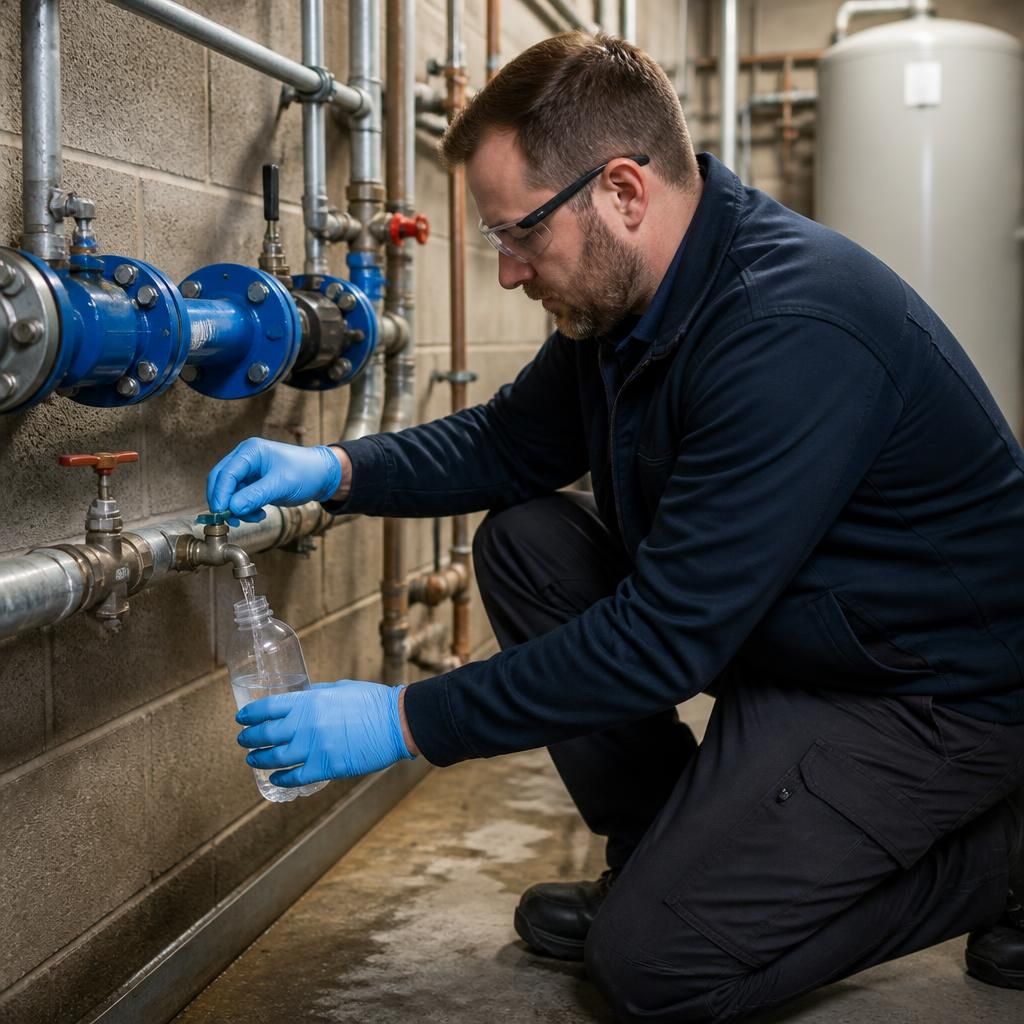
Verification testing is a central part of follow-up after mains water chlorination. The provider should arrange representative samples once the system has been flushed and returned to the appropriate operating condition, using a competent laboratory where laboratory analysis is required.
The follow-up report should identify the sampling locations, sample dates, tests completed and results obtained. It should also state whether the findings support release of the treated main for use, or whether further flushing, investigation or remedial work is needed. Results should be linked to the relevant parts of the installation so that an unsatisfactory finding can be investigated rather than treated as an isolated number.
Where samples are submitted for laboratory analysis, the provider should explain the significance of the findings in practical terms and distinguish between a completed test, a pending result and a result requiring action. A clear record of the testing provides evidence that the disinfection was checked after treatment and gives the client a reliable basis for its water safety records.
Discuss follow-up support after mains water chlorination
Discuss your post-treatment requirements with Blue Fish Water Management Ltd to establish an appropriate handover, review and escalation plan for the treated main. Their team can advise on how follow-up support should fit your water safety arrangements.