
What does commercial water chlorination involve?
Commercial water chlorination involves cleaning the water system, applying a controlled chlorine dose, allowing sufficient contact time for disinfection, and then flushing the system. Water samples are subsequently tested to verify that the treatment has achieved the required result before the system is returned to normal use.
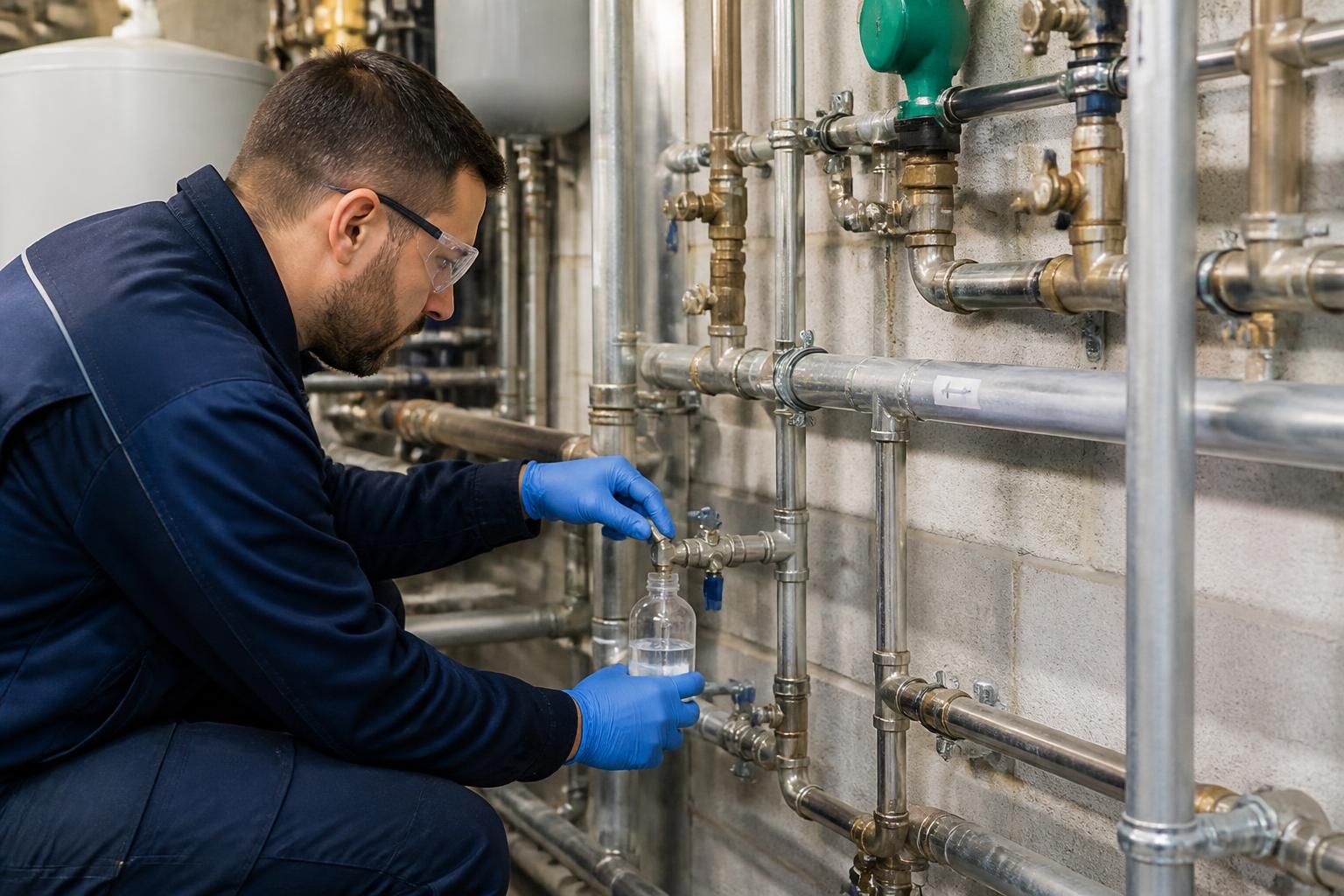
Commercial water chlorination is a planned disinfection exercise designed to reduce microbial contamination within a building’s water system. It involves assessing the installation, selecting a treatment approach that is suitable for the system and its materials, controlling the chemical hazards, and producing records that demonstrate what was done and why.
1. Pre-treatment assessment
Before treatment begins, the contractor or responsible person should establish the system’s configuration and intended use. This normally includes reviewing available schematics, identifying storage tanks, pumps, calorifiers, distribution pipework and outlets, and checking whether parts of the installation are isolated, poorly used or difficult to access. Any dead legs, redundant branches, scale, sediment or biofilm can affect how effectively chlorine reaches all parts of the system.
The assessment should also consider the reason for chlorination. A newly installed system may require disinfection before being brought into service, while an existing system may need treatment following contamination, remedial work or an unsatisfactory investigation. The required approach can differ according to the water source, system design, pipe materials, volume and condition of the installation.
2. Planning and preparation
Commercial chlorination can affect occupants, tenants, production activities and other water users, so the work needs to be planned with the site’s responsible person. The plan should identify isolation points, access requirements, outlets to be operated, areas that could be affected and arrangements for communicating the interruption or restricted use of water.
Chlorine is a hazardous substance and must be handled under appropriate risk controls. This includes selecting suitable personal protective equipment, controlling access to the work area, providing adequate ventilation and following the relevant chemical safety information. Chemicals must not be mixed with incompatible substances. The treatment plan should also account for sensitive equipment, specialist processes and components that could be damaged by the chosen chemical or exposure conditions.
3. Reaching the whole system
Effective treatment depends on disinfectant reaching every relevant section at the required strength. Operators may need to open outlets in a controlled order, operate valves, circulate water or address sections that are not reached by normal flow. Storage cisterns, shower supplies, low-use outlets and secondary branches require particular attention because they can be overlooked during routine operation.
Where the system contains significant deposits or established contamination, physical cleaning may be necessary as part of the remedial work. Chlorination alone may not remove scale, sludge or organic material that protects microorganisms from the disinfectant. In some situations, defective components, redundant pipework or design issues must be corrected before disinfection can provide a reliable result.
4. Treatment controls
The chlorine dose and contact conditions are selected for the individual installation rather than applied as a universal setting. The operator must account for chlorine demand, water temperature, pipework materials, system volume and the purpose of the treatment. Measurements during the work help confirm that the intended conditions are being maintained at representative points, rather than assuming that the concentration is uniform throughout the building.
Commercial sites may require the work to be divided into manageable sections so that treatment can be controlled without exposing unaffected areas to unnecessary disruption. Where water is used for drinking, food preparation, healthcare activities or manufacturing, the release of the system back into service should be subject to the site’s documented acceptance requirements.
5. Reinstatement and documentation
After treatment, the system must be returned to its normal operating condition in a controlled manner. This includes checking that valves are correctly positioned, storage arrangements are restored, outlets are usable and any temporary dosing or sampling equipment has been removed. Treated water may need to be managed before discharge to prevent excessive chlorine entering drains, watercourses or processes that are sensitive to disinfectant.
The completed record should normally identify:
- the system or sections treated;
- the reason for the work and the date it took place;
- the chemicals, equipment and treatment conditions used;
- any areas that could not be treated or any deviations from the plan;
- sampling details and laboratory or field test results; and
- follow-up actions, restrictions or recommendations.
These records form part of the site’s water hygiene documentation and can support the responsible person’s wider control programme. Chlorination is not a replacement for ongoing management: storage tanks, temperatures, circulation, outlet use, cleanliness and monitoring still need to be controlled after the intervention. Where the findings indicate an underlying design or maintenance problem, corrective work may be more important than repeating disinfection alone.
For a commercial premises, the appropriate treatment method should therefore be based on a documented assessment of the water system, the reason for intervention and the risks to users. Specialist water hygiene advice can help determine the scope of work, coordinate safe treatment and interpret the resulting evidence in the context of the site’s compliance requirements.
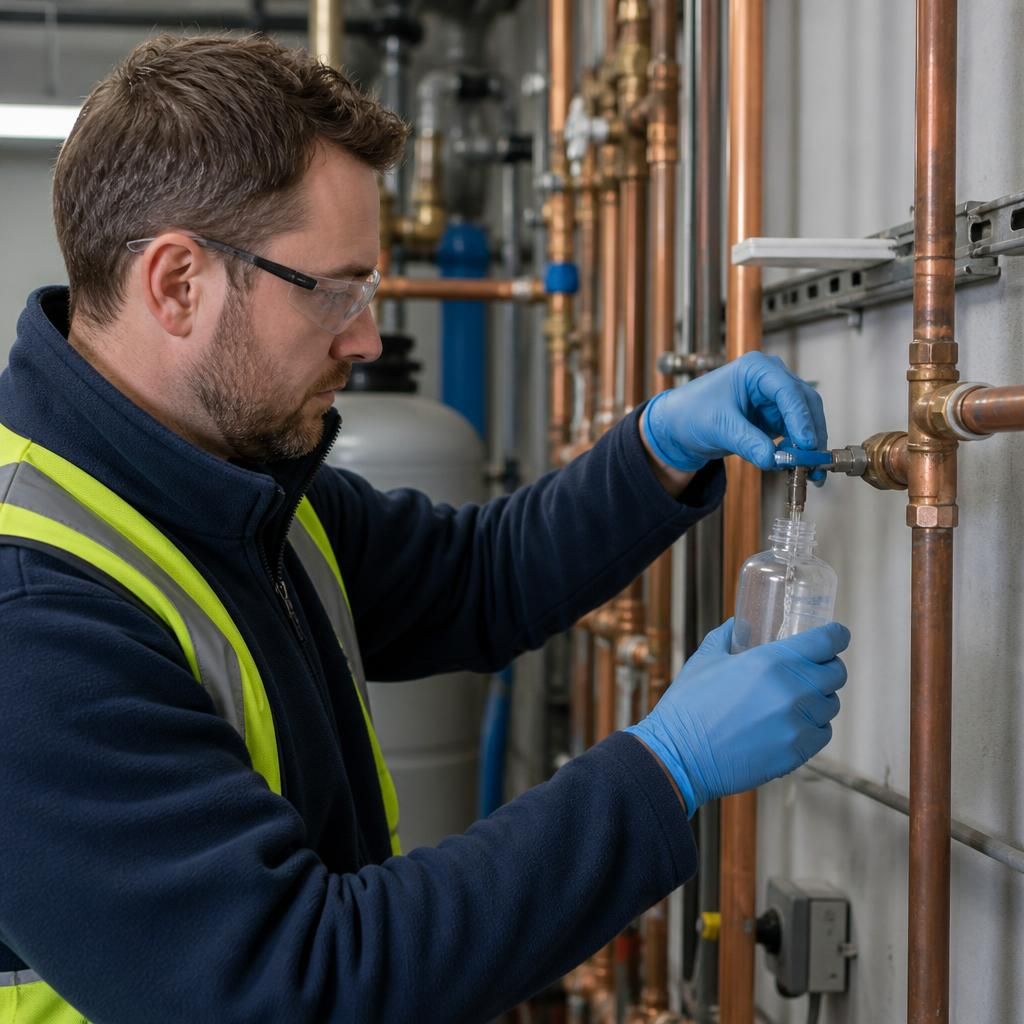
Commercial water chlorination is a controlled, temporary intervention rather than a permanent method of maintaining water quality. Its purpose is to address a defined disinfection need within the system, while routine controls continue to manage conditions that could allow contamination to return. The treatment record should therefore be considered alongside the site’s water hygiene risk assessment, monitoring results, maintenance history and any outstanding remedial work.
This distinction is important when reviewing a chlorination certificate. A satisfactory treatment result confirms the conditions achieved during that intervention; it does not, by itself, demonstrate that the system will remain hygienic indefinitely. Ongoing management may still require attention to water temperatures, tank condition, circulation, outlet usage and system alterations.
Discuss your commercial water chlorination requirements
Discuss your commercial water chlorination requirements with Blue Fish Water Management Ltd to review the treatment scope, site constraints and documentation needed for your water hygiene records.