
How is water chlorination verified after treatment?
Water chlorination is verified by measuring disinfectant residuals at representative points after the required contact period, then checking that the results meet the treatment specification. Depending on the system and purpose of the work, verification may also include microbiological sampling, inspection records and a documented compliance review.
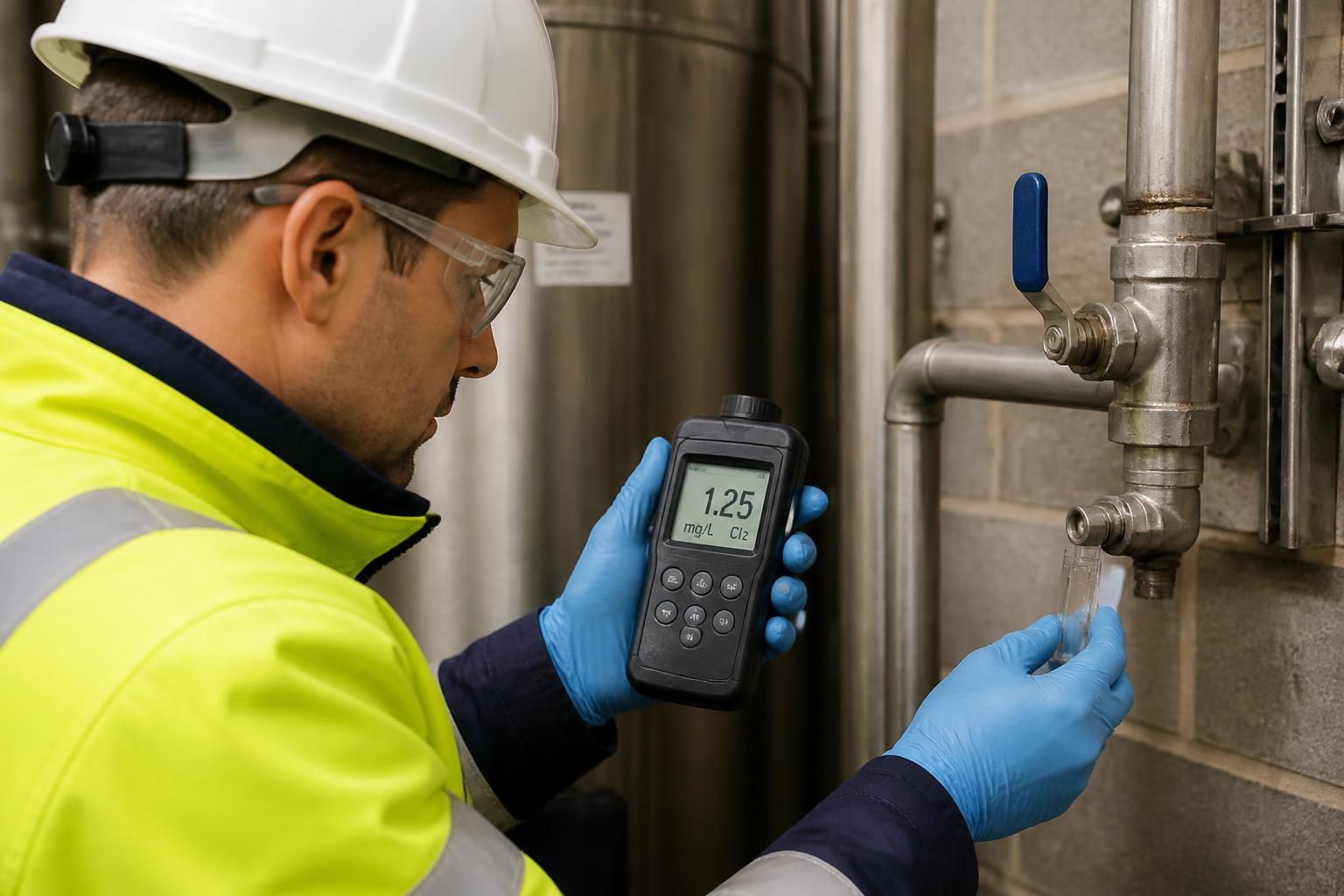
Verification after water chlorination is an evidence-based check that the treatment was completed correctly and that the system can be returned to use safely. It normally combines treatment records, field measurements, physical inspection and, where required, microbiological test results rather than relying on a single chlorine reading.
The main stages of verification are:
- Confirming the treatment record. The person responsible should record which parts of the system were included, the disinfectant used, the dose applied, the start and finish times, the contact period and any conditions that could affect performance. This provides evidence that the planned method was followed.
- Checking the water during or immediately after treatment. Free chlorine is usually measured with a suitable field instrument at selected outlets and other representative locations. Results should be linked to the sampling point, time and relevant system conditions. The reading needs to be interpreted alongside factors such as pH, temperature, water demand and the presence of organic material, because these can affect disinfection performance.
- Assessing the whole system. A result from a convenient tap does not necessarily represent tanks, remote outlets, branches or sections with limited circulation. Verification should therefore cover locations selected from the system layout and risk assessment. The assessment may also identify dead legs, poor access, contamination sources, damaged components or areas that were not adequately flushed.
- Checking the system after flushing. Following treatment, the disinfectant is removed or reduced in accordance with the approved procedure before the system is put back into normal use. Water quality and residual disinfectant are checked to confirm that the system has been flushed appropriately and that the final condition is suitable for its intended use.
- Completing microbiological sampling where specified. Samples may be sent to a competent laboratory to provide additional evidence about the microbiological condition of the water after treatment. Sampling points, sample containers, transport arrangements and laboratory methods all affect the value of the result. The report should therefore be read together with the treatment and flushing records, not in isolation.
Acceptance criteria depend on the system and purpose of the work. A newly installed system, a system undergoing remedial disinfection and a potable water installation may have different project specifications or sampling requirements. The relevant risk assessment, contract specification, industry guidance and water safety procedures should establish what constitutes an acceptable result. There is no single chlorine value that proves every type of system has been satisfactorily treated.
Good records make the verification auditable. A useful completion pack normally includes the treatment method, system drawings or sampling schedule, field readings, equipment details, calibration information, laboratory reports where applicable, flushing records, any non-conformities and the actions taken. It should also identify who carried out the work and when each check was completed. This allows a responsible person, facilities manager or auditor to trace the decision to return the system to service.
If a result does not meet the agreed criteria, the system should not simply be signed off. The cause may be inadequate circulation, insufficient contact, incomplete flushing, a hidden section, continuing contamination or an error in sampling. The appropriate response may include further investigation, cleaning, repairs, repeat chlorination or additional sampling. Any corrective action should be recorded, followed by verification of the affected areas.
Verification is separate from ongoing water hygiene management. A satisfactory post-treatment result confirms the condition demonstrated by that particular treatment and sampling exercise; it does not remove the need for routine monitoring, maintenance and review. Changes to tanks, pipework, outlets, usage or operating conditions can require the water safety arrangements to be reassessed.
Blue Fish Water Management Ltd can support businesses with water hygiene testing, compliance reviews and documented legionella control advice. The appropriate verification approach should be agreed before treatment begins so that the sampling points, acceptance criteria and records provide clear evidence of what has been achieved.
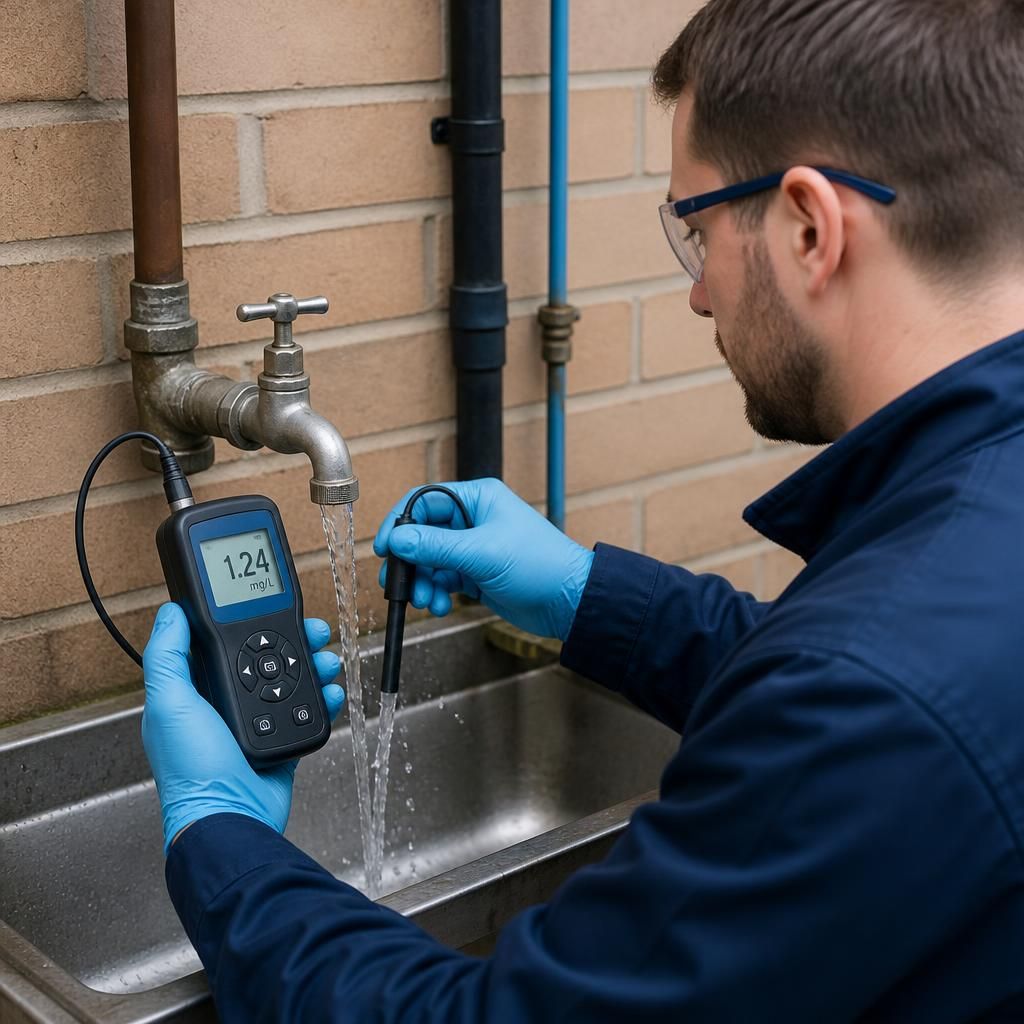
A chlorine reading is only useful evidence when the test method is suitable for the concentration being measured and the instrument is working correctly. Before sampling, the operator should check the meter or test kit, use in-date reagents where applicable, and follow the stated procedure for sample volume, reaction time and temperature. The sample cell must also be clean, since residue or contamination can distort the result.
Results should be recorded with the measurement unit, sampling location, time and instrument identification, alongside any calibration or performance checks. This creates a traceable link between the number reported and the condition of the system at that point. If readings are inconsistent or outside the instrument's reliable range, they should be investigated and repeated using an appropriate method rather than treated as definitive evidence.
Discuss your water chlorination verification requirements
Discuss your water chlorination verification requirements with Blue Fish Water Management Ltd to determine the appropriate evidence and documentation for your system.