
What checks demonstrate that a commercial water filter remains suitable?
A commercial water filter remains suitable when documented checks confirm that it is hygienically maintained, performing its intended treatment effectively, correctly sized for the application and operated in line with the manufacturer’s requirements. Review inspection and maintenance records, water quality test results, flow and pressure performance, filter condition, replacement intervals and any relevant risk assessment or compliance actions.
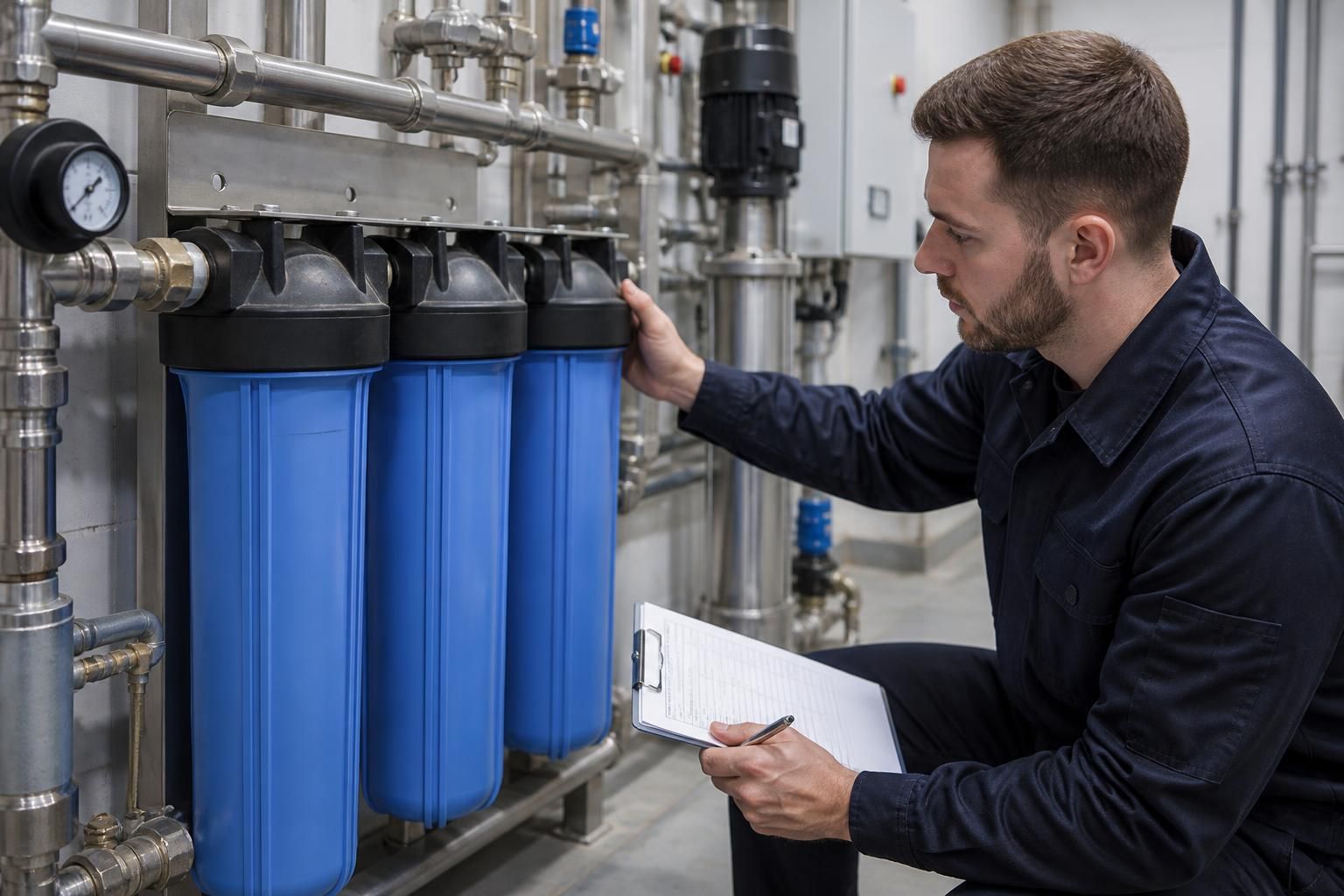
A commercial water filter remains suitable when there is current, documented evidence that its design, installation and operation match the premises’ water use and treatment objectives. The most reliable demonstration is a formal review that compares the filter’s specification and intended application with actual site conditions, then confirms that the system continues to produce water of the required quality without creating a hygiene or operational risk.
Start with the treatment objective. The business should be able to state what the filter is intended to control, where treated water is used and what level of treatment is required. A filter selected for taste and odour improvement, for example, should not be treated as evidence of control for a different contaminant or microbiological hazard. The assessment should identify whether the original water-quality assumptions remain valid and whether the filter is being used only for the purpose for which it was selected.
Check that the design still suits the premises. Compare the filter’s rated capacity and operating conditions with the actual number and type of outlets, peak demand, hours of use and available supply pressure. Changes such as a building extension, additional catering equipment, altered occupancy or a change in production activity can make an originally suitable unit inappropriate. The review should also consider whether untreated and treated supplies have been clearly separated and whether water can bypass the filter unintentionally.
Verify the installation and associated controls. A site inspection should confirm that the unit is accessible for servicing, correctly connected, securely supported and protected from damage, contamination and unauthorised alteration. Pipework, valves and connections should be checked for leaks and incorrect flow direction. Where the installation could affect wholesome water supplies, the responsible person should also examine backflow protection, segregation and any cross-connection risks identified by the site’s water safety arrangements.
Examine evidence rather than relying only on visual appearance. A clean-looking housing does not establish that treatment is effective, while discolouration or a pressure change may indicate a developing fault. Suitable evidence can include laboratory results where testing is justified, operational readings, inspection findings, service reports and documented observations from users. Results should be interpreted against the treatment objective and the conditions of use, not considered in isolation.
Review the maintenance method. The procedure should explain how the filter is isolated, opened, cleaned or sanitised where applicable, reassembled and returned to service. It should identify who may carry out each task and what checks are required afterwards. Particular attention is needed to prevent contamination during cartridge changes or other interventions. A maintenance record should show the date, equipment concerned, work completed, parts or consumables used, findings and any follow-up action.
Confirm that replacement decisions are controlled. Replacement should be based on the filter’s specified service conditions and evidence from the site, rather than on an informal assumption that all units last the same length of time. The review should confirm that the correct replacement component is used, that stock is traceable where necessary and that overdue changes are identified. If the unit has reached the end of its service life, repeated maintenance alone may not demonstrate continuing suitability.
Check changes in the surrounding water system. Alterations to incoming water, storage tanks, pumps, pipework, outlet use or cleaning regimes can change the risk profile. A filter review should therefore be revisited after refurbishment, a change of tenant or process, persistent water-quality concerns, an incident involving contamination, or a significant change in demand. The findings should be considered alongside the premises’ water hygiene risk assessment rather than treated as a separate exercise.
Assess records for consistency and action. Useful records show what was checked, the result, the person completing the check, the date and any corrective action. Isolated entries are less persuasive than a consistent history showing that faults are identified, investigated and closed. Where a result is outside the expected range, the record should explain whether the filter was isolated, serviced, retested or referred for further technical assessment.
A competent reviewer should be able to follow a clear chain of evidence: the filter has a defined purpose, the application remains within its design parameters, the installation is controlled, maintenance is carried out correctly, and any adverse findings lead to proportionate action. If that evidence is incomplete, the filter should be treated as requiring investigation rather than automatically assumed to remain suitable.
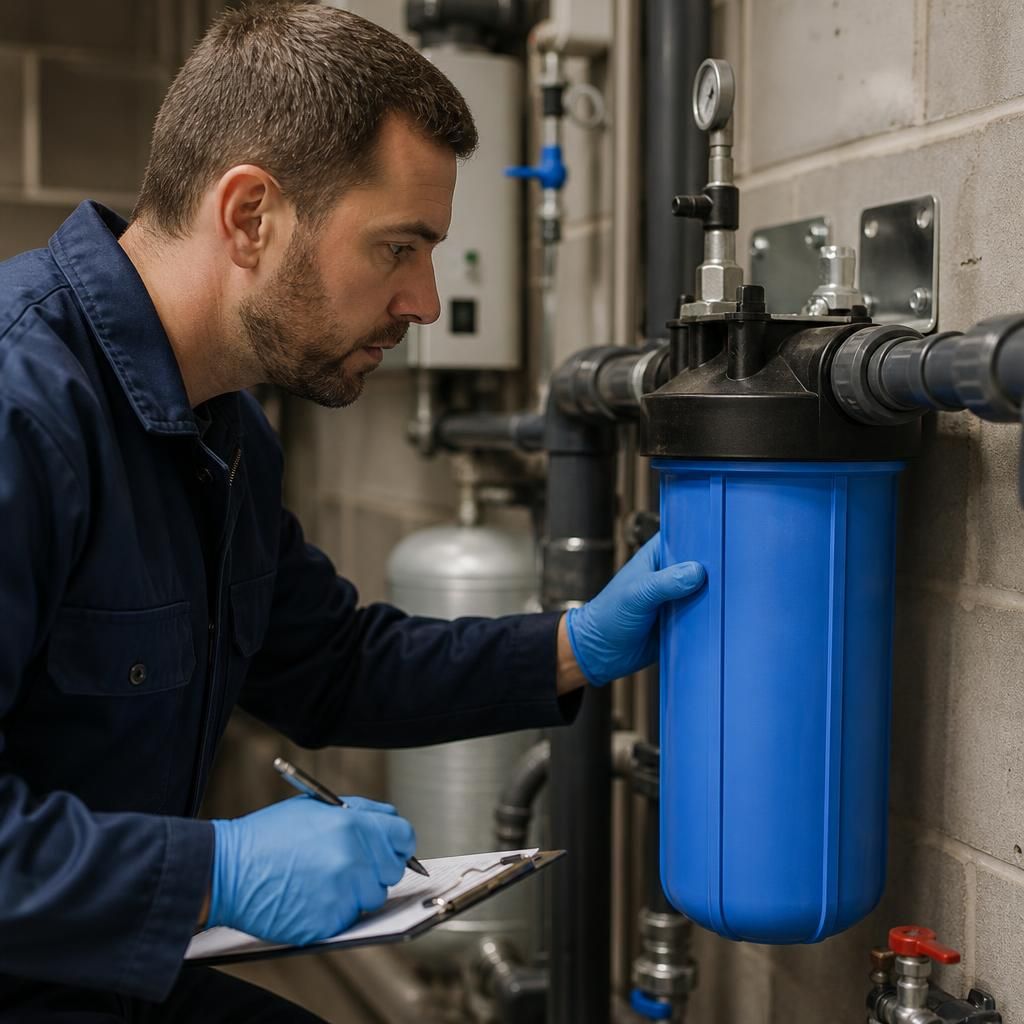
Water test results only demonstrate that a commercial water filter remains suitable when the sampling process is reliable. Samples should be taken from clearly identified points that represent the water supplied by the filter, using a consistent method and suitable containers. The record should state the date, location, sample point, test requested and any relevant operating conditions at the time.
Results should be linked to the filter’s treatment purpose and reviewed alongside the sampling information. An unexpected result may reflect a filter fault, contamination at the outlet, inadequate flushing or a sampling error, so it should not be dismissed or attributed to the filter without investigation. Where results are unclear or adverse, further sampling, technical review and documented corrective action may be needed before continued use is accepted.
Need Help Reviewing Your Commercial Water Filter?
If your records do not clearly demonstrate that a commercial water filter remains suitable, contact Blue Fish Water Management Ltd to discuss a structured review of the system, its evidence and any required corrective actions.