
Can one commercial filter remove both fluoride and chlorine?
Yes, a commercial filtration system can be designed to reduce both fluoride and chlorine, but a single filter medium will not usually remove them equally well. Chlorine is commonly addressed with activated carbon, while fluoride requires a suitable specialist medium or reverse osmosis, so the system must be selected and maintained according to the incoming water chemistry, flow demand and required treatment performance.
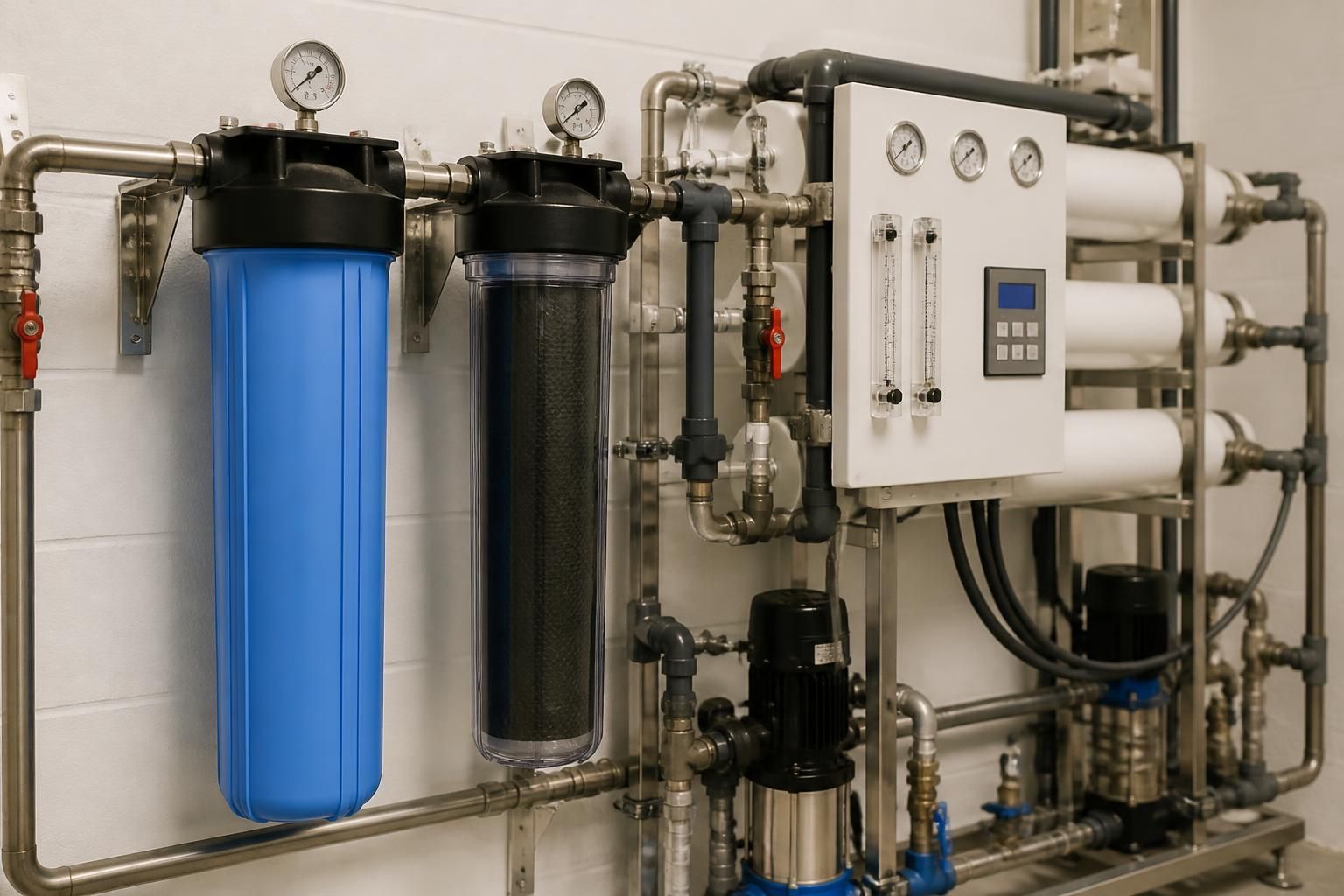
The practical answer depends on whether “one filter” means one housing or one treatment process. A commercial system can combine treatment stages in a single assembly, but fluoride and chlorine behave differently in water and must be assessed separately. A cartridge that performs well for chlorine should not be assumed to provide meaningful fluoride reduction.
Why the distinction matters: chlorine is a disinfectant residual that can often be reduced through contact with activated carbon. Fluoride is a dissolved ionic contaminant, so its reduction depends on the chemistry of the water and the properties of the treatment medium. Conventional sediment filters, particulate filters and standard carbon cartridges are not reliable substitutes for a fluoride-specific process.
There are several ways to configure treatment for both substances:
- Combined cartridge systems: separate media can be installed in stages within one commercial unit. One stage may reduce chlorine while another is selected for fluoride. This arrangement remains dependent on correct sizing, contact time, pressure and the manufacturer’s stated operating conditions.
- Reverse osmosis: a suitably designed reverse osmosis system can reduce a broad range of dissolved substances, including fluoride, while carbon pre-treatment can protect the membrane and reduce chlorine. Reverse osmosis produces a treated stream and a concentrate or reject stream, so drainage, storage and operating controls need to be considered.
- Specialist adsorption or ion-exchange media: these may be appropriate where reverse osmosis is unsuitable, but their performance can be affected by pH, alkalinity and other dissolved ions. They may also require regeneration or replacement under defined conditions.
A key limitation is that treatment performance is not determined by the filter label alone. The incoming water analysis should be reviewed for fluoride concentration, chlorine form, pH, hardness, alkalinity, turbidity and other substances that could consume capacity or interfere with removal. The required treated-water quality must also be stated clearly. Water intended for drinking, food preparation, process use or equipment supply may have different treatment criteria.
Flow demand is equally important. A filter selected for a small drinking-water outlet may not provide adequate contact time or capacity when used across a larger commercial supply. Peak flow, daily volume, operating pressure, temperature and whether demand is continuous or intermittent should be used when sizing the system. If a unit is undersized, water may pass too quickly through the media or the treatment capacity may be exhausted sooner than expected.
Point-of-use treatment and whole-premises treatment should not be treated as the same application. A point-of-use unit can focus on a defined outlet, whereas a system serving multiple outlets must account for pipework, simultaneous demand, storage and stagnation. Where treated water is stored or distributed, the design should also consider how treatment affects the control of microbial growth. Removing chlorine from water can remove part of the disinfectant residual, making hygiene controls, cleaning and monitoring particularly important.
Maintenance requirements differ between the treatment stages. Sediment pre-filters may need changing when pressure loss increases or at the specified service interval. Carbon and specialist media have finite capacity, even when the water still appears clear. Reverse osmosis membranes can foul or scale and may need performance checks, cleaning or replacement. A maintenance plan should identify the component, its operating limit, the evidence used to decide when it needs attention and the person responsible for recording the work.
Visual checks alone cannot demonstrate that fluoride or chlorine reduction is still being achieved. Suitable verification may include testing treated water, checking pressure and flow, reviewing usage against media capacity and confirming that the system has not been altered or bypassed. Results should be compared with the original design specification rather than relying only on taste, odour or appearance, because water can look and smell normal while dissolved fluoride remains present.
For a commercial installation, the selection process should therefore document the source-water analysis, intended use, treatment objectives, design flow, media or membrane specification, anticipated maintenance and verification method. If the water chemistry changes, the source is altered or demand increases, the treatment assessment should be revisited. A single packaged system may be a suitable way to manage both requirements, but only when each treatment stage is matched to its contaminant and the complete installation is operated as a controlled water-treatment system.
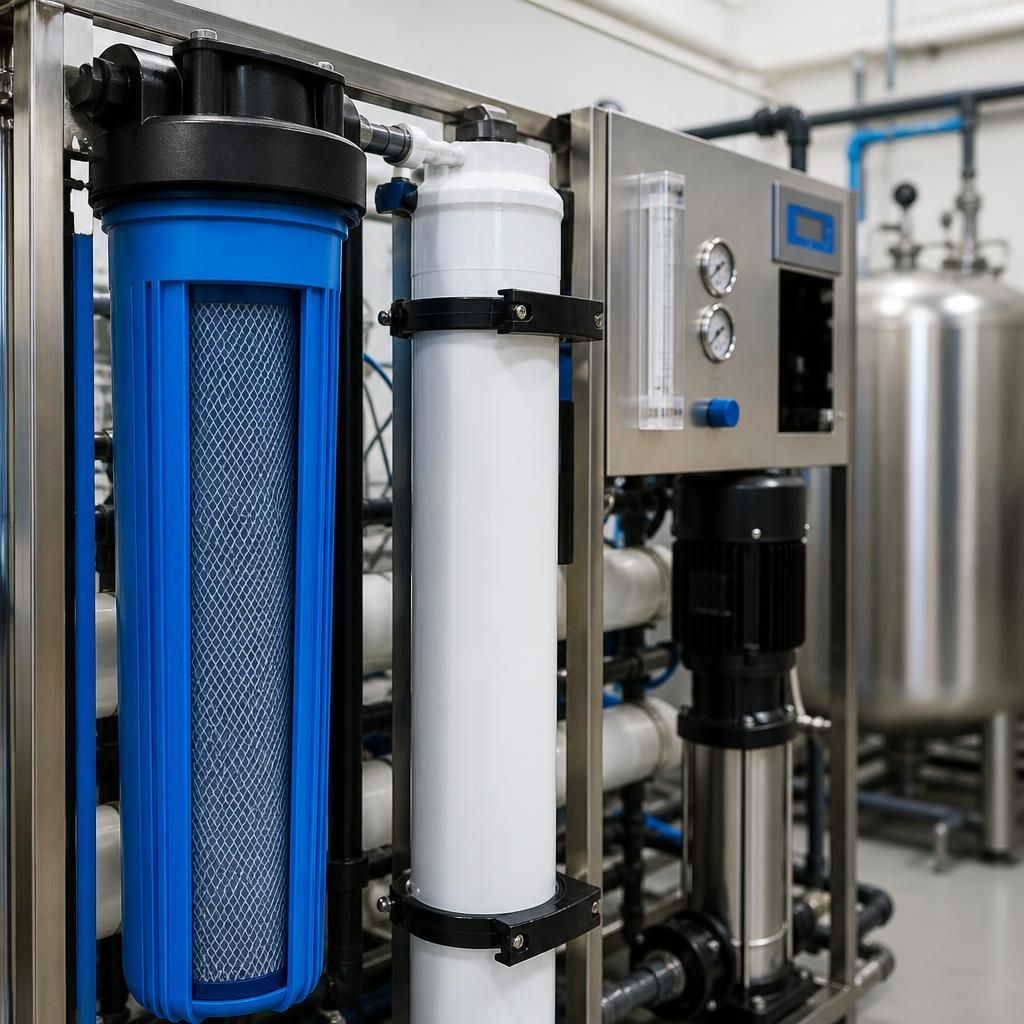
Chlorine treatment must be matched to the form of chlorine present. Activated carbon commonly reduces free chlorine, but water containing chloramine may require a different carbon specification, longer contact time or an additional treatment stage. A filter described simply as a “chlorine filter” therefore does not provide enough information to judge performance.
Before selecting a commercial unit, establish whether the supply contains free chlorine, chloramine or another disinfectant residual, then check the manufacturer’s performance data for that specific condition. This prevents the chlorine stage from being treated as interchangeable with the fluoride stage and helps ensure that the complete system is assessed against the water it is actually intended to treat.
Discuss your commercial fluoride and chlorine filtration requirements
Discuss your commercial fluoride and chlorine filtration requirements with Blue Fish Water Management Ltd to identify a suitable treatment approach for your water system.