
How are Legionella water samples collected for laboratory testing?
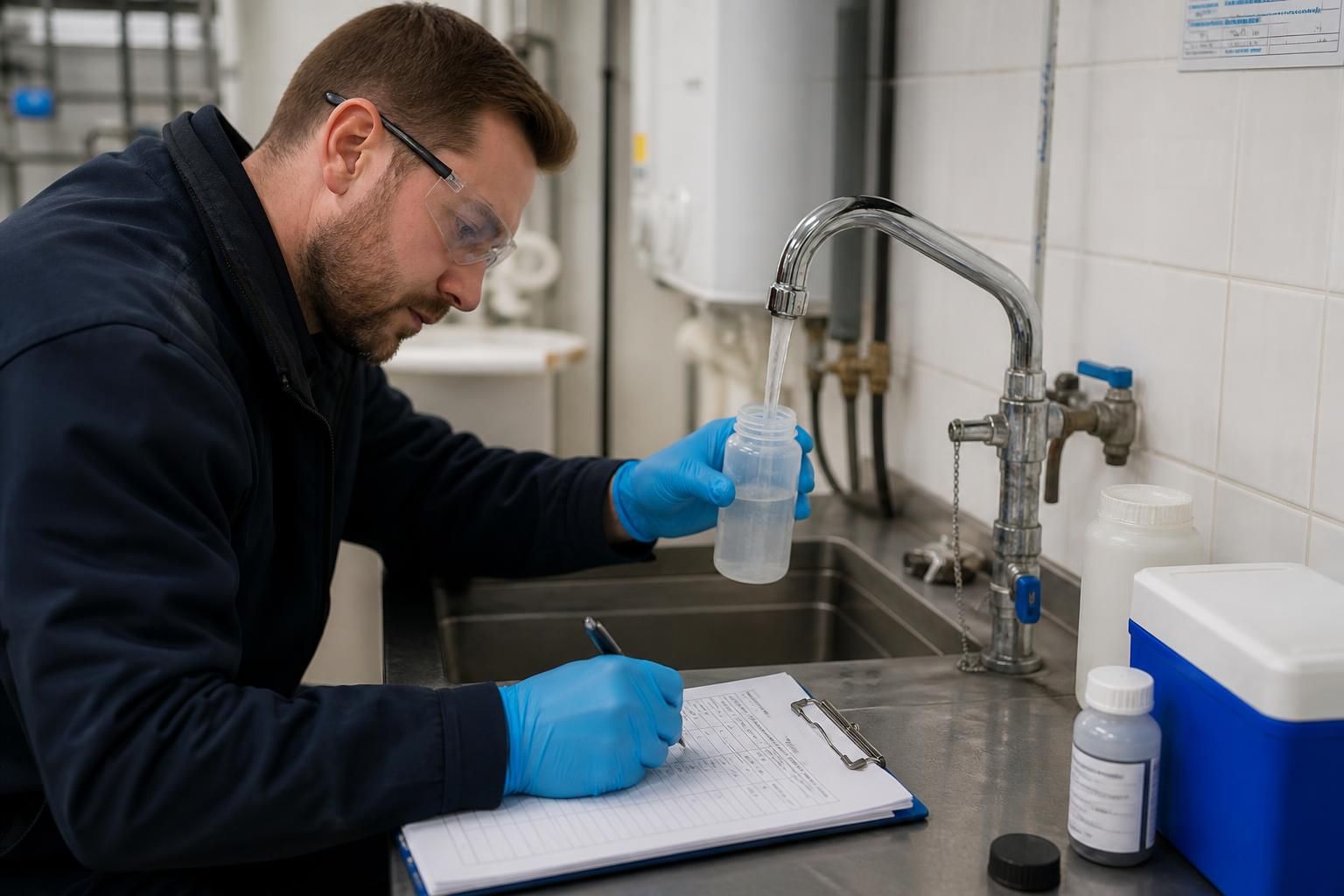
Legionella water samples are collected using a documented sampling plan that matches the purpose of the investigation. The sampler identifies representative outlets and system components, takes the sample without introducing contamination, records relevant conditions and maintains the sample’s integrity until the laboratory receives it. The result is only meaningful when considered alongside the water system’s design, operating conditions, temperature records and maintenance history.
Sampling begins with planning. The person taking the samples should review available schematic drawings, the written control scheme, previous results, risk assessment and any recent changes to the system. Sampling locations may include sentinel outlets, infrequently used outlets, calorifier or storage tank points, return circulation points and areas with known stagnation or low flow. The selection depends on whether the purpose is routine monitoring, investigating an elevated result, checking a suspected source or verifying remedial work.
The sampler should identify each outlet precisely and assess its condition before taking the sample. Taps, showerheads, hoses, spray fittings and other detachable accessories can harbour biofilm or alter the sample, so the sampling instructions must state whether they are removed, sampled in place or assessed separately. The outlet should not be touched internally, and unnecessary movement, cleaning or adjustment should be avoided immediately before sampling.
Different sampling approaches answer different questions:
- Point-of-use or first-draw samples can indicate the water present at an outlet before it has been flushed. They may help identify contamination associated with the outlet, its flexible connection or local pipework.
- After-flush samples can provide information about water further back in the distribution system. The flushing time or volume must be defined and recorded rather than left to personal judgement.
- Hot- and cold-water samples should be distinguished clearly, because temperature and system configuration affect how results are assessed.
- System samples from tanks, calorifiers, return loops or other accessible components can help investigate conditions within the wider installation, but they require suitable access and controls to prevent disturbance or exposure.
Sampling should follow the laboratory’s instructions for the required test. The container must remain closed until it is filled, and the sampler should avoid contact with the inside of the cap or bottle. Where the container contains a preservative, it should not be rinsed out. The bottle is filled to the required level without overflowing, leaving any headspace specified by the laboratory. A preservative such as sodium thiosulfate may be used where residual disinfectant could continue killing organisms after collection; the laboratory determines the appropriate container and preservative for its method.
Disinfection of an outlet immediately before collection can remove or reduce organisms that the sample is intended to detect. Conversely, failing to control an outlet that has recently been cleaned, disinfected or altered may make the result difficult to interpret. The sampler therefore records relevant treatment, cleaning, flushing and maintenance activity, and follows the agreed method for the investigation. A sample taken to assess normal system conditions is not collected in exactly the same way as one intended to investigate a suspected localised source.
Temperature measurements are commonly taken at the time of sampling, using a suitable calibrated instrument and a defined method. The record may include the initial temperature, temperature after an agreed period of flushing, outlet identification, water type, flow condition and any abnormal observations. Other useful observations include dead legs, low-use outlets, poor flow, scale, biofilm, damaged fittings and evidence of recent works. These details help the laboratory report to be interpreted in its operational context.
Good sampling practice also considers health and safety. Running a shower or spray outlet can generate aerosols, which may increase exposure to Legionella. The sampler should use the site’s risk controls, suitable personal protective equipment and a method that limits aerosol generation. Where a vulnerable person could be exposed, the activity should be coordinated with the responsible person and carried out in accordance with the water safety plan. Sampling must not create an avoidable exposure risk or compromise the system’s control measures.
After collection, the samples are kept within the laboratory’s specified temperature range and protected from excessive heat, freezing, light and physical damage. They should reach the laboratory within the required holding time, with the accompanying documentation identifying the sample, collection conditions and requested analysis. The chain of custody should account for transfer from the sampler to the laboratory, particularly where results may support an investigation, compliance decision or remedial action.
The laboratory normally examines the sample using a validated method for detecting and enumerating Legionella. Culture-based analysis requires time for incubation and confirmation, so a result is not an instant indication of system status. A negative result does not prove that Legionella is absent from every part of the water system: it applies to the sample collected at that location and time, within the limitations of the method. A positive or unexpected result should be reviewed with the sampling information, other microbiological findings, system temperatures and control records before deciding what further investigation or action is appropriate.
For that reason, repeat samples should not be taken casually or used to obtain a more favourable result. If the first collection was affected by an incorrect container, poor identification, unsuitable transport, contamination or a departure from the agreed method, the issue should be documented and the sampling plan reviewed. Where results are significant, an appropriately competent water hygiene professional can help determine whether additional points, different sample types or system examination are needed.
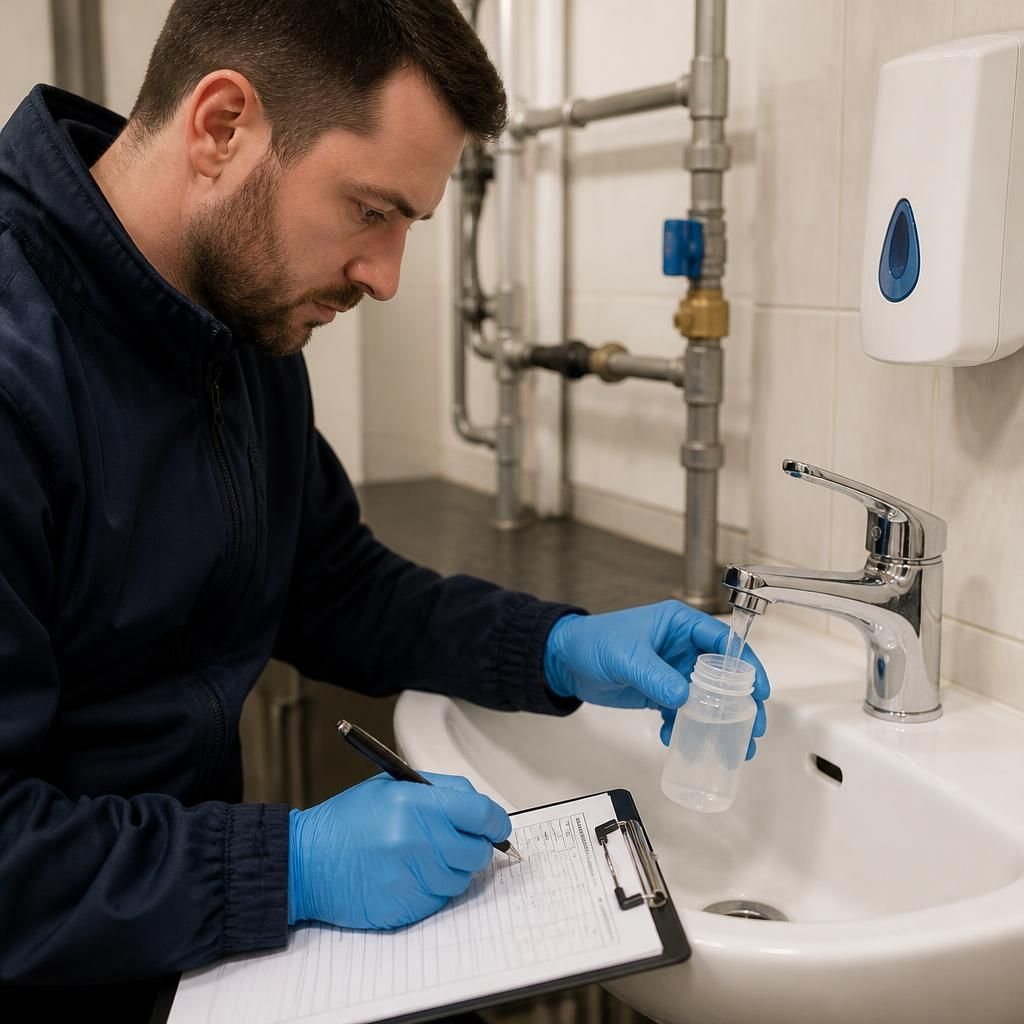
Need advice on Legionella water sample collection?
If you need advice on planning or reviewing Legionella water sample collection, speak to Blue Fish Water Management Ltd about a sampling approach suited to your water system and testing objectives.