
Who is responsible for arranging Legionella testing in a business?
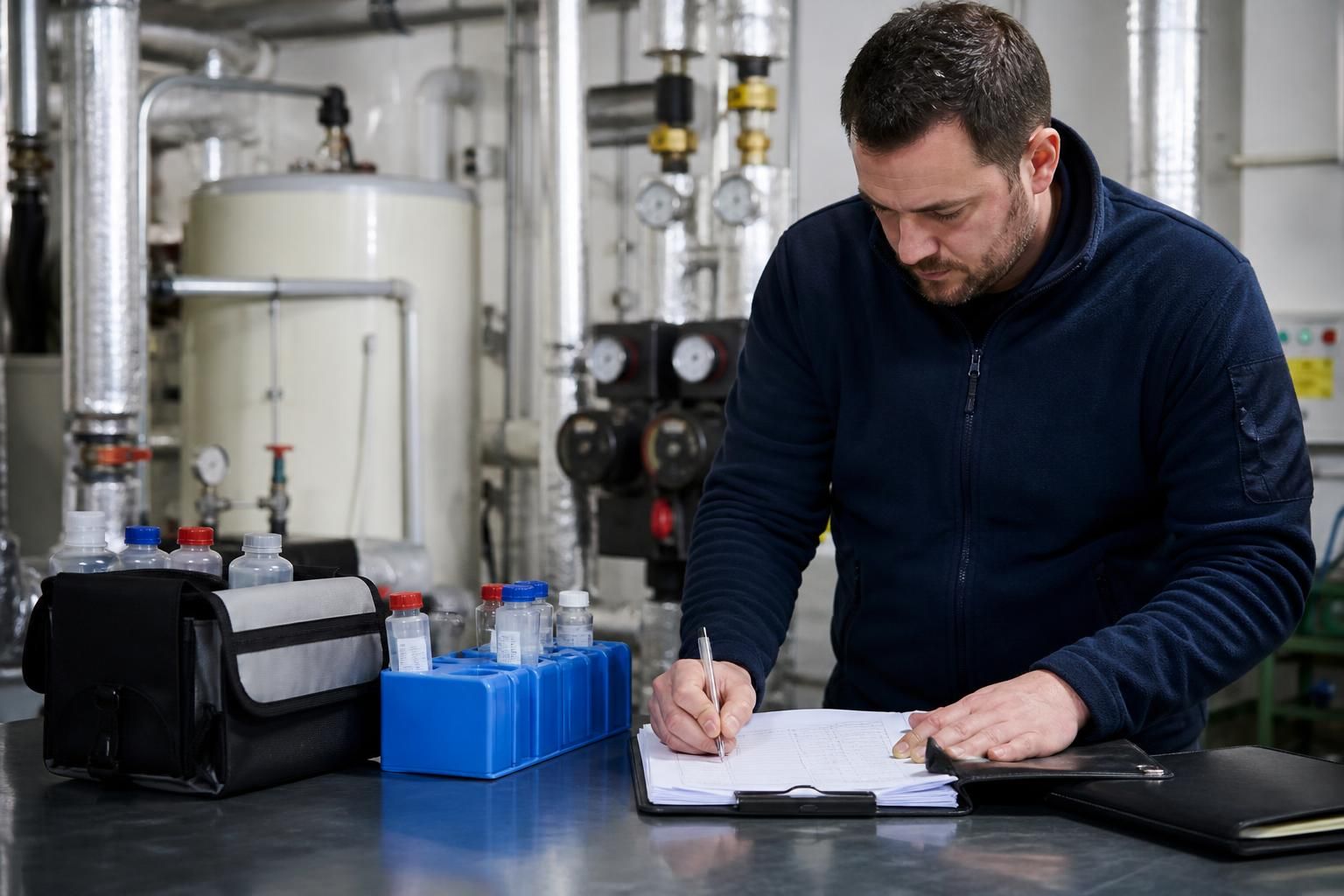
Responsibility for arranging Legionella testing normally rests with the person who has control of the business premises or the water system, often referred to as the dutyholder or responsible person. This may be an employer, building owner, landlord, facilities manager or another appointed individual, depending on who controls the premises and how responsibility is allocated.
The responsible person does not necessarily collect samples or perform the laboratory analysis personally. Their duty is to make sure that testing is considered within the water hygiene risk assessment, arranged where justified, carried out by a suitably competent provider and followed by appropriate action. Delegating the practical work does not remove the underlying management responsibility.
Who may hold responsibility?
- An employer: Where an organisation occupies and controls its own workplace, the employer will commonly be responsible for managing the risks associated with its water systems.
- A building owner or landlord: The owner may be responsible for systems serving common areas, central plant or several occupiers, particularly where the owner retains control over maintenance and water services.
- A facilities or property manager: Responsibility may be assigned to a facilities manager or managing agent, provided the appointment gives them sufficient authority, resources and competence to manage the required controls.
- A tenant or occupier: A tenant may be responsible for systems within its control, even where another party owns the building. The lease, service agreement and actual division of operational control should be checked rather than relying on ownership alone.
- Several dutyholders: In a multi-occupancy building, more than one organisation may have duties. They should co-operate, exchange relevant information and clearly document which party arranges testing for each part of the system.
Under the Health and Safety at Work etc. Act and the Control of Substances Hazardous to Health Regulations, employers and others controlling premises must assess and control risks that could expose people to harmful substances, including Legionella bacteria. The HSE's Approved Code of Practice L8 and associated guidance set out the recognised approach for managing Legionella risk in water systems. The precise testing programme should be based on the findings of the risk assessment rather than applied as an automatic requirement to every business.
The responsible person's practical duties
Arranging a test is only one part of the responsibility. A suitable management process should establish:
- which water systems and outlets fall within the organisation's control;
- who is appointed to manage Legionella risk and what authority they have;
- whether the risk assessment calls for routine or investigative sampling;
- which sampling locations, methods and laboratory arrangements are appropriate;
- how results will be recorded, reviewed and communicated;
- what thresholds, trends or other findings require investigation or remedial work; and
- when the assessment and testing programme must be reviewed.
The nominated person should also make sure that relevant information is available to the testing provider. This may include system schematics, asset registers, temperature records, previous analytical results, maintenance history and details of vulnerable occupants or higher-risk processes. Without this context, a laboratory result may not provide a complete picture of the system's condition.
When might testing be arranged?
Testing may be included in a planned monitoring programme where the risk assessment identifies a meaningful risk, particularly for systems that store or distribute warm water, have periods of stagnation, contain complex pipework or serve people who may be more susceptible to infection. Additional sampling may be appropriate after remedial work, changes to the water system, prolonged inactivity, suspected contamination or an unexpected change in control results.
Not every business water system requires the same frequency or extent of sampling. A competent risk assessor should explain why testing is needed, what it is intended to establish and how the result will affect the control plan. Ordering tests without defining those purposes can produce data that is difficult to interpret or does not address the actual risk.
Can the responsibility be outsourced?
A business can appoint a competent consultant, water hygiene specialist or laboratory to arrange sampling and testing. It can also use a facilities contractor to manage the wider monitoring programme. The appointment should be recorded in writing and should define the scope of work, reporting arrangements, escalation procedures and responsibility for implementing corrective action.
Outsourcing does not mean that the building owner or employer can disregard the results. The responsible person should understand the report, ensure that recommendations are assessed and confirm that actions are completed. A testing company generally provides technical services; it does not automatically become the legal dutyholder simply because it has been contracted to take samples.
What should businesses check?
- Identify who controls each water system, including shared systems and landlord-managed services.
- Review the Legionella risk assessment and confirm whether testing is required and for what purpose.
- Appoint a provider with suitable experience, competence and laboratory arrangements for the required analysis.
- Agree sampling points, responsibilities and reporting routes before the samples are taken.
- Give the responsible person access to the results and require prompt review of any adverse or unexpected findings.
- Record decisions, remedial measures and follow-up testing, retaining the information with the water safety records.
Where responsibility is unclear, the organisations with control should resolve the position formally rather than assume that another party is managing the risk. A written allocation of duties, supported by a current risk assessment and clear testing records, provides a more reliable basis for demonstrating that Legionella risks are being managed.
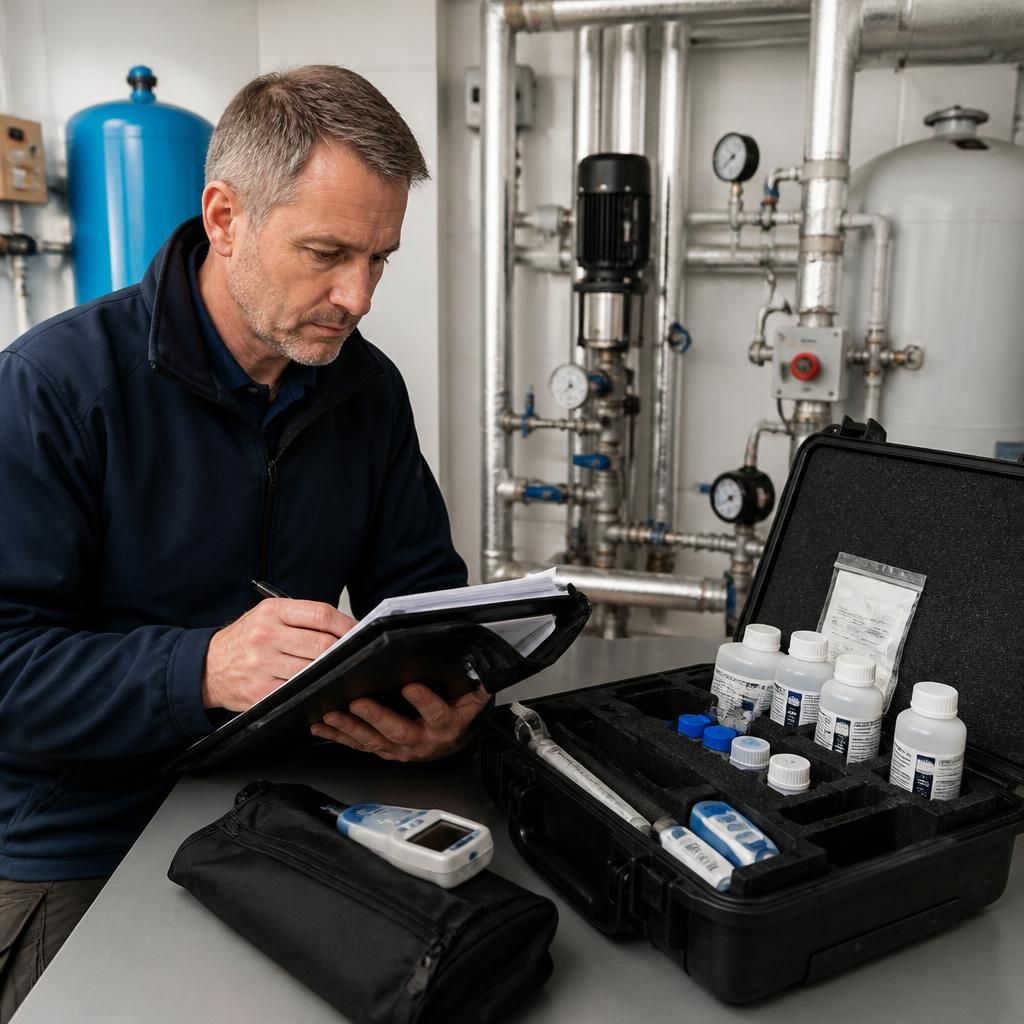
The person responsible for arranging Legionella testing must select a provider whose competence matches the work required. This involves checking both the sampling arrangements and the laboratory analysis, rather than assuming that any water test will provide a suitable basis for managing the risk.
- Confirm that the laboratory is appropriately accredited for the Legionella analysis being requested, such as through UKAS accreditation.
- Check that the person collecting samples understands the water system, sampling protocol and risk assessment requirements.
- Ensure the provider can explain the limitations of the test method and how results will be reported.
- Agree in advance who will receive the report, interpret significant findings and authorise any necessary corrective action.
These checks help the dutyholder demonstrate that testing was arranged competently and for a defined management purpose. Laboratory accreditation supports confidence in the analytical process, but it does not transfer responsibility for the business water system away from the person who controls it.
Discuss who should arrange your Legionella testing
If responsibility for Legionella testing is unclear within your organisation, discuss your water system and existing risk assessment with Blue Fish Water Management Ltd. We can help clarify the testing arrangements and information needed to support informed water safety decisions.