
When should Legionella test results trigger further investigation?
Legionella test results should trigger further investigation when they show elevated or unexpected contamination, a rising trend, or findings inconsistent with the system’s risk assessment and control measures. The responsible person should review the water system and monitoring records, identify possible causes, assess whether remedial action is needed and arrange follow-up testing where appropriate.
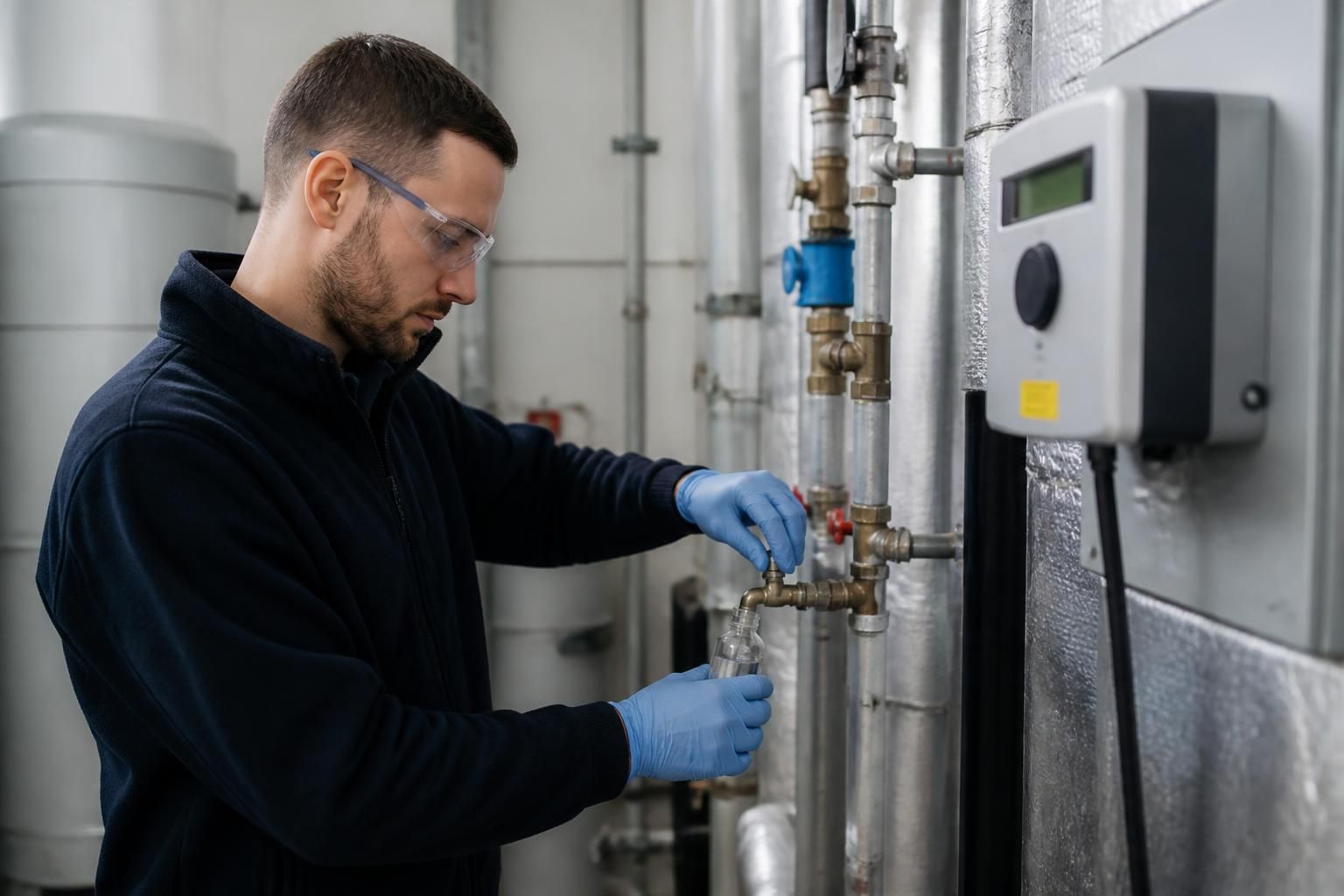
Further investigation is warranted when a Legionella result indicates a possible loss of control, particularly where the concentration is elevated, the organism is repeatedly detected, or the result does not fit the water system’s known risk profile. The finding should be interpreted alongside the sample location, system design, temperature records, previous results, water usage and the susceptibility of exposed people.
Use the result as an action trigger, not as an isolated pass-or-fail verdict. For routine culture results, commonly used HSE guidance bands are:
- Below 100 cfu/l: continue the existing control programme, provided other evidence shows that the system remains properly managed.
- 100 to 1,000 cfu/l: review the control measures, operating conditions and sampling history. Further checks or remedial work may be appropriate, particularly where results are persistent or the system presents higher risks.
- Above 1,000 cfu/l: take prompt action to identify and control the source. This normally requires a detailed review of the system, immediate consideration of remedial measures and follow-up sampling to establish whether control has been restored.
These bands are a starting point rather than a substitute for professional judgement. The significance of a result can change according to whether it was obtained from a hot or cold water outlet, a storage vessel, a return circuit or another part of the system. A result from a high-risk outlet or a location used by vulnerable people may require a more cautious response than the same result from a different part of the installation.
Investigate a pattern, not only a high reading. Repeated detection, a gradual increase across successive samples, or positive results at several linked outlets can indicate that conditions are allowing contamination to persist or spread. A single low result may also merit investigation if earlier results were higher, if temperatures are outside the control parameters, or if the sample was taken after a change to the system. Conversely, an isolated result should be checked against sampling quality and the wider evidence before conclusions are drawn.
The responsible person or duty holder should examine the following evidence:
- the exact sample point, date, time and sampling method;
- whether the sample was representative of the system or affected by outlet use, stagnation or recent flushing;
- hot and cold water temperatures, including storage, distribution and return temperatures where relevant;
- records of flushing, cleaning, disinfection, maintenance and any recent alterations;
- dead legs, low-use outlets, redundant pipework, tanks, calorifiers and areas of poor circulation;
- water quality indicators such as deposits, scale, sediment, biofilm or unusual appearance; and
- changes in occupancy, water demand, building use or the population potentially exposed.
A laboratory report should also be checked for the organism reported, the analytical method, the result’s units and any qualification attached to the finding. Culture results and molecular methods do not provide identical information. For example, a molecular result may detect genetic material without demonstrating that organisms are viable, so it must be interpreted in the context of the test method and the system assessment. If a result is unexpected, clarification from the laboratory may be needed before deciding what it means.
Immediate escalation is appropriate where exposure could be significant. This includes a high concentration, evidence of widespread contamination, failure of key control measures, or a setting used by people who may be more susceptible to Legionnaires’ disease. The response may involve restricting use of affected outlets, providing alternative water arrangements, carrying out cleaning or disinfection, correcting temperature or circulation problems, and seeking advice from a competent water hygiene professional. Any restriction should be proportionate and documented.
Follow-up sampling should be planned around the corrective action rather than used as a substitute for it. The investigation should record what was found, which control failed or was insufficient, what work was completed, who authorised it and how effectiveness will be verified. If repeat results remain positive, the risk assessment should be revisited rather than simply increasing the frequency of testing without addressing the underlying cause.
Results should also be reviewed against the written legionella control scheme and the organisation’s monitoring records. If the assessment does not reflect the actual system, if responsibilities are unclear, or if monitoring has not been completed as specified, those management weaknesses are themselves reasons for further investigation. A compliant approach links the laboratory evidence to the risk assessment, corrective actions, communication and continuing monitoring.
Where the interpretation is uncertain, an independent review can help determine whether the result reflects a sampling issue, a localised outlet problem or a wider system failure. Blue Fish Water Management Ltd can support businesses with UKAS-accredited water testing, review of findings, compliance audits, system monitoring and practical remedial advice.

The urgency of further investigation depends partly on how the contaminated water could expose people. Outlets that generate breathable aerosols, such as showers and spray taps, deserve particular attention because inhalation is the principal route by which Legionella can cause Legionnaires’ disease. A result from such an outlet may therefore require a more cautious response than the same finding from a point that is rarely used and does not create spray.
Review the outlet’s function, frequency of use, users and connection to the wider system before deciding the next step. This helps determine whether the finding is likely to be localised at the fitting or indicative of contamination affecting connected pipework, and supports proportionate decisions about additional sampling, temporary restrictions or remedial work.
Need help interpreting your Legionella test results?
If you need help interpreting an unexpected Legionella result, Blue Fish Water Management Ltd can review the findings alongside your control records and risk assessment. Contact the team to discuss appropriate next steps for your water system.