
How do you choose a laboratory for reverse osmosis water testing?
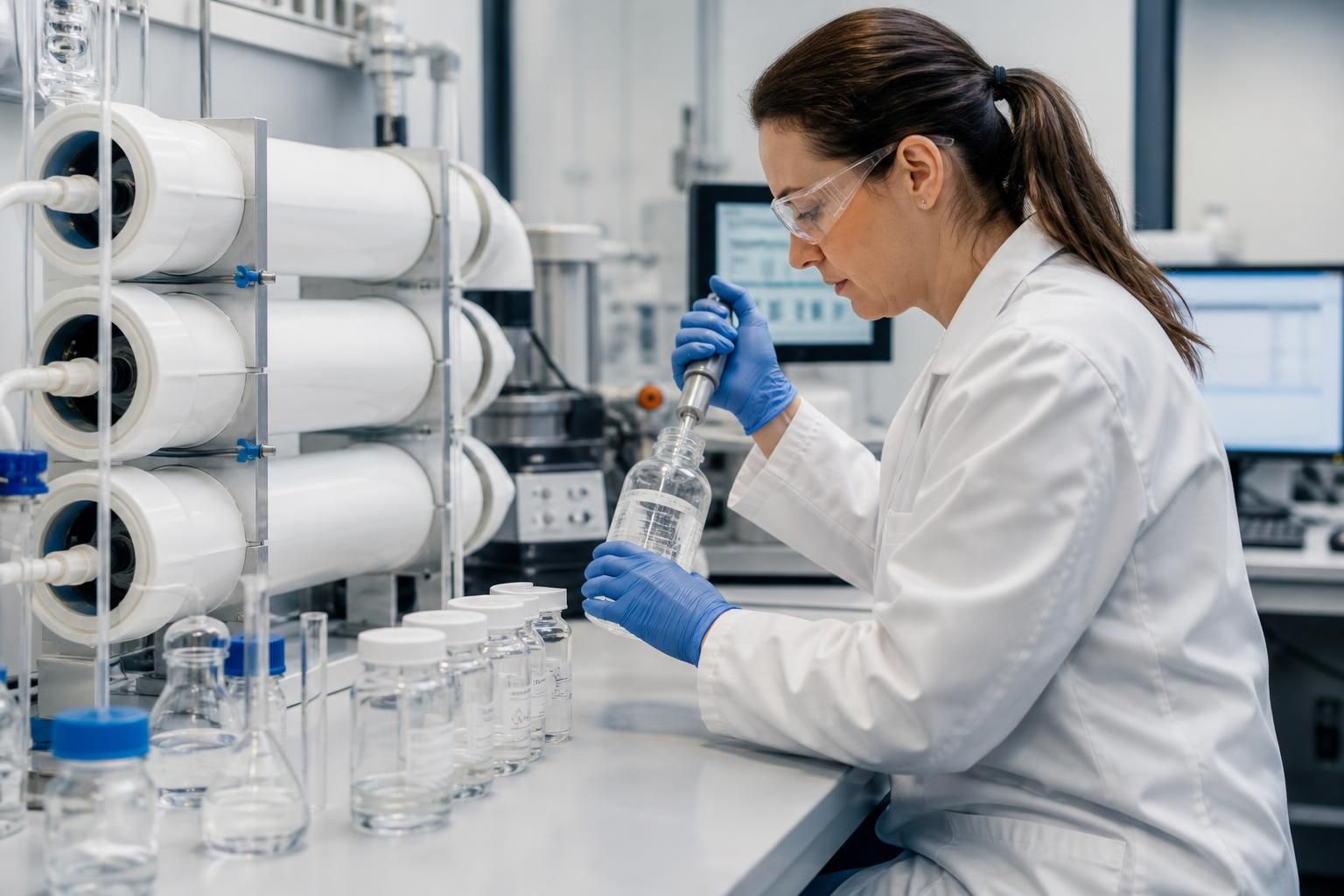
Choose a laboratory that can examine the particular water samples and parameters relevant to the reverse osmosis installation, while providing results that are technically defensible, traceable and suitable for operational decisions. The right choice depends on more than the laboratory’s general reputation: its methods, sample handling, reporting arrangements and understanding of treated-water systems should all be assessed.
Confirm that the laboratory can test the required sample types. Reverse osmosis investigations may involve feed water, permeate, product water, storage tanks, distribution points and reject or concentrate streams. Ask whether the laboratory routinely handles these types of samples and whether it understands how the sampling point affects the meaning of the result. A result from water entering the membrane cannot be interpreted in the same way as a result from a downstream outlet or storage vessel.
Check the analytical scope in detail. The laboratory should be able to test the parameters needed for the system’s purpose and risk profile. These may include microbiological indicators, chemical characteristics, dissolved solids, conductivity, hardness, metals or other contaminants. The relevant question is not simply whether a laboratory offers “water testing”, but whether it uses an appropriate method for each parameter and reports the result in a form that can be compared with the applicable specification, control limit or assessment criterion.
Ask about method performance. Important details include the method used, the reporting limit, measurement uncertainty where relevant, and how results close to a limit are treated. A laboratory should be able to explain whether a reported value is a direct measurement, a result below the reporting limit, or an estimated value. This distinction matters when deciding whether a membrane is performing acceptably or whether further investigation is justified.
Review the sampling and preservation requirements before booking. Some tests require particular containers, preservatives, minimum sample volumes or temperature controls. Microbiological samples may have stricter handling requirements than routine chemical samples. The laboratory should provide clear instructions covering:
- the correct container for each test;
- the volume required;
- labelling and sample identification;
- maximum holding times;
- temperature and transport conditions; and
- any information that must accompany the sample.
These requirements should be agreed before sampling takes place. Poorly collected, delayed or incorrectly preserved samples can produce results that are difficult to interpret, even where the analysis itself is technically sound.
Examine the chain of custody process. A reliable process should show who collected the sample, where and when it was taken, how it was transported, and when the laboratory received it. This record is particularly important where results may support a compliance audit, a contractor review, an investigation into system performance or a decision about remedial work. Sample identifiers should remain consistent from collection through to the final report.
Assess the quality of the final report. A useful report should identify the sample clearly and normally include the sampling location, collection date, receipt date, test date, analytical method, units, results and any relevant qualifications. It should distinguish between results generated by the laboratory and information supplied by the sampler. Reports should also make clear where a sample was unsuitable, a test was not performed, or a result has limitations.
Consider whether the laboratory can provide results in a format that supports comparison over time. Consistent sample descriptions, units and reporting conventions make it easier to identify changes in feed water, membrane performance or downstream contamination. If the format changes between tests, ask how historical results will remain comparable.
Check how technical queries are handled. The laboratory should be able to explain an unusual result without overstating what the test proves. For example, a microbiological result may indicate contamination at a sampling point but may not, by itself, identify the source. Similarly, a chemical result may point towards changes in feed water or treatment performance without proving that a particular component has failed. Ask whether a suitably qualified technical contact is available to discuss method limitations, unexpected findings and the need for repeat sampling.
Consider independence and quality controls. The laboratory should have documented procedures for calibration, internal quality checks, handling non-conforming work and reviewing reported results. It is also sensible to establish whether subcontracting is used for any part of the analysis. If another facility performs a test, the report should make that arrangement clear and identify which organisation is responsible for the result.
Compare the laboratory’s service arrangements against the testing plan. Ask about sample submission requirements, test availability, reporting format, arrangements for urgent technical clarification and the treatment of failed or rejected samples. Price alone is not a reliable basis for selection if a cheaper test uses an unsuitable method or produces a report that cannot support the required decision. Compare like with like, including the parameters, method, reporting limit, sampling requirements and interpretation provided.
Before appointing a laboratory, prepare a short testing brief containing the system description, sample locations, intended use of the water, required parameters, relevant control criteria and any previous results. Send the same brief to each laboratory under consideration. Their responses will show whether they have understood the testing objective and whether they can provide a coherent service rather than a collection of unrelated analyses.
For complex installations or investigations, a water hygiene specialist can help define the sampling plan and place laboratory findings in context. The laboratory produces the analytical evidence; competent review is then needed to decide whether the result indicates normal variation, sampling error, a treatment issue, contamination within the distribution system or the need for further action.

When choosing a laboratory for reverse osmosis water testing, assess not only the laboratory’s analytical capability but also who will collect the samples. A technically sound result depends on the sample being representative of the water and system condition being investigated.
Clarify whether the laboratory provides sampling, accepts samples collected by a competent contractor, or expects the client to collect them. The sampling arrangement should define the correct outlet, preparation of the point, collection technique and any precautions needed to avoid introducing contamination. This is particularly important when comparing feed water with permeate, stored product water or water from downstream outlets.
Keep the responsibilities clear. The laboratory is responsible for the agreed analysis, while the sampler must collect and identify the sample correctly and provide accurate information about its location and condition. If a result is unexpected, knowing how the sample was obtained helps determine whether the finding reflects the reverse osmosis system or a problem with collection.
Discuss your reverse osmosis water testing requirements
Speak to Blue Fish Water Management Ltd for practical guidance on selecting suitable reverse osmosis water testing support and defining the evidence your system requires. Our water hygiene specialists can help you assess laboratory findings in relation to system performance and compliance requirements.