
What should follow a failed reverse osmosis water test?
A failed reverse osmosis water test should be followed by a review of the result, investigation of the likely cause and proportionate corrective action. The system should then be retested to confirm that the issue has been resolved before the water is accepted for its intended use.
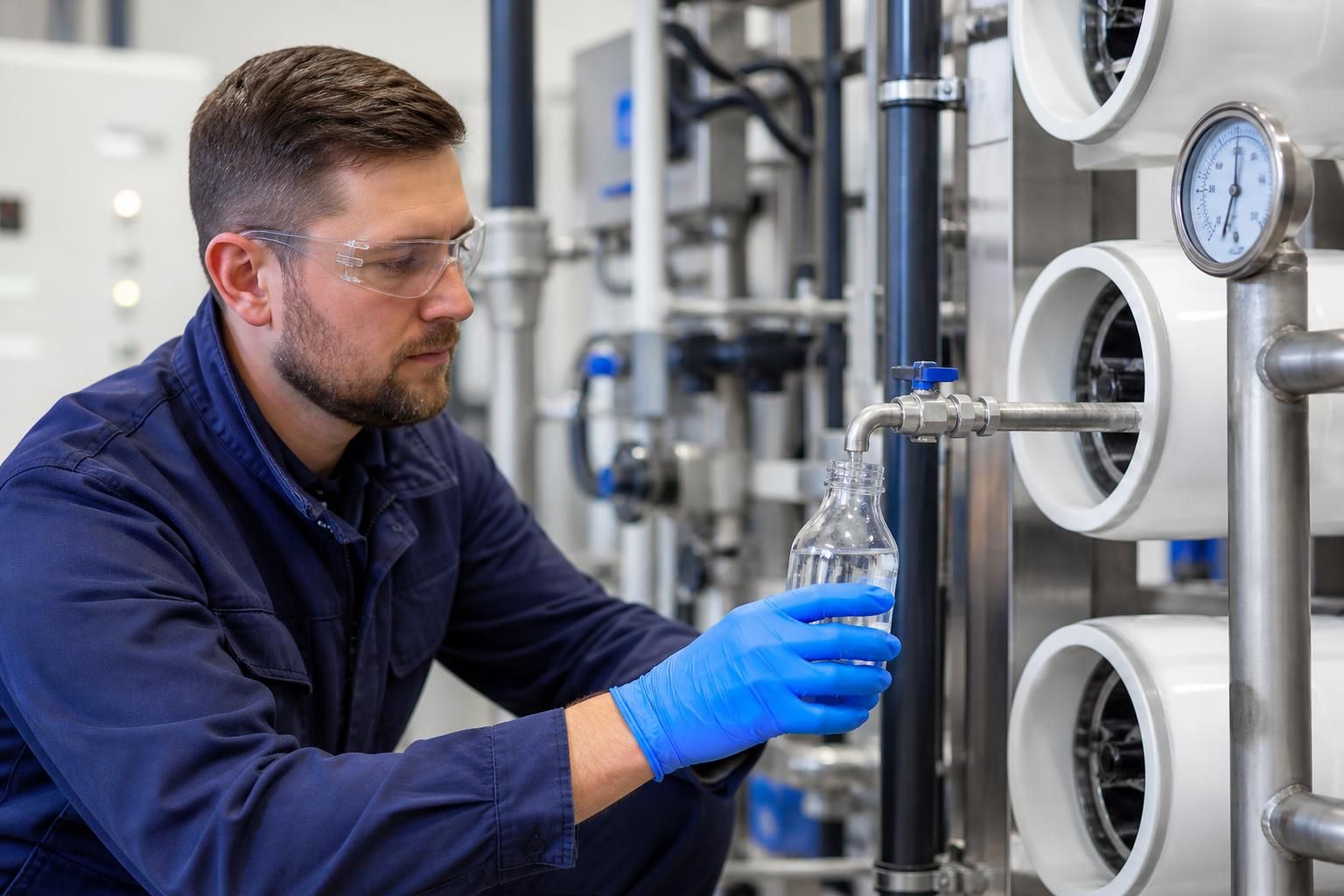
The next step after a failed reverse osmosis water test is to establish exactly what failed, where the sample was taken and whether the result represents a genuine system problem. The response should be based on the parameter reported, the water’s intended use and the level of risk, rather than treating every failed result in the same way.
Review the laboratory report first. Check the sample point, sampling date, test method, result, units, reporting limit and applicable acceptance criterion. Confirm whether the result relates to feed water, permeate water, stored water or water from a point of use. A result outside the required specification may indicate a treatment failure, contamination after treatment or a sampling issue. The laboratory should be asked to clarify any unclear notation or qualification on the report before decisions are made.
For a microbiological failure, consider whether the sample was collected using an appropriate method and container, whether the outlet was prepared correctly and whether the sample could have been contaminated during collection or transport. This does not justify disregarding an adverse result: the system should be treated cautiously while the finding is assessed. For a chemical failure, compare the result with the relevant process specification and examine whether the contaminant is being rejected by the membrane, introduced downstream or concentrated through poor operating conditions.
Control the affected water. Until the significance of the result has been determined, prevent the water from being used for any process for which it is unsuitable. This may involve placing a batch or storage vessel on hold, restricting a point of use or informing the responsible production, facilities or quality team. The control applied should be proportionate to the result and to the consequences of using non-compliant water. Where the water supports a critical process, the responsible technical or quality authority should decide whether existing work, products or equipment require review.
Investigate the whole treatment route. Reverse osmosis performance depends on more than the membrane itself. The investigation should consider:
- feed-water quality and any recent change in supply, pressure, temperature or flow;
- pre-treatment equipment, including sediment filters, carbon filters, softeners and dosing systems where fitted;
- membrane condition, fouling, scaling, damage, incorrect installation or loss of rejection;
- dead legs, stagnant sections, poorly drained pipework and infrequently used outlets;
- storage tanks, vents, level controls, recirculation arrangements and downstream filters;
- sanitisation, maintenance, filter replacement and membrane-change records;
- recent alterations, commissioning work, shutdowns, abnormal alarms or extended periods without use; and
- the sampling procedure, sample point hygiene, container handling and chain of custody.
A microbiological result may be associated with biofilm, stagnation, inadequate sanitisation or contamination downstream of the membrane. A chemical result may point towards membrane deterioration, exhausted pre-treatment, unsuitable operating conditions, carryover from the feed water or contamination from tanks and distribution pipework. Trends from routine monitoring can help distinguish a sudden event from gradual loss of control.
Define corrective action from the evidence. Corrective work might include cleaning and sanitising affected equipment, replacing a filter, servicing pre-treatment, correcting operating conditions, repairing a leak, improving circulation or removing a stagnant section. If membrane performance is in doubt, its condition and rejection performance should be assessed before it is returned to service. Any chemical or sanitising agent used must be suitable for the equipment and completely removed or controlled before the water is sampled for release.
Cleaning alone may not resolve a recurring failure. Repeated adverse results should prompt a broader review of system design, sample-point suitability, maintenance controls and the frequency of monitoring. If the result may have arisen from sampling, improve the sampling method and have the sample collected by a suitably competent person, while retaining the original result as part of the system history.
Retest the relevant locations. A follow-up sample should be taken only after the corrective work is complete and the system has returned to its normal operating condition. The sampling plan should cover the location that failed and, where relevant, upstream and downstream points to identify whether the problem is local or system-wide. For a storage and distribution arrangement, testing the tank alone may not demonstrate control at the outlets, while testing one outlet may not explain a wider issue.
The water should not be accepted solely because one repeat result is satisfactory if the investigation identified unresolved weaknesses. Review the follow-up result alongside operating records, maintenance evidence and any related samples. Where the outcome remains adverse or inconsistent, further investigation and technical advice may be needed before the system is released for its intended use.
Record the decision and prevent recurrence. The corrective-action record should link the original report to the investigation, affected equipment or water, actions taken, follow-up samples and the person who approved return to use. It should also state why the acceptance criterion was selected and whether any batches, processes or users were affected. Update the risk assessment, monitoring schedule, maintenance instructions or staff training where the failure exposed a weakness in existing controls.
A competent water hygiene or water treatment specialist can help interpret an unusual result, assess the treatment train and plan proportionate remedial work. Where laboratory testing is required, results should be obtained from a suitably competent laboratory using methods appropriate to the parameter and intended application.
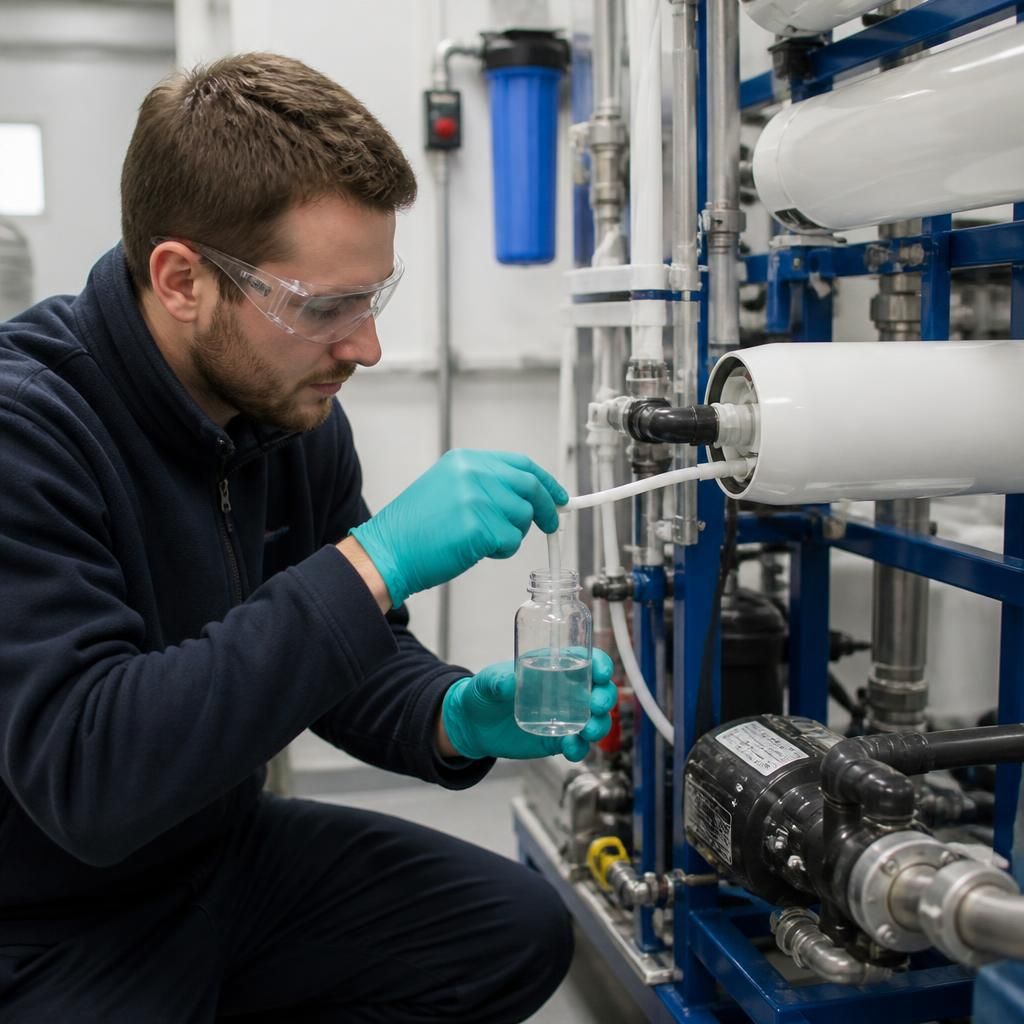
Return to use should be treated as a formal release decision, not an automatic consequence of completing maintenance. The person who carried out the corrective work should provide the evidence, while an appropriately authorised quality, facilities or technical representative reviews the failed result, the work completed and the follow-up evidence before approving use.
This separation helps prevent unresolved problems being closed on the basis that equipment appears clean or operational. The release decision should identify the specific water stream and outlets covered, any restrictions that remain, and the records supporting acceptance. If the evidence does not demonstrate control, the water should remain segregated while further technical investigation is carried out.
Discuss your failed reverse osmosis water test
Discuss your failed reverse osmosis water test with Blue Fish Water Management Ltd for practical guidance on interpreting the report and deciding whether specialist investigation or further testing is appropriate.