
When should a reverse osmosis system receive laboratory water testing?
A reverse osmosis system should receive laboratory water testing at commissioning, after significant maintenance or changes to the treatment process, and at routine intervals determined by a documented risk assessment. Additional testing may be appropriate when monitoring identifies a concern, water quality changes, or compliance requirements specify a particular frequency.
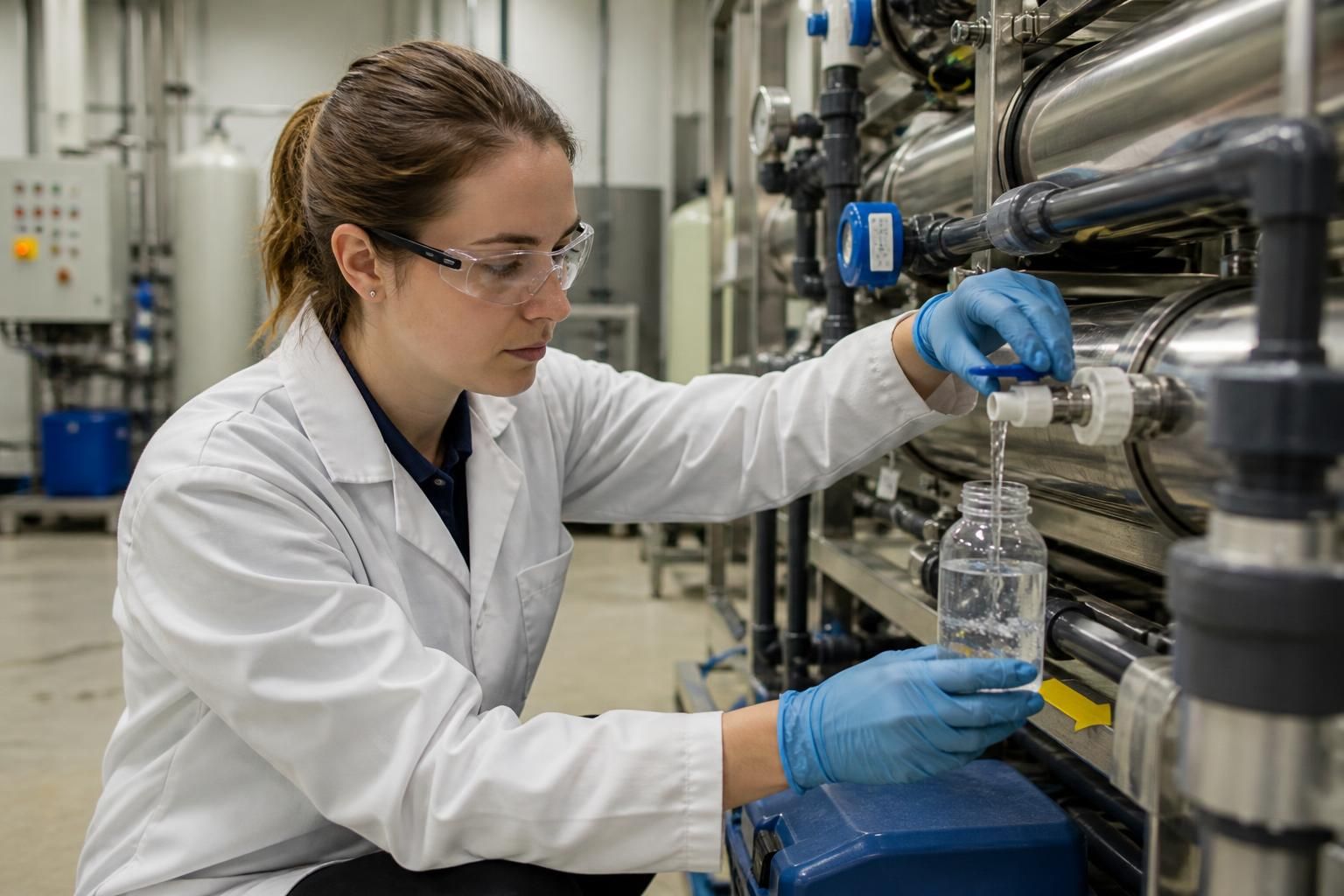
Laboratory testing should be scheduled according to the reverse osmosis system’s documented risk assessment, the purpose of the treated water and the consequences of a quality failure. A fixed calendar interval is not suitable for every installation. A system supplying high-risk processes or vulnerable users may require more frequent laboratory verification than a small, stable system with a consistent operating history.
The testing plan should consider the complete water pathway, rather than the membrane alone. Relevant factors include the incoming water source, pretreatment equipment, membrane configuration, storage tanks, distribution pipework, points of use and any final treatment. Changes in any of these areas can alter the quality of the water being produced or introduce contamination after the reverse osmosis stage.
Routine laboratory testing is most useful when it forms part of a wider monitoring programme. Operators may monitor conductivity, total dissolved solids, pressure, flow, rejection performance and other system indicators between laboratory samples. These operational checks can identify a developing problem, but they do not replace laboratory analysis. A result that appears acceptable from an instrument reading does not necessarily confirm microbiological safety or demonstrate that all relevant parameters meet the required specification.
The sampling frequency should be reviewed when:
- the system has a history of variable or unsatisfactory results;
- operational readings show a deterioration in membrane or pretreatment performance;
- there is evidence of stagnation, inadequate circulation, biofilm formation or poor storage conditions;
- the treated water is used in a process with strict quality requirements;
- there are changes to the incoming supply, occupancy, process or water demand; or
- the risk assessment identifies a greater likelihood or consequence of contamination.
Testing should also be considered following an extended period of inactivity, a suspected contamination event, remedial cleaning or disinfection, and any incident in which the system may have been exposed to unsuitable water or operating conditions. In these circumstances, a single sample may not be enough to demonstrate that control has been re-established. Follow-up sampling should be based on the nature of the incident, the corrective action taken and the evidence needed to confirm stable performance.
A suitable sampling plan identifies what will be tested, where samples will be taken, how often they will be collected and which limits or specifications will be applied. Samples may need to represent the incoming water, treated water, storage and point-of-use outlets. Sampling only at the final outlet can conceal a problem within the treatment equipment, while sampling only immediately after the membrane may fail to identify contamination in a tank or distribution loop.
The laboratory should receive clear information about the system and the intended use of the water. This helps determine whether the test should include microbiological parameters, chemical parameters, physical characteristics or a combination of these. The laboratory’s instructions for containers, preservation, transport and maximum holding times should be followed, because poor sample handling can produce results that do not accurately represent the water at the point of collection.
Results should be assessed against the specification that applies to the particular use of the water, rather than against a generic assumption that all reverse osmosis water has the same quality requirements. A trend of increasing conductivity, recurring microbiological findings or progressively poorer rejection performance may justify investigation even before a formal limit is exceeded. Reviewing results over time can therefore provide earlier warning than relying on individual pass-or-fail outcomes.
Where a result is unsatisfactory, the response should be proportionate and documented. It may involve checking instruments, reviewing recent maintenance, inspecting pretreatment and storage, examining sampling technique, isolating affected outlets, cleaning or disinfecting relevant components and repeating the analysis. Water should not be released for a sensitive use solely because a corrective action has been completed; the release decision should be supported by appropriate evidence and the applicable quality requirements.
All laboratory reports and related records should be retained with the system’s water safety documentation. Records should link each result to the sampling date, location, sampler, test method, operating conditions, interpretation and any action taken. Blue Fish Water Management Ltd can help organisations establish a risk-based testing programme, interpret laboratory findings and identify whether changes to monitoring or remedial work are warranted.
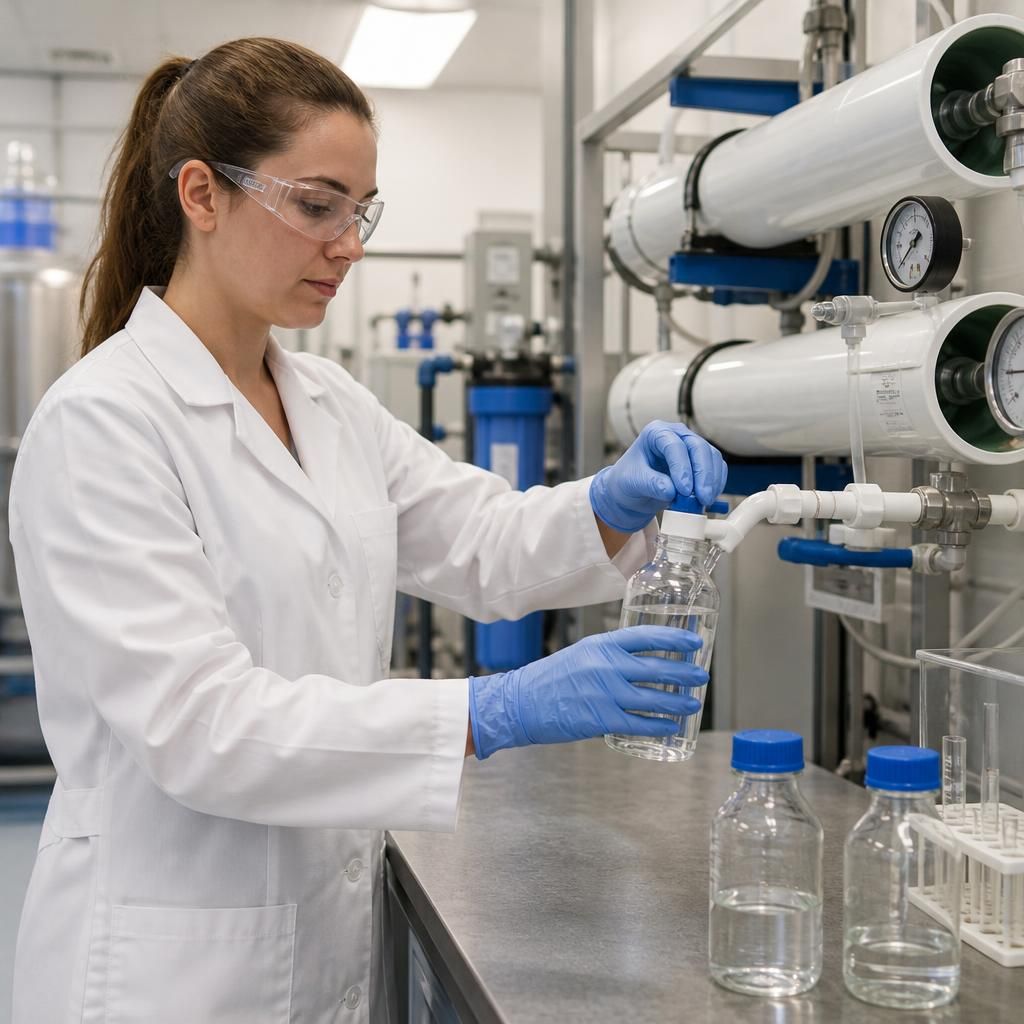
Laboratory testing should be timed to represent the reverse osmosis system’s normal operating condition. A sample taken immediately after cleaning, disinfection, prolonged shutdown or unusually intensive flushing may not reflect the water quality normally supplied at the outlet. Where verification follows one of these events, the sampling plan should state whether the purpose is to confirm the effectiveness of the intervention or to demonstrate stable performance during routine use.
For meaningful comparison, the sample record should note the system’s operating state, recent sanitisation or maintenance, storage conditions and whether the outlet had been used normally. This context helps distinguish a temporary post-maintenance result from a recurring deterioration and supports a more reliable decision about when further laboratory testing is necessary.
Plan laboratory testing for your reverse osmosis system
Discuss your reverse osmosis system with Blue Fish Water Management Ltd to review whether its laboratory testing arrangements are suitable for the way the treated water is used.