
What happens during septic tank cleaning?
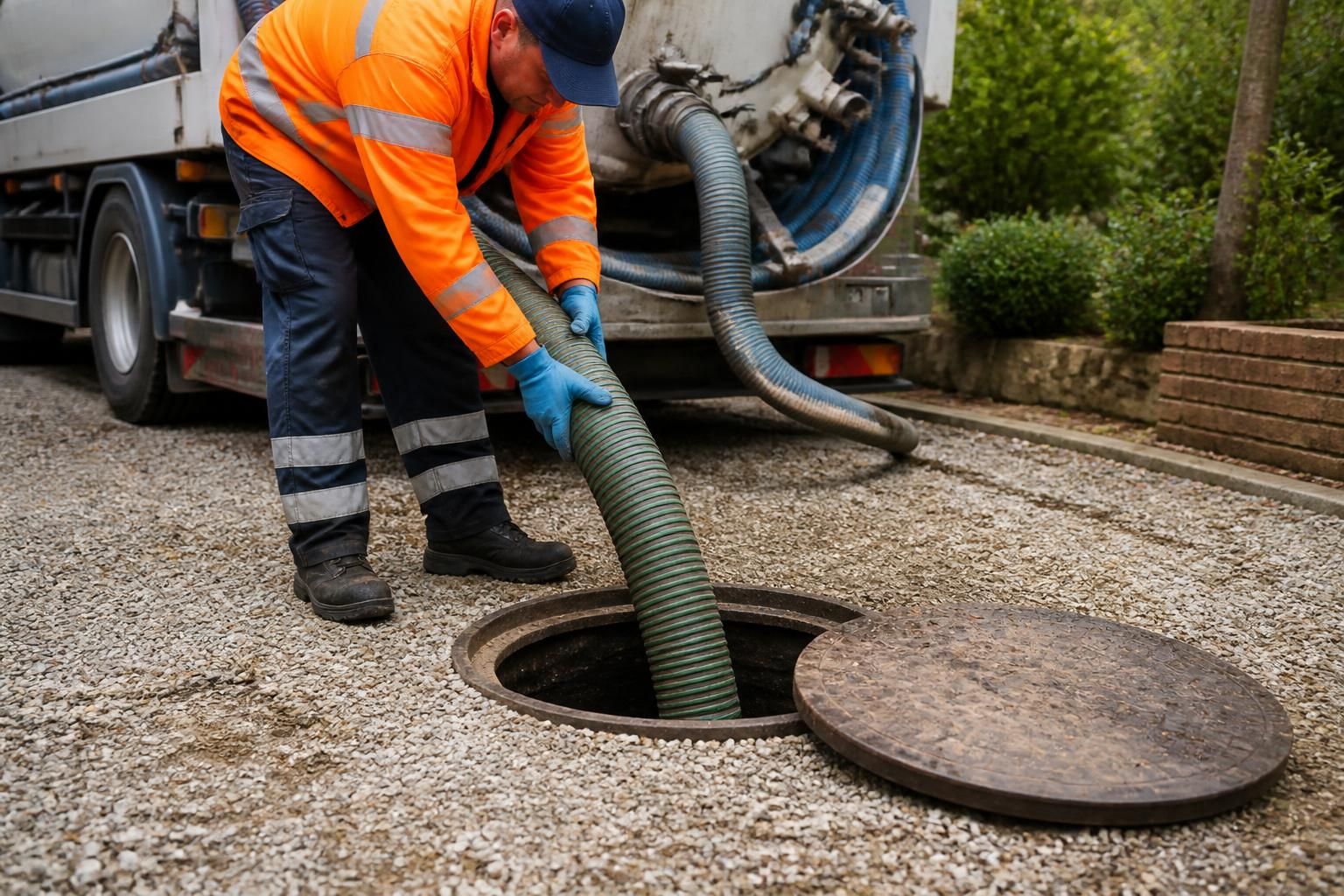
Septic tank cleaning is a planned maintenance procedure in which a specialist manages the site safely, removes the tank’s accumulated contents, and completes the necessary close-out checks and documentation. The exact sequence depends on the tank design, its condition, the quantity of material present and how easily the contractor can reach it.
Before work starts, the contractor will normally confirm the tank location, access arrangements and any relevant site restrictions. The tank must be identifiable and reachable by the vacuum tanker or other suitable equipment. Covers may need to be exposed, surrounding vegetation cleared, vehicles kept away from areas that could be damaged, and gates or security arrangements dealt with in advance. If the tank cannot be safely reached, the contractor may need to discuss alternative equipment or additional site preparation.
On arrival, the operative should establish a safe working area before opening or handling the tank. Septic tanks can contain hazardous gases, contaminated material and unstable covers, so appropriate personal protective equipment and safe working procedures are essential. Tank entry is not part of ordinary cleaning. It is a confined-space activity requiring separate controls, specialist equipment and properly trained personnel, and should never be attempted by the site owner or unqualified staff.
The contractor then carries out the cleaning operation using equipment suited to the installation. Vacuum hoses are positioned to remove the contents without causing unnecessary damage to the tank, pipework or surrounding ground. Some systems may require care around internal baffles, filters, pumps or other components. Where access is difficult, the operative may need to reposition the vehicle or work through an agreed access point rather than forcing equipment into place.
Cleaning does not automatically mean that every associated problem is repaired on the same visit. If the contractor encounters a damaged cover, blocked pipe, failed pump, structural defect or drainage issue, the work may need to pause or proceed only to the extent that it remains safe. Any extra work should be explained clearly, with the cost and scope agreed before chargeable remedial work is undertaken.
The time required varies considerably. A straightforward installation with good access may take less time than a large or heavily used tank, a site with a long hose route, restricted vehicle access or a tank that has not been maintained properly. Travel, waiting for access, difficult ground conditions and the need to deal with connected equipment can also affect the appointment length. A responsible contractor should give an indication based on the site information available, while recognising that the final duration may change once the installation is exposed.
During the visit, the contractor may identify conditions that affect future operation. These can include unusually rapid solids accumulation, signs of hydraulic overloading, evidence of unsuitable materials entering the system or a need for more regular maintenance. Such observations do not necessarily prove the cause of a problem, but they provide useful information for deciding whether the property’s usage, drainage arrangements or maintenance plan should be reviewed.
Once the work is complete, the tank should be left in a safe condition and covers should be replaced securely. The surrounding area should be checked for obvious spillages or damage, and any temporary barriers or equipment should be removed when it is safe to do so. The site owner should be told about defects, limitations or follow-up actions rather than being left to discover them later.
Documentation is an important part of the process. The completion record should identify the site and tank, the date of the visit, the work carried out and any relevant observations. It should also record the waste transfer information required for lawful waste management. Businesses should retain this information with their water and drainage maintenance records, particularly where the septic tank forms part of a wider environmental or facilities-management system.
After cleaning, the system should be used in accordance with its design. Avoid putting oils, solvents, wipes, sanitary products or other unsuitable materials into the drainage system, as these can obstruct pipework or interfere with biological treatment. If the tank serves a commercial premises, staff and relevant contractors should know which substances must not enter the system. Any recommendation for inspection, repair or future cleaning should be recorded and assigned to a responsible person.
For a business arranging the work, the most useful preparation is to provide accurate information about the tank, previous problems, access restrictions, connected pumps and any known drainage alterations. This allows the contractor to select suitable equipment, plan safe access and distinguish routine cleaning from work that may require a separate quotation or specialist assessment.
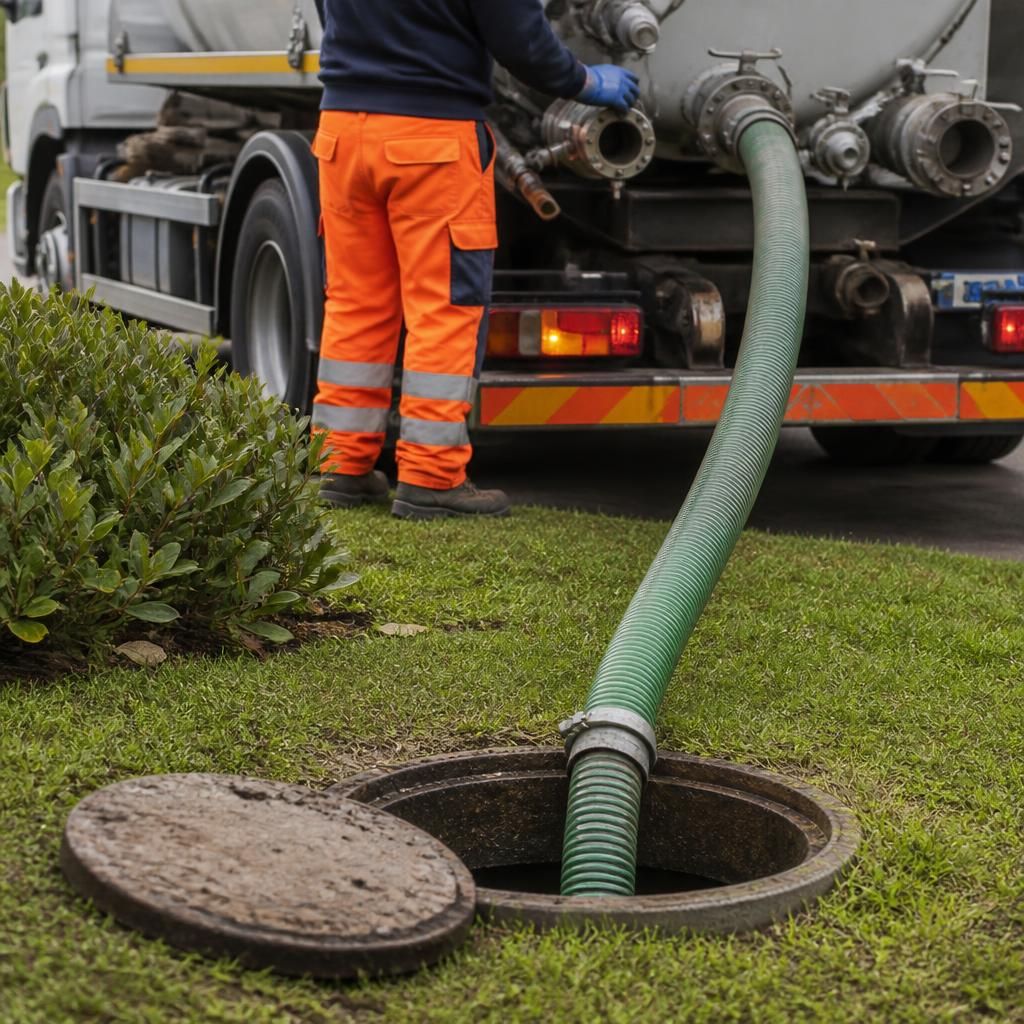
Septic tank cleaning normally means removing accumulated sludge, scum and liquid from the tank itself. It does not automatically include cleaning the full drainage network, soakaway, treatment unit or every connected pipe. If filters, pumps or outlet pipework need attention, these should be identified as separate elements of the planned work.
Before the appointment, the site representative should confirm exactly what the quotation covers and whether any additional inspection or cleaning is recommended after the tank has been emptied. This helps distinguish routine tank cleaning from remedial work and ensures that any limitations are understood before the contractor begins.
Request a septic tank cleaning quotation
If you are planning septic tank cleaning for a business site, request a quotation based on your tank type, access arrangements and required scope of work.