
How should businesses assess competence for septic tank cleaning?
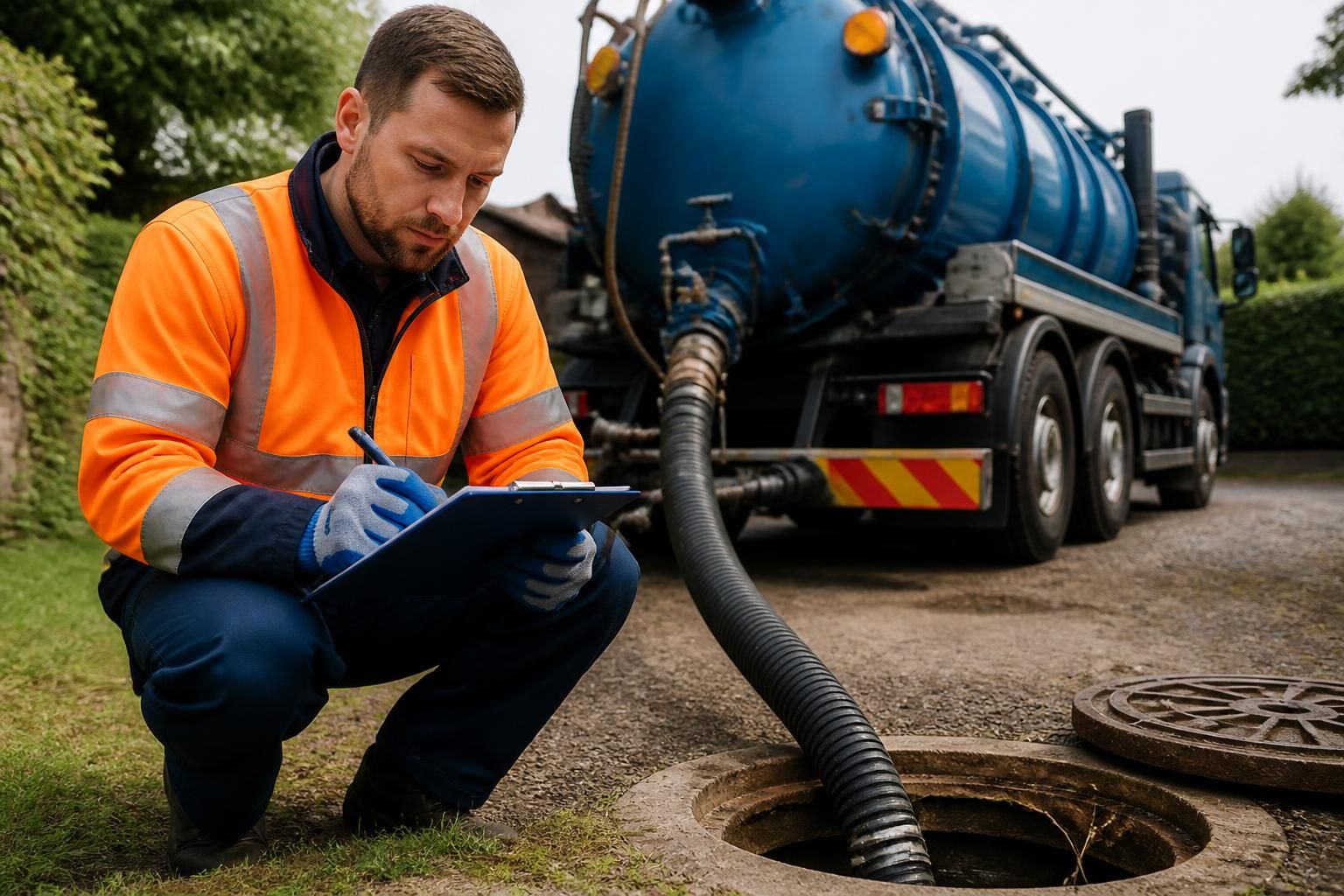
Businesses should assess septic tank cleaning competence by testing whether a contractor can demonstrate controlled, traceable work from the initial site review through to lawful waste transfer and completion. A professional presentation or low quotation is not sufficient on its own; the evidence should show that the contractor understands the site, the tank, the relevant environmental duties and the risks created by sewage and tanker operations.
Check the contractor’s legal standing. Ask for the registration details relevant to carrying and transferring septic tank waste, and verify them with the appropriate environmental regulator for the part of the UK where the work will take place. The contractor should also explain which disposal or treatment facilities may receive the waste and how the transfer will be documented. Requirements can differ between England, Wales, Scotland and Northern Ireland, so a competent provider should be able to identify the rules applying to the site rather than relying on a generic statement of compliance.
Assess competence against the actual installation. Septic tanks vary in construction, access arrangements, capacity, inlet and outlet configuration, and connection to the drainage system. Before work is agreed, the contractor should establish useful site information, such as the tank location, access route, cover condition, likely contents, proximity to buildings or watercourses, and any restrictions affecting tanker positioning. Where information is missing, the contractor should state what must be confirmed before attendance rather than making assumptions.
Ask how the work will be controlled on site. The contractor should be able to explain how operatives will protect people, property and the environment while opening the tank, removing contents and leaving the area. This includes controlling access, preventing contact with sewage, managing hoses, dealing with spills, protecting vulnerable surfaces and responding to unexpected conditions. If access covers are damaged, unstable or difficult to lift, the work plan should address that specifically. No one should enter a septic tank or other confined space simply to make cleaning easier; any such proposal requires a properly justified, planned and controlled confined-space procedure.
Review the standard of supervision and training evidence. Look for clear information about who will carry out the work, who supervises it and how new or subcontracted staff are controlled. Evidence may include relevant training records, competency assessments, toolbox-talk arrangements and procedures for handling biological hazards, manual handling, vehicle movements and emergency situations. Training certificates alone do not prove that a person can manage a particular installation, but unexplained gaps or an inability to describe the operating team are warning signs.
Examine the contractor’s quality controls. A reliable process should include confirmation of the tank serviced, the work undertaken, unusual conditions found and any limitations that affected the result. The business should receive documentation that distinguishes between routine emptying, additional cleaning and any inspection or remedial recommendation. If the contractor identifies structural damage, blocked pipework, poor access or evidence of a drainage fault, the report should separate observed facts from suggested further work.
Test the disposal chain, not just the collection service. Competence includes maintaining a credible chain of custody after the waste leaves the premises. Ask what information will appear on transfer documentation, how the receiving facility is selected and how discrepancies are handled. A contractor who is vague about the destination, cannot explain the paperwork or suggests that waste can be discharged informally should not be treated as competent. The business commissioning the work should retain the relevant documents in line with its own environmental records policy.
Consider insurance and contractual responsibility. Request current evidence of cover appropriate to the work and check that the named business matches the contracting entity. The agreement should identify responsibility for damage to access areas, pollution incidents, missed or unsafe access, additional work and any subcontracting. Insurance does not replace safe practice, but unclear responsibility can make it difficult to resolve an incident or establish who was authorised to undertake the work.
Compare quotations on scope rather than price alone. A useful quotation should define what is included, the assumptions about access and tank condition, the treatment of additional problems, the documentation supplied and the basis for any extra charges. Compare like with like: a cheaper quotation may exclude difficult access, waste documentation, cleaning beyond basic emptying or reporting. A contractor who refuses to describe the scope in writing leaves the business unable to verify whether the work was completed as intended.
Use proportionate pre-appointment checks. For a commercial site, ask for suitable references or examples of comparable installations, then ask what the contractor learned from difficult jobs rather than seeking a generic recommendation. Check that any claims about registrations, training or insurance are supported by current documents. Where the tank serves a workplace, care setting, food premises or other sensitive operation, involve the person responsible for health, safety or environmental compliance before appointing the contractor.
After the work, competence can be confirmed by checking whether the contractor followed the agreed scope, left the area secure, reported defects clearly and supplied the expected waste and service documentation. Repeated omissions, unexplained changes to the method, poor housekeeping or reluctance to provide evidence should be recorded and treated as grounds for review before the contractor is used again.

A practical way to assess competence is to ask the contractor to explain how they would respond to realistic site scenarios, rather than relying only on certificates and written policies. Their answers should show sound judgement, clear escalation points and a willingness to pause work when the agreed method is no longer safe or suitable.
- What information would you need before confirming the job?
- When would you stop work and seek further instruction?
- How would you record a condition that prevented the full scope from being completed?
- What would you do if the work revealed a problem outside routine cleaning?
Look for specific, consistent answers that distinguish routine cleaning from specialist inspection, repair or emergency response. A competent contractor should understand the limits of its role, avoid making unsupported diagnoses and explain how unresolved issues will be reported to the responsible person.
Discuss Your Septic Tank Cleaning Requirements
If you are appointing a contractor for septic tank cleaning, discuss your site requirements with Blue Fish Water Management Ltd before confirming the scope. Clear information about the installation and its operating environment helps establish what the work should include.