
What equipment is suitable for chlorine monitoring?
Suitable chlorine monitoring equipment may include manual DPD test kits or photometers for routine checks, and online chlorine analysers with sensors where continuous measurement is required. The appropriate choice depends on the water system, the type of chlorine being measured, the required monitoring frequency and the level of accuracy needed for compliance records.
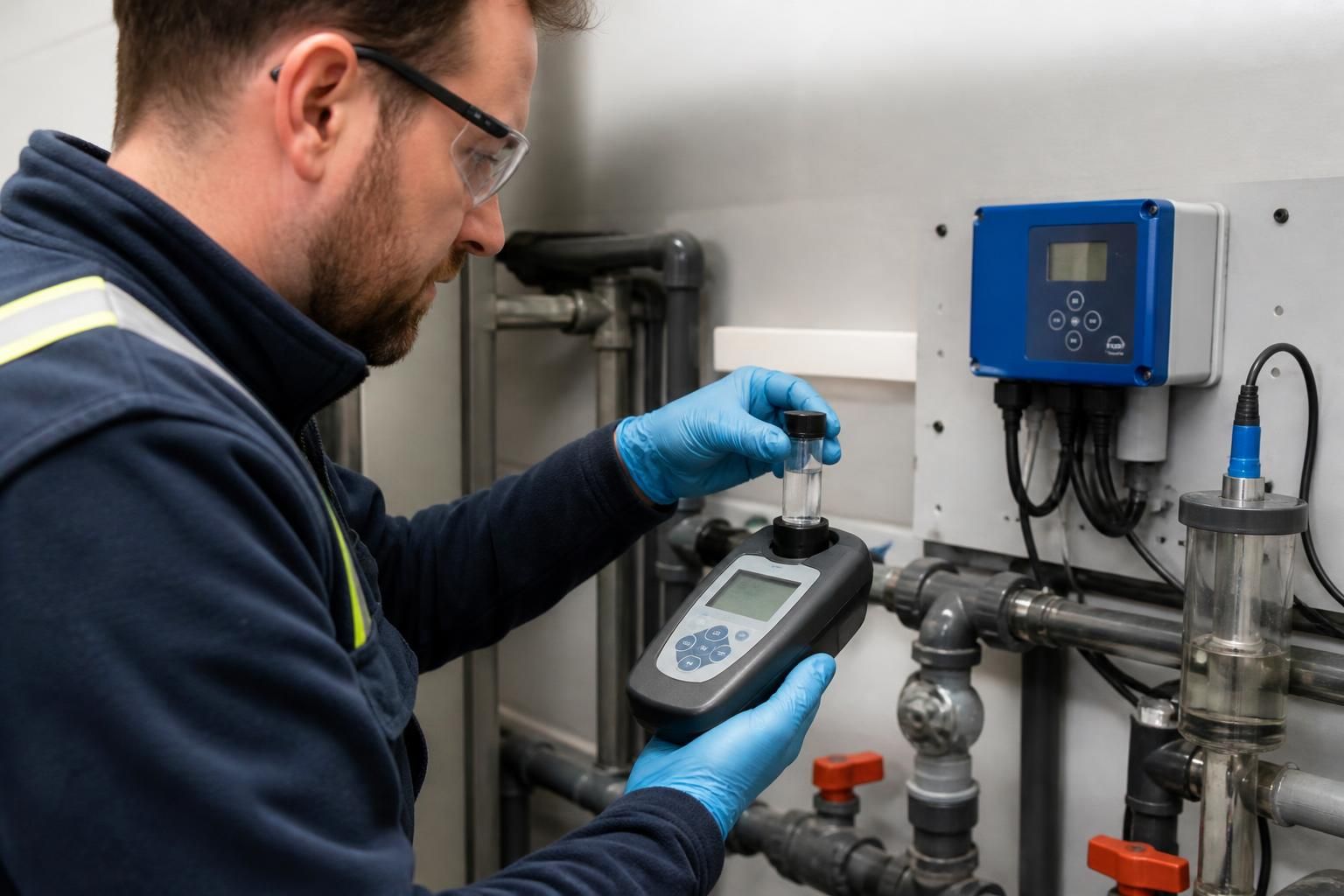
Suitable chlorine monitoring equipment is equipment that measures the correct chlorine parameter, at the required detection range and frequency, while producing results that can be checked and recorded reliably. For many water systems, this means using a portable DPD method for routine verification, with a fixed analyser where the risk assessment requires regular or continuous measurement.
Portable DPD equipment is commonly suitable for operational checks at designated sampling points. DPD reagents react with chlorine to produce a measurable colour change. A visual comparator can be appropriate for straightforward checks, provided the user can distinguish the colour scale consistently. A photometer offers a more objective reading and is generally preferable where a narrower measurement range, better repeatability or more detailed records is required.
The test method must match the parameter being monitored. Free chlorine, total chlorine and combined chlorine are not interchangeable measurements. A kit intended for free chlorine should not be used to report total chlorine without the appropriate reagent and procedure. The equipment instructions should also confirm that the method is suitable for the water type, expected concentration and sample conditions.
Online chlorine analysers are suitable where results need to be generated at regular intervals without relying solely on manual sampling. These may use amperometric sensors, membrane-covered electrodes or reagent-based colorimetric measurement. An online unit should be selected according to the system’s flow, pressure, temperature, pH and expected chlorine range. Some analysers require a controlled sample stream, filtration or other sample conditioning, so the installation arrangement is part of the equipment choice rather than an afterthought.
An analyser connected to a dosing or control system needs additional safeguards. The measured value should be visible to the responsible operator, and alarms should identify an out-of-range result, loss of sample flow, reagent failure, sensor fault or other condition that could make the displayed value unreliable. Automatic control should not be enabled simply because an analyser has been installed; the control strategy, alarm limits and response arrangements should be defined and reviewed as part of the water safety process.
When comparing equipment, assess the following points:
- Measurement range: the instrument should cover the normal operating range as well as foreseeable high and low results, without sacrificing useful resolution.
- Accuracy and repeatability: the stated performance should be suitable for the decisions the result will support, including compliance records and dosing adjustments.
- Interferences: turbidity, colour, pH, temperature, other oxidising agents and sample age can affect some methods. The manufacturer’s technical information should identify relevant limitations.
- Sampling arrangement: the sample point, sample line, flow rate and flushing procedure should provide a representative sample and avoid stagnant or contaminated water.
- Calibration and verification: the equipment should have a documented procedure for calibration, functional checks and comparison with a suitable reference method.
- Maintenance: consider reagent storage, sensor replacement, cleaning, consumables and the effect of a missed maintenance task on the reliability of results.
- Data handling: readings should be attributable to the sampling point, date, time and operator or system, with faults and corrective actions retained alongside the result.
A portable kit is not automatically inferior to a fixed analyser. It can be the more suitable option for systems where sampling is scheduled, the number of points is limited or installation of an online instrument would add unnecessary complexity. Conversely, a manual kit may be unsuitable where changing chlorine levels need to be identified between scheduled visits or where the monitoring plan requires frequent unattended readings.
Online equipment should still be checked against a properly conducted manual test. Sensors can drift, become fouled or respond incorrectly if the sample conditions change. A difference between the analyser and a reference result should be investigated rather than corrected by adjusting the instrument without establishing the cause. Records should show the instrument used, method, result, calibration or verification status and any action taken.
The final choice should therefore follow the system risk assessment and monitoring plan. A competent water hygiene specialist can help define the measurand, sampling locations, operating range, verification method and record requirements before equipment is purchased or installed. Blue Fish Water Management Ltd provides advice on chlorine monitoring, water testing and system compliance for domestic, industrial and commercial water systems.
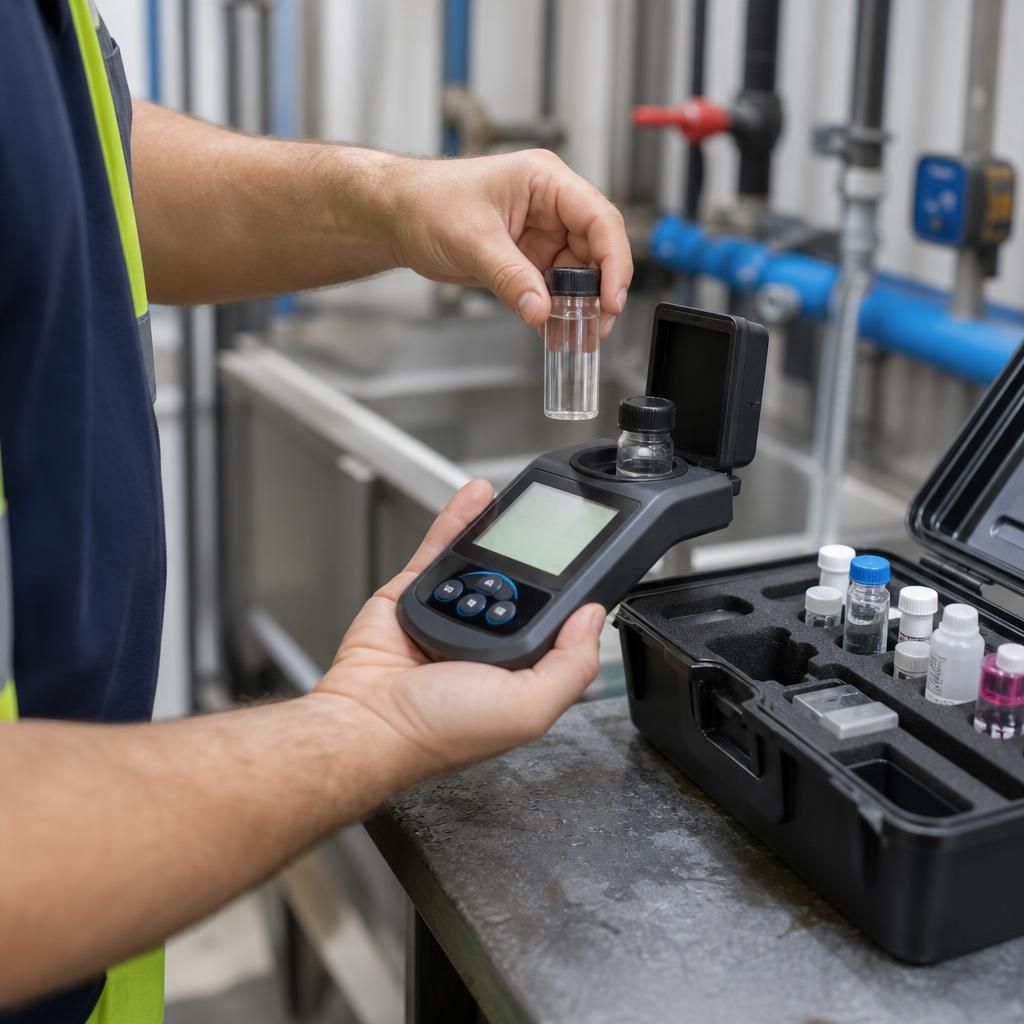
A handheld photometer is suitable for chlorine monitoring when users need an objective reading from a portable test method. Its reliability depends not only on the instrument, but also on using the correct reagent, cuvette and test sequence for the chlorine parameter being measured.
Before selecting a photometer, check that its operating procedure supports the required reporting range and that the display resolution is useful for the decisions being made. The monitoring process should also define how the instrument is zeroed, how reagents are added, how reaction times are controlled and how the cuvette is cleaned and positioned. These details reduce avoidable variation between users.
- Use reagents specified for the instrument and intended chlorine measurement.
- Check reagent expiry dates and storage conditions before use.
- Keep the optical surfaces and cuvette free from fingerprints, scratches and residue.
- Record the result together with the test point, date, time and instrument identification.
This makes a portable photometer more than a simple checking device: it becomes a traceable part of the chlorine monitoring process. Where results inform compliance decisions, the operating procedure should be documented and followed consistently.
Get advice on suitable chlorine monitoring equipment
Discuss your proposed chlorine monitoring equipment with Blue Fish Water Management Ltd to confirm that it matches your system, monitoring plan and compliance requirements. Their specialists can help you assess the practical suitability of portable or online equipment before purchase or installation.