
Does your water system need continuous chlorine monitoring?
Continuous chlorine monitoring may be appropriate where maintaining a stable disinfectant residual is critical, conditions vary, or an out-of-range result could create a significant water safety risk. It is not automatically necessary for every system: the decision should be based on the system’s risk assessment, design, use, treatment process and existing monitoring controls.
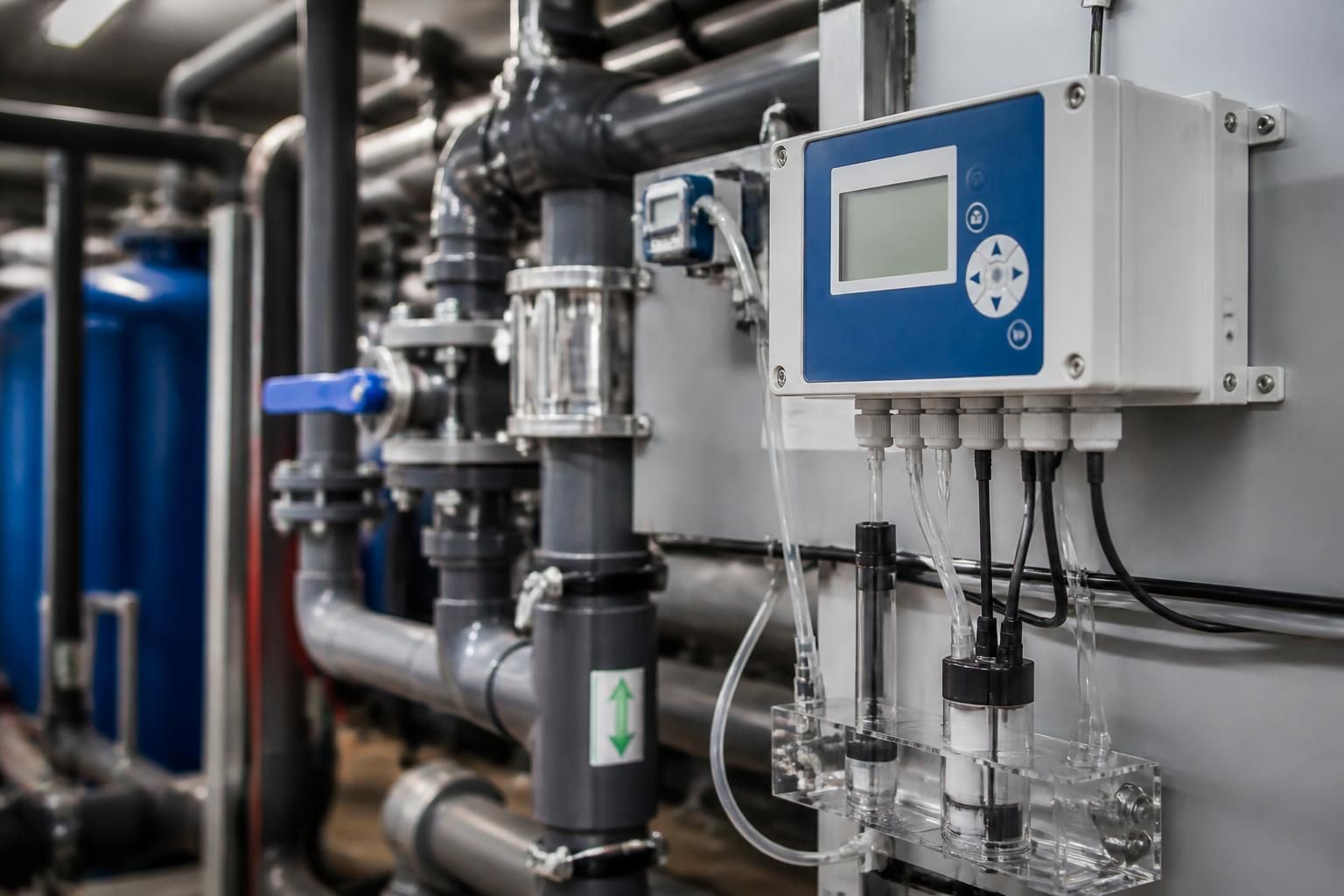
Continuous chlorine monitoring is most appropriate where the disinfectant residual can change between scheduled checks and a loss of control could expose people to a significant water safety risk. Whether it is needed should be determined through the system’s water safety risk assessment, rather than by the size or type of premises alone. The assessment should consider how the water is treated, stored and distributed, how demand changes, who uses the water and whether existing checks would identify a problem soon enough.
Continuous monitoring measures the disinfectant residual at defined intervals, usually through an installed sensor and analyser connected to a recording system. Depending on the arrangement, it may also provide an alarm when the measured value moves outside a pre-set operating range. This gives the responsible person visibility between manual sampling visits and can help identify a developing loss of treatment control.
A system is more likely to justify continuous monitoring where:
- chlorination or another disinfectant dosing process is essential to maintaining control;
- the residual is known to vary because of changing demand, variable incoming water quality, temperature, storage or flow conditions;
- water passes through a large, complex or extensive distribution network;
- there are storage tanks, booster arrangements, blending points or other features that may affect the residual;
- the system supplies a setting where vulnerable people may be exposed;
- the premises cannot rely on frequent, consistent manual checks at all relevant points; or
- a failure of dosing, loss of flow or deterioration in water quality might remain undetected until affected water has already been used.
Continuous monitoring can be particularly valuable on systems where the treated water is a critical control measure. It can show whether a dosing system is maintaining the intended residual, reveal gradual drift and help distinguish an isolated reading from a persistent trend. It may also provide evidence that the control measure is being operated and reviewed in accordance with the site’s written procedures.
It is not automatically required where a system is simple, stable and adequately controlled by a documented programme of manual checks. If the risk assessment demonstrates that sampling frequency, sample locations, staff competence and escalation arrangements provide suitable control, installing an analyser may add complexity without improving safety. The decision should account for the quality of the existing regime, not simply whether monitoring equipment is available.
Continuous monitoring does not replace the wider water hygiene programme. A disinfectant reading cannot, on its own, confirm that every part of a water system is safe. The system may still require temperature checks where relevant, inspection of storage and distribution components, flushing, cleaning and disinfection, maintenance of dosing equipment, investigation of stagnation and appropriate microbiological testing. A normal residual at one monitoring point also does not prove that the same condition exists throughout the network.
The monitoring point must therefore be selected carefully. It should provide a representative indication of the water being controlled and be accessible for inspection, calibration and maintenance. A result can be misleading if the sample line has poor flow, contains stagnant water, is affected by air, or is positioned where the measured water does not represent the parts of the system presenting the greatest risk. The system design should also allow operators to take confirmatory manual samples when a reading appears unusual.
Before relying on an installed monitor, confirm that:
- the parameter being measured is appropriate for the treatment process;
- the sensor and analyser are suitable for the water conditions and expected operating range;
- the equipment can be calibrated, cleaned and maintained in accordance with the manufacturer’s instructions;
- the monitoring point, sample flow and installation arrangement have been assessed;
- the recording system preserves results in a form that can be reviewed;
- alarm limits reflect the site’s risk assessment and operating requirements; and
- there is a written response to low, high, unstable or implausible readings.
Alarm functionality is only useful if someone is responsible for receiving, reviewing and acting on the alarm. The response procedure should explain how to verify the result, check the dosing and monitoring equipment, assess affected parts of the system, restrict use where necessary and arrange corrective work. It should also state who records the event and who decides when the system can return to normal operation. An alarm that is routinely ignored, set too narrowly or disconnected from an action plan does not provide effective control.
Manual verification remains important because sensors can foul, drift or fail. Calibration records, maintenance records, alarm logs and trend reports should be retained with other water safety documentation. Regular review can identify recurring fluctuations that may indicate a dosing fault, incorrect control settings, changing demand, biofilm or deposits, inadequate circulation, or a problem with the underlying system design.
For a defensible decision, the responsible person should document why continuous monitoring is or is not proportionate, what alternative checks are in place, and what event would trigger a review. The decision should be revisited after changes to treatment equipment, occupancy, water usage, storage, distribution, operating procedures or the population exposed. It should also be reconsidered after an incident, repeated out-of-range results or evidence that scheduled checks are not detecting changes soon enough.
Blue Fish Water Management can help assess the existing control strategy, interpret monitoring requirements and identify whether installed chlorine monitoring would add meaningful protection. Any recommendation should sit within the site’s overall risk assessment, operating procedures and record-review arrangements, alongside appropriate testing and remedial action where required.
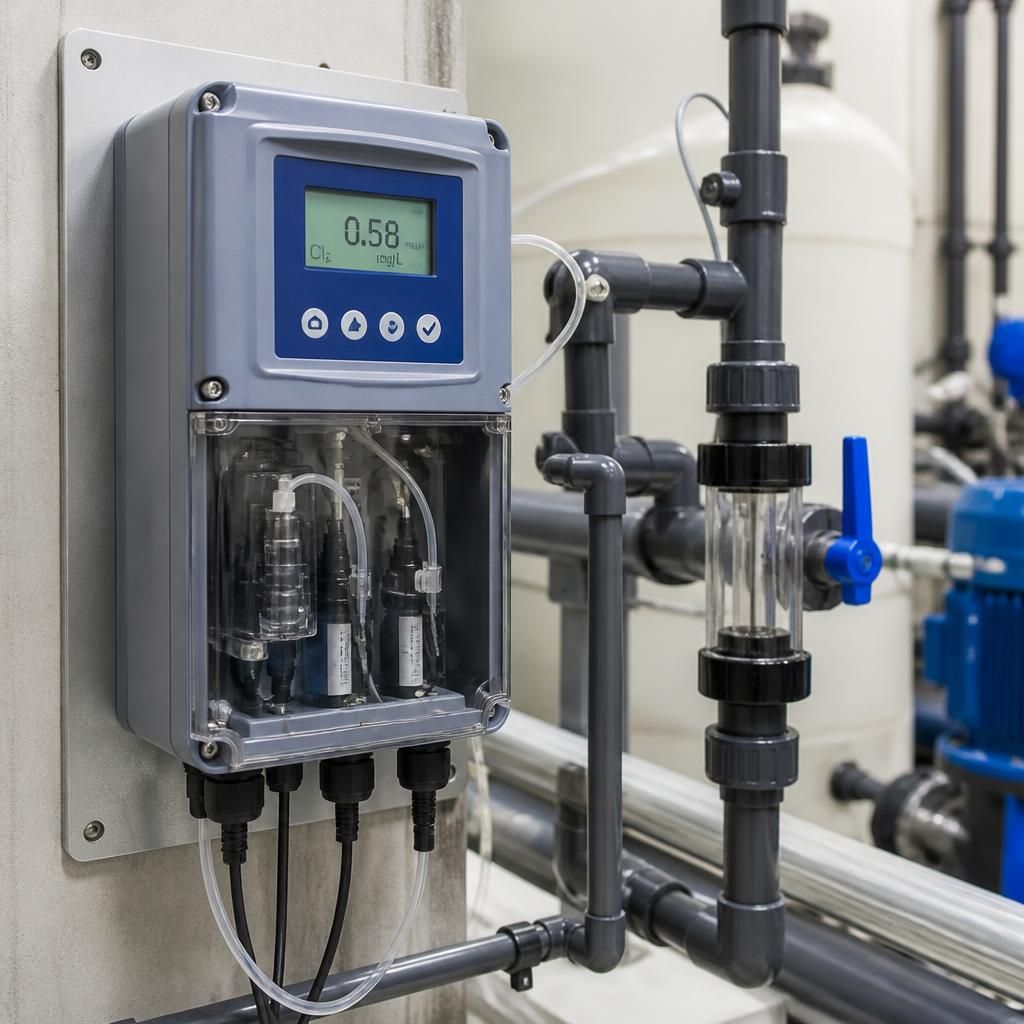
A continuous chlorine monitor should be commissioned against reliable manual measurements before its readings are used for operational decisions. This confirms that the sensor is measuring representative water and that the analyser’s results correspond with the site’s established testing method.
Commissioning should include comparison under different flow, demand and treatment conditions, confirmation that the sample line is flushed correctly, and recording of any difference between the installed monitor and manual results. The normal operating pattern can then be established, allowing alarm limits to reflect genuine loss of control rather than harmless short-term variation. This validation should be repeated after significant changes to dosing equipment, pipework, flow conditions or the monitoring location.
Discuss whether continuous chlorine monitoring is suitable for your system
Need to document whether continuous chlorine monitoring is proportionate for your system? Contact Blue Fish Water Management to discuss the information required for a robust review.