
What should happen when chlorine monitoring identifies an out-of-range result?
When chlorine monitoring identifies an out-of-range result, the responsible person should verify the reading, check the system and monitoring equipment, and record the finding. If the result is confirmed, follow the documented corrective action, assess potential water safety implications, and arrange investigation, remedial work or further testing as appropriate.
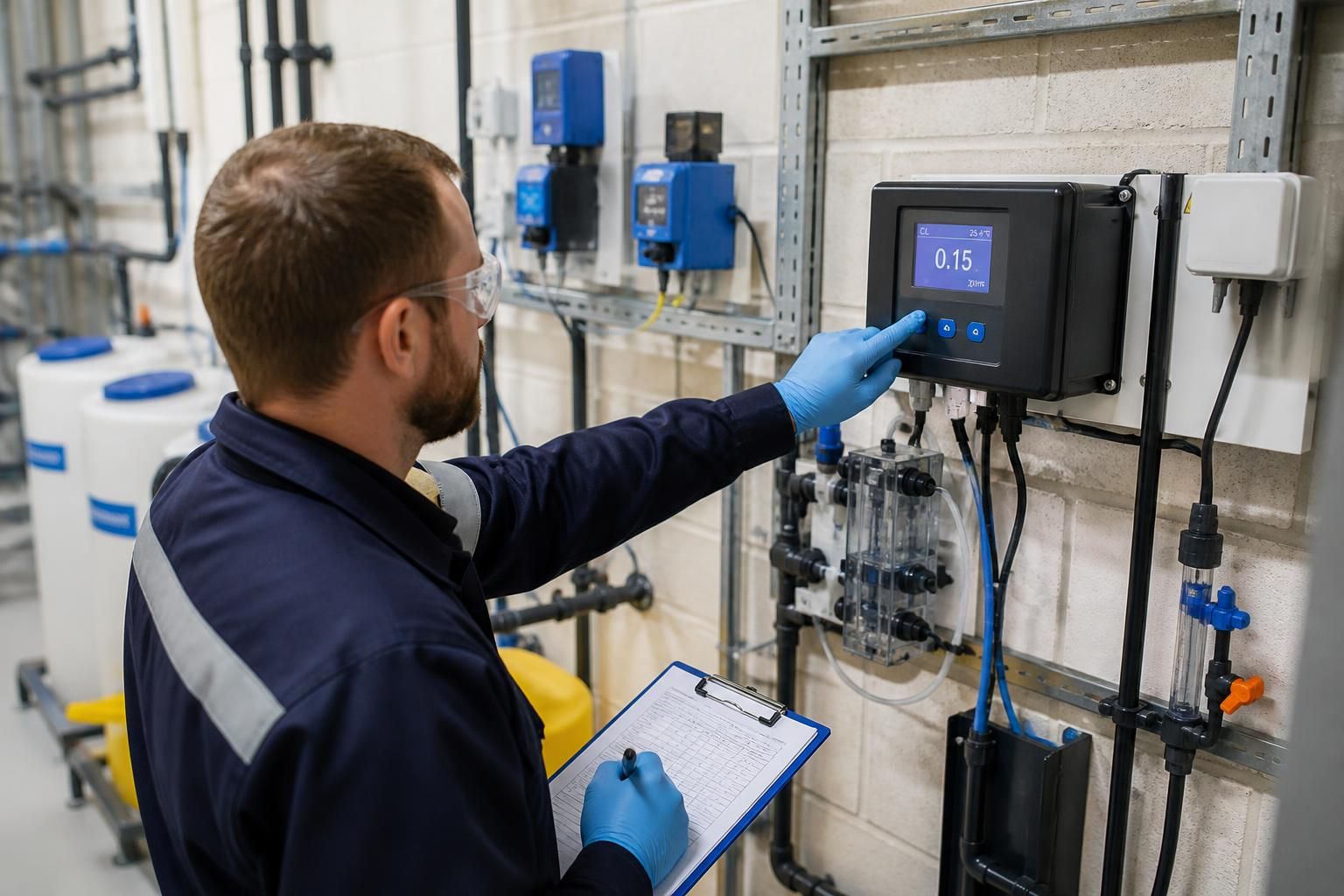
An out-of-range chlorine result should trigger a documented, risk-based response: establish whether the result is genuine, assess the possible effect on water safety, investigate the cause, take proportionate corrective action and confirm that control has been restored. The response should be based on the type and severity of the deviation, the affected part of the system and the people who may be exposed.
1. Classify the result and its potential significance
Compare the reading with the site’s defined operating range, alarm limits and action levels. A low free chlorine residual may indicate inadequate disinfection, excessive demand, stagnation, dilution, dosing failure or loss of disinfectant through the system. A high result may point to over-dosing, a control fault or an incorrect set point, and can create concerns such as taste, odour, irritation or damage to system components.
The result should also be considered alongside temperature, flow, recent maintenance, water usage, dosing activity and previous readings. A single minor deviation may require a different response from a sustained or rapidly changing result. Repeated results, a sudden loss of residual or an alarm affecting a high-risk area should be treated with increased priority.
2. Establish whether the reading is reliable
Before making a technical adjustment, establish whether the result reflects the water or a monitoring problem. Review the instrument status, calibration information, sensor condition, reagent validity, sample flow and any fault codes. Check for air bubbles, fouling, blocked sample lines, inadequate flow or other conditions that can distort an online measurement.
Where appropriate, take a representative confirmatory sample using a suitable method and compare it with the monitor result. Confirmation should not involve repeatedly sampling an unrepresentative point simply to obtain a more acceptable value. If laboratory analysis is needed, use a competent provider and ensure the sample is collected, preserved and transported in line with the relevant method.
3. Protect water users while the cause is investigated
The responsible person should consider whether the affected outlet, zone or system should remain in use. Depending on the circumstances, interim controls may include restricting access to affected outlets, isolating a section, suspending a process that relies on the water, increasing supervision or issuing suitable internal advice. Any decision should reflect the confirmed result, the duration of the deviation, the system’s purpose and the vulnerability of exposed users.
Do not make an unplanned chemical adjustment without understanding the dosing arrangement and the possible consequences. Changes to chlorine dosing can create a second deviation, leave parts of the system untreated or introduce an unnecessarily high residual. Adjustments should be made by suitably competent personnel and in accordance with the system design, risk assessment and equipment instructions.
4. Investigate the underlying cause
An out-of-range result is an indication, not a diagnosis. The investigation should examine the points that could have altered the residual or the reliability of the measurement, including:
- chemical supply, concentration, storage condition and dosing pump operation;
- control settings, interlocks, alarms and links between the monitor and dosing equipment;
- water flow, pressure, demand patterns, stagnation and changes in supply;
- pipework alterations, dead legs, storage tanks, strainers, filters and injection points;
- recent cleaning, flushing, maintenance or disinfection work; and
- the condition, calibration and installation of the monitoring equipment.
Trend data can help distinguish a brief instrument anomaly from a developing loss of control. Comparing readings at the monitoring point with appropriately selected downstream locations may also show whether the issue is localised or affecting a wider section of the system.
5. Apply and verify corrective action
Corrective action should address the identified cause rather than only clear the alarm. It may involve repairing dosing equipment, replacing consumables, cleaning a sensor, correcting a control setting, removing a restriction, flushing a section or arranging remedial work. The action taken, person responsible and completion date should be defined clearly.
After the intervention, carry out follow-up checks at suitable points and intervals to demonstrate that the system has returned to its intended operating condition. A monitor displaying an acceptable value immediately after an adjustment is not, by itself, evidence that the whole system is stable. Where the deviation could have affected water quality, additional sampling or specialist assessment may be appropriate.
6. Record the decision-making
The incident record should show the original result, date and time, location, measurement method, alarm or limit involved, relevant operating conditions, confirmation checks, risk assessment, actions taken and follow-up results. It should also explain why any restrictions, notifications or further investigations were considered necessary or unnecessary.
Records should be sufficiently clear for another competent person to understand what happened and why the response was proportionate. Where the result indicates a recurring weakness, the finding should feed into the water safety plan, monitoring schedule, maintenance programme or staff training rather than being closed as an isolated event.
7. Escalate where control cannot be demonstrated
Escalation is appropriate where the result remains abnormal, the cause is uncertain, the affected area is extensive, monitoring equipment cannot be trusted, or there may be a significant risk to users. Relevant parties may include the responsible person, water hygiene specialist, facilities or engineering team, water treatment provider and, where applicable, public health or regulatory contacts. Any external communication should be based on verified information and the advice of the appropriate competent authority.
Independent support can be useful when an out-of-range result forms part of a wider control failure. Legionella risk assessment, water testing, compliance review, system monitoring and remedial expertise can help determine whether the immediate issue has been resolved and whether the underlying management arrangements need strengthening.
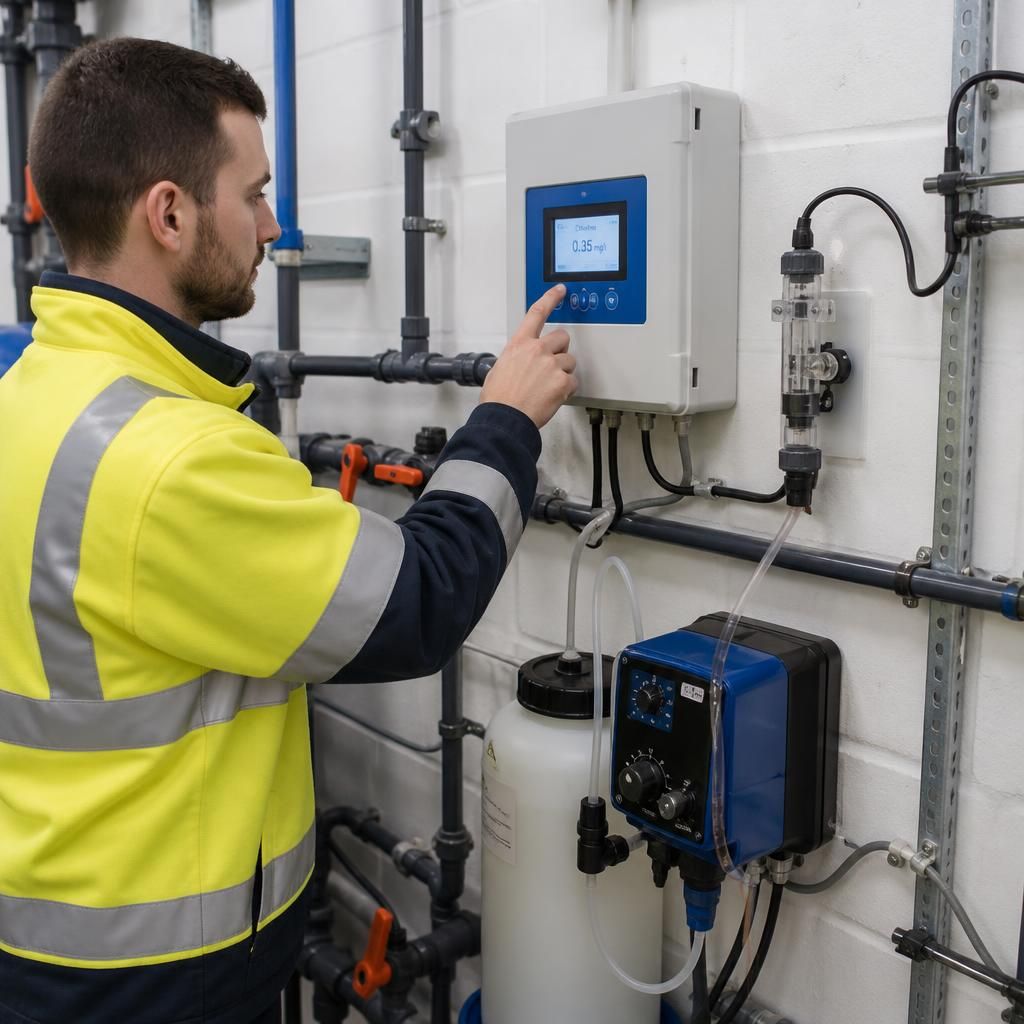
An out-of-range chlorine result should have a clear operational status until the investigation is complete. Staff responsible for the affected area should know whether the result is being checked, whether any temporary restriction applies and who has authority to return the area to normal use.
Use a controlled handover process so that important information is not lost between water hygiene, facilities and operational teams. The handover should identify the affected location, the time of the result, current precautions, outstanding checks and the person responsible for the next decision. Once the issue has been resolved, communicate that the restriction has been lifted only after the agreed verification has been completed.
Discuss an Out-of-Range Chlorine Result
If your organisation needs to review an out-of-range chlorine result, discuss the monitoring evidence and site circumstances with Blue Fish Water Management Ltd. Their water hygiene specialists can help determine whether further testing, investigation or remedial work is appropriate.