
How is residual chlorine tested during potable water dechlorination?
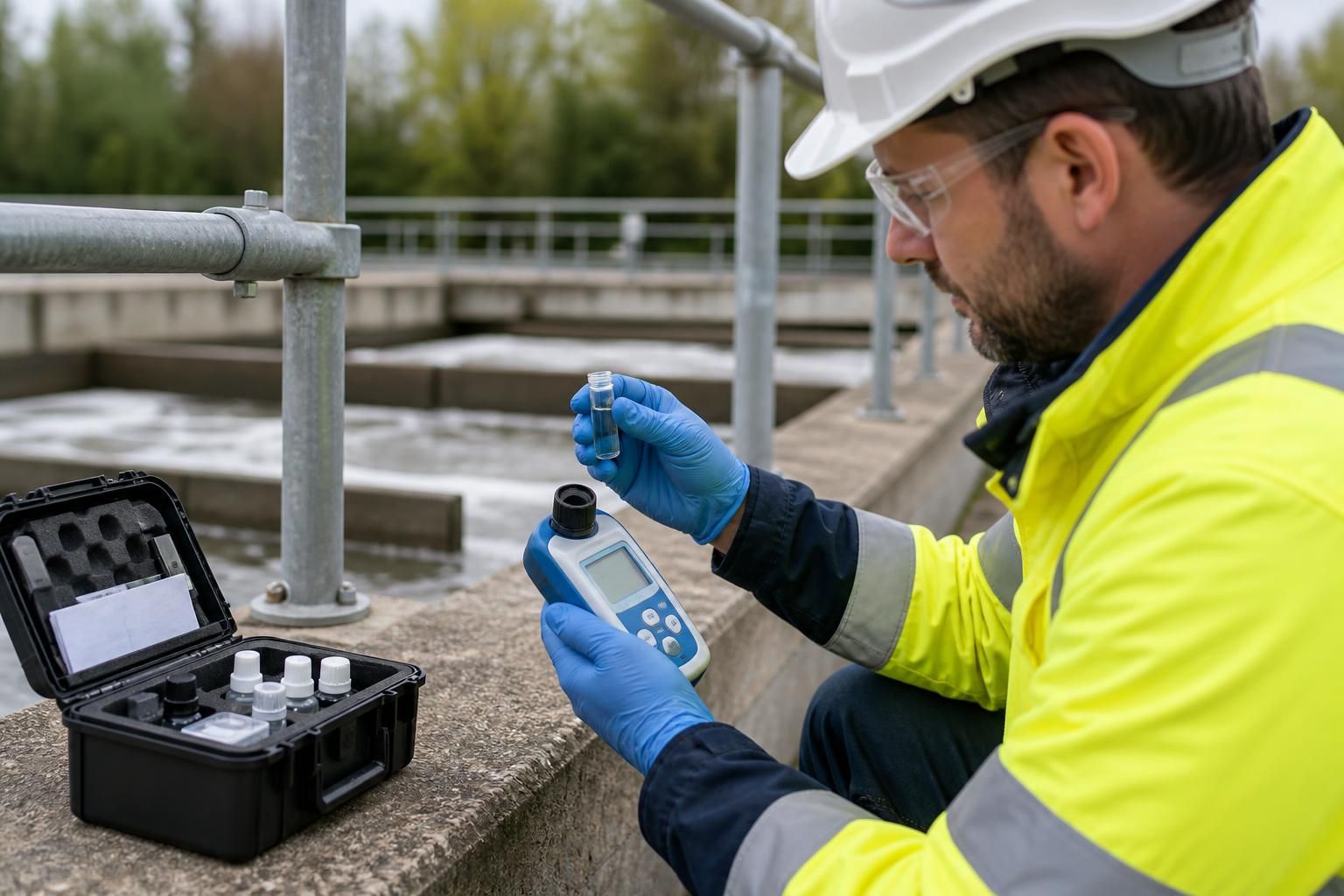
Residual chlorine is tested by measuring free chlorine in carefully collected samples throughout the dechlorination process and comparing the result with the applicable discharge or water-quality requirement. The result is only meaningful when the sampling point, test method, sample handling and acceptance criterion are all defined in advance.
Free chlorine and total chlorine
For most dechlorination checks, the key measurement is free residual chlorine: the active chlorine remaining in the water after treatment. Total chlorine includes free chlorine plus combined chlorine compounds, such as chloramines. A test for total chlorine may therefore give a different result from a free-chlorine test. The method selected should match the risk assessment, the disinfectant used and the requirement that the treated water must meet.
DPD testing
The common field method uses a DPD reagent. A measured water sample is placed in a clean test cell, the reagent is added, and the resulting colour is compared with a reference scale or measured by a photometer or colourimeter. A free-chlorine DPD test is read promptly because the chlorine concentration can change after collection. If combined chlorine also needs to be assessed, a separate total-chlorine stage is used and the difference between the two results can indicate the combined fraction.
Visual comparator kits can be suitable for straightforward field checks, but an electronic meter generally provides more objective readings where low residuals, repeated measurements or formal records are important. The equipment must be appropriate for the expected concentration range and used in accordance with its instructions. Reagents should be within their stated shelf life, stored correctly and protected from contamination.
Where samples are taken
Sampling should show what is happening at each relevant stage rather than relying on one convenient sample. Depending on the arrangement, this may include:
- water entering the dechlorination equipment;
- water leaving the treatment point;
- the final discharge or release point;
- representative low-flow areas or separate outlets where mixing may be uneven; and
- the potable water system itself after flushing, where return-to-service checks require confirmation that disinfectant has been removed.
The sample should be taken after sufficient flow has passed to represent the water being assessed, while avoiding unnecessary aeration, splashing or contact with materials that could alter the result. A sample from a stagnant section, an unrepresentative hose or a poorly mixed discharge can give false confidence that dechlorination is complete.
Testing during treatment
Initial readings establish the incoming chlorine level and help show whether the treatment arrangement is operating as expected. Further readings at the outlet confirm the effect of the dechlorination stage. If results remain above the required limit, the water should not be released or returned to service solely because the equipment is running. The cause may be exhausted treatment media, incorrect dosing, inadequate contact, excessive flow, poor mixing, equipment malfunction or a chlorine concentration outside the system's expected range.
Results should be checked against the criterion set for the particular activity. A discharge to a surface-water sewer, foul sewer, or other receiving environment may be subject to different requirements, while water remaining within a potable system may require a separate operational decision. The target should therefore come from the relevant risk assessment, permit or consent, project specification and responsible water-safety decision-maker, rather than from an assumed universal value.
Quality controls that affect accuracy
Good practice includes checking the meter or comparator before use, using clean sample cells, confirming the correct reagent and test range, and carrying out any required zero or blank check. Sample cells should be handled by their sides so fingerprints do not affect the optical reading. Where results are unexpected, the test should be repeated with a fresh sample and the equipment checked before treatment is adjusted.
Some substances can interfere with chlorine tests or affect the colour reaction. Turbidity, colour, oxidising chemicals, reducing agents and unusually high chlorine levels may all require a different procedure, dilution or specialist analysis. Dilution must be controlled and recorded because it changes the calculation. If the result is close to an important limit, or field conditions make the reading unreliable, a suitably competent laboratory can provide confirmation using an appropriate validated method.
Recording and interpretation
Each result should be traceable to the work being carried out. Records normally identify the date, sampling location, sample type, test method, equipment reference, reagent or kit details where relevant, result, units, operator and any corrective action. It is also useful to record flow conditions, treatment settings and observations such as unusual colour, odour or poor mixing.
A single acceptable reading does not necessarily demonstrate that all water has been adequately treated. Results should be considered alongside the sampling plan, flushing or discharge sequence and any changes in flow or treatment conditions. Where readings vary materially between locations, the lowest apparent chlorine result should not automatically be treated as representative; the variation should be investigated and the sampling arrangement reviewed.
For planned potable water work, an appointed competent person should define the test method and acceptance criteria before dechlorination begins. Independent review or laboratory confirmation may be appropriate where the consequences of an incorrect result are significant. Testing supports the decision to release or return water to service, but it does not replace the wider commissioning, flushing, inspection and water-safety checks required for the system.
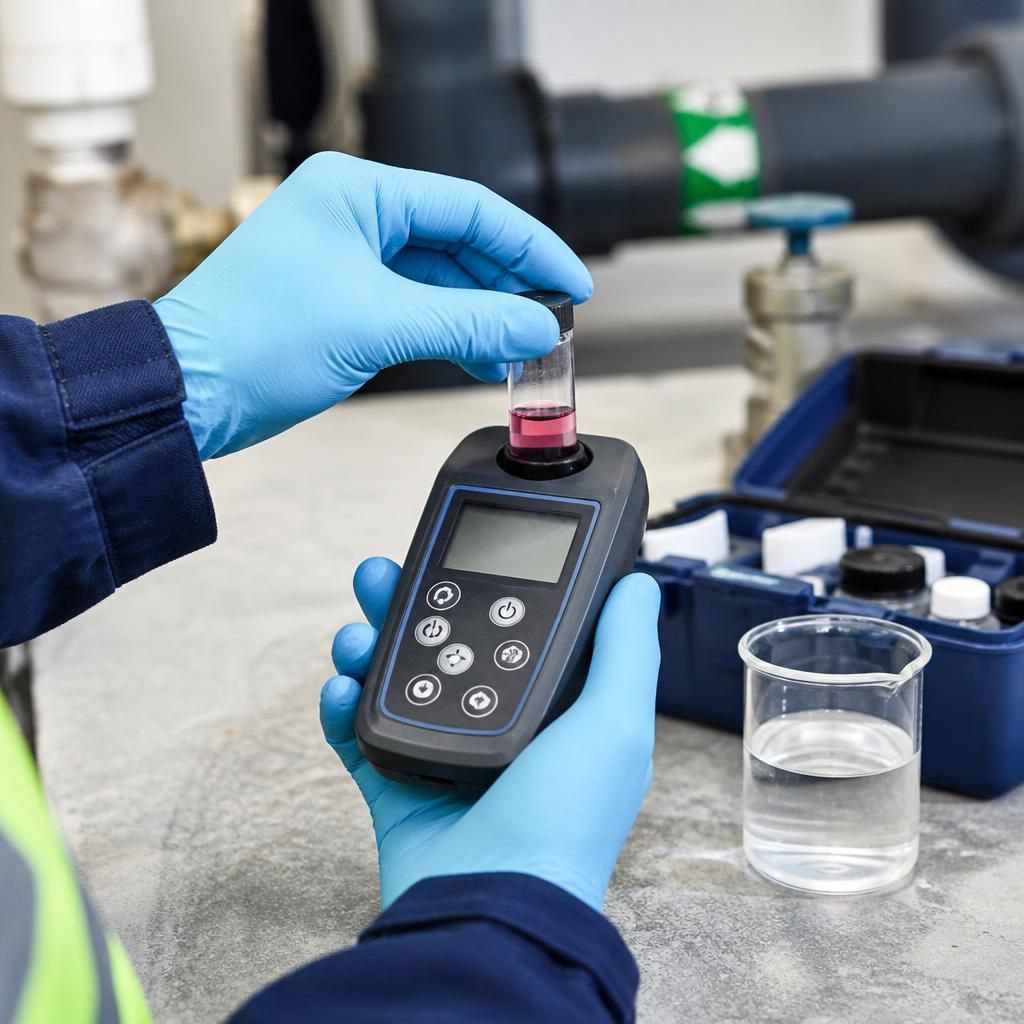
A residual chlorine result shows how much disinfectant remains in the sample; it does not, by itself, prove that the potable water is microbiologically safe. After dechlorination, the responsible water-safety decision-maker may still require flushing checks, inspection and appropriate microbiological sampling before the system returns to service. Chlorine testing should therefore be treated as one control within the wider verification process, not as a substitute for final approval.
Need advice on residual chlorine testing?
If you need support reviewing a residual chlorine testing plan for potable water dechlorination, speak to Blue Fish Water Management Ltd about the appropriate sampling approach, equipment and acceptance criteria for your project.