
When is dechlorination required after potable water system disinfection?
Dechlorination is required after potable water system disinfection when the disinfectant contact period has been completed but residual chlorine remains too high for safe drinking use, discharge, or the receiving environment. The water should be tested first, then dechlorinated where necessary before the system is flushed, approved and returned to service.
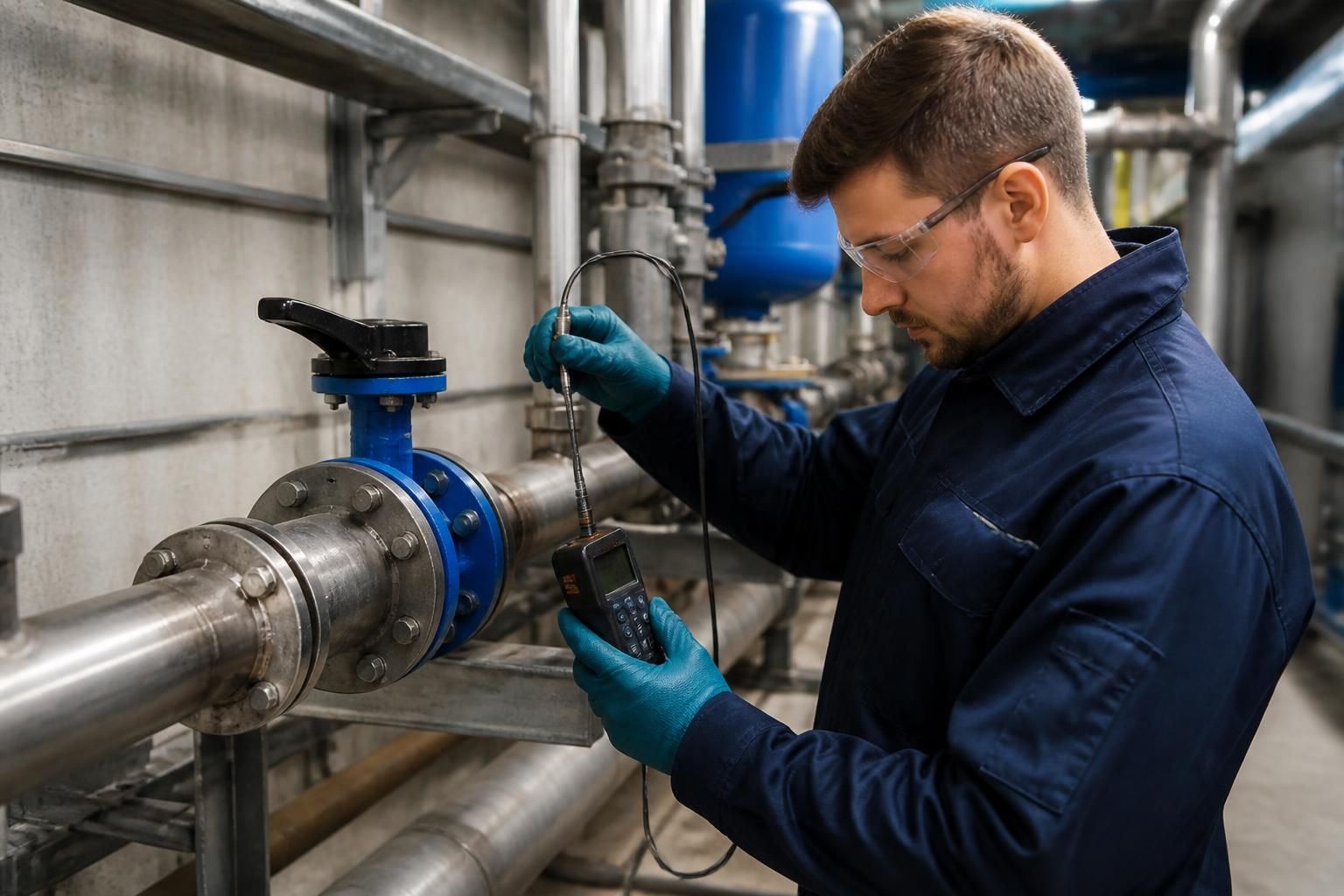
Dechlorination is a controlled post-disinfection step used when the remaining disinfectant must be reduced before the water can be discharged, used for drinking, or introduced back into a potable system. It is not automatically required after every disinfection exercise: the need depends on the disinfectant used, the measured residual, the intended destination of the water and the acceptance criteria for the system.
The disinfection contact period must be completed before neutralisation begins. Removing chlorine too early can reduce the effectiveness of the treatment and leave parts of the installation inadequately disinfected. Once the required contact period has elapsed, representative samples should establish the residual at relevant points, including outlets or sections where chlorine demand, stagnation or poor circulation may produce different results.
Dechlorination is normally considered in the following circumstances:
- Before potable use: a residual that is unsuitable for drinking use must be reduced before the system is put back into service. Taste, odour, material compatibility and the system’s agreed water-quality criteria may all be relevant, rather than relying on appearance alone.
- Before discharge: water containing disinfectant may require treatment before it enters a foul drainage system, surface-water drainage system or other receiving route. The requirements can vary according to the receiving infrastructure and any conditions set by the relevant authority or water company.
- Before environmental release: chlorine can harm aquatic organisms and other sensitive receiving environments. Where flushing water could reach a watercourse, ground, storm drain or other environmentally sensitive location, its residual should be assessed and neutralised where required.
- Where flushing alone is unsuitable: a system may not have sufficient flow, storage capacity or a suitable discharge route to remove the residual safely by dilution. Controlled chemical neutralisation can then be needed as part of the flushing plan.
Dechlorination should not be treated as a substitute for flushing. Neutralisation removes or reduces the disinfectant, but flushing is still needed to remove loosened deposits, stagnant water, suspended material and the products of the treatment. The sequence and extent of flushing should reflect the system design and the results of post-treatment testing.
The method must match the chemistry present. Free chlorine, combined chlorine and other disinfectants do not necessarily respond in the same way, so the responsible person should confirm what has been dosed before selecting a neutralising agent. Common approaches use a measured reducing chemical, controlled dosing equipment or a treatment vessel. The chemical should be introduced in a way that allows adequate mixing and avoids creating an excessive dose, a sudden change in water quality or a secondary residue.
Testing is needed before, during and after the process. A suitable approach is to:
- confirm that the specified contact period has ended;
- measure the relevant chlorine residual using a method appropriate to the disinfectant and water conditions;
- identify the discharge or reuse criteria that must be met;
- apply dechlorination in a controlled manner, if the results show it is necessary;
- flush or discharge through the agreed route; and
- retest representative points to confirm that the residual and other required water-quality conditions are acceptable.
A single sample from the point where dosing took place may not represent the whole installation. Large buildings, long pipe runs, storage tanks, blended supplies and systems with low-use outlets can require sampling at several locations. If results vary, the cause should be investigated rather than assuming that further chemical addition is the correct solution.
Dechlorination may also be required in stages. For example, heavily chlorinated water may first be contained or treated before controlled discharge, while residual water in branches and outlets is dealt with during subsequent flushing. The plan should account for worker safety, chemical handling, backflow prevention and protection of tanks, pipework, pumps and downstream equipment.
The final decision should be based on measured results and the documented requirements for the installation, discharge route and intended use. A competent water hygiene professional can determine whether dechlorination is necessary, select a proportionate method and verify that the system has reached the required condition before normal potable operation resumes.
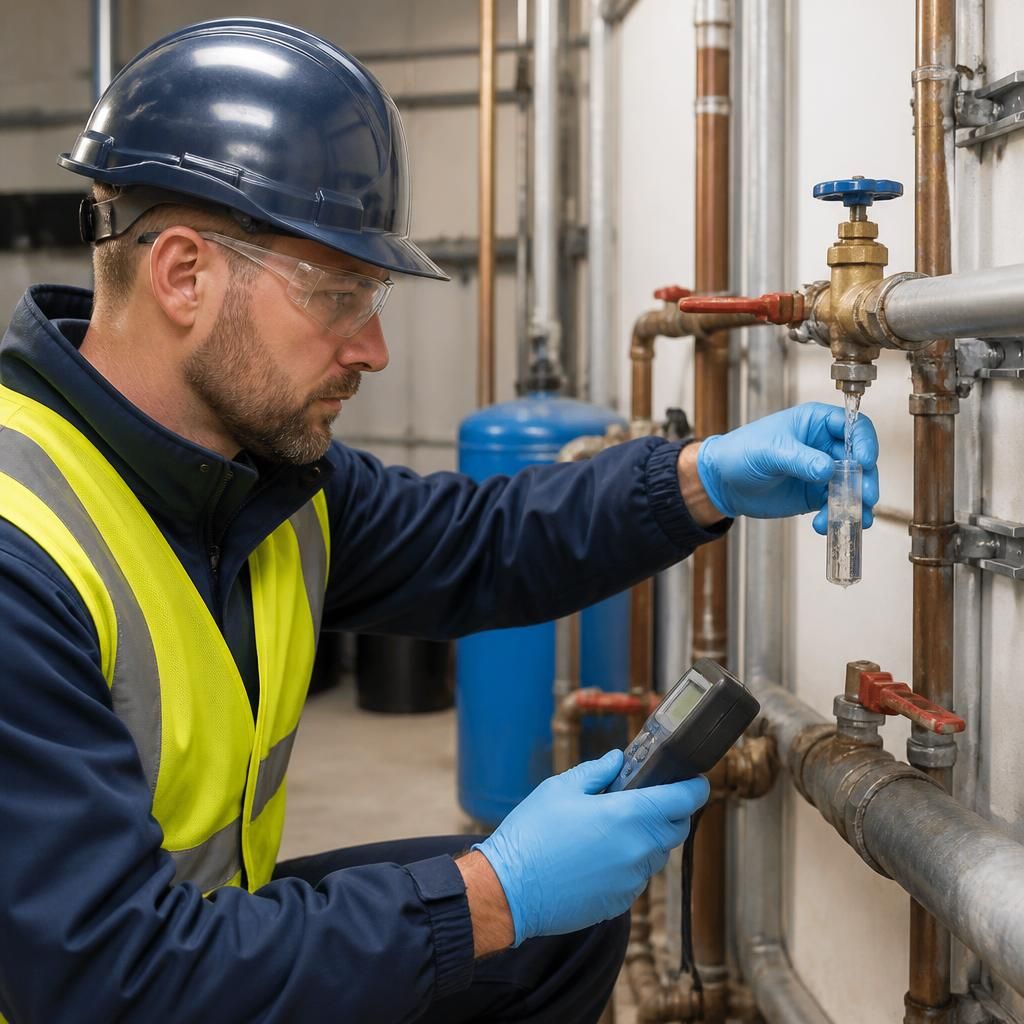
The trigger for dechlorination is not simply the presence of chlorine. It is whether the measured residual is suitable for the water’s next destination. A residual may be acceptable within a controlled disinfection process but unsuitable for drinking use, discharge to drainage or release where aquatic life could be affected.
For that reason, the responsible person should identify the receiving route and its water-quality requirements before deciding whether neutralisation is needed. Testing can then show whether the water can proceed to controlled flushing or discharge, or whether it must first be treated to reduce the residual. This prevents unnecessary chemical dosing while ensuring that chlorinated water is not released through an unsuitable route.
Get Advice on Potable Water Dechlorination
If you need to establish whether dechlorination is required after a potable water system disinfection, speak to Blue Fish Water Management Ltd about reviewing the test results, discharge route and return-to-service requirements.