
What records should potable water dechlorination produce?
Potable water dechlorination should produce a clear, traceable record of the treatment, including the system or discharge point, date and time, method used, chemicals or equipment applied, and the person responsible. It should also capture chlorine residual results before and after treatment, discharge monitoring, any deviations or corrective action, and confirmation that the water was suitable for its intended discharge or return to service.
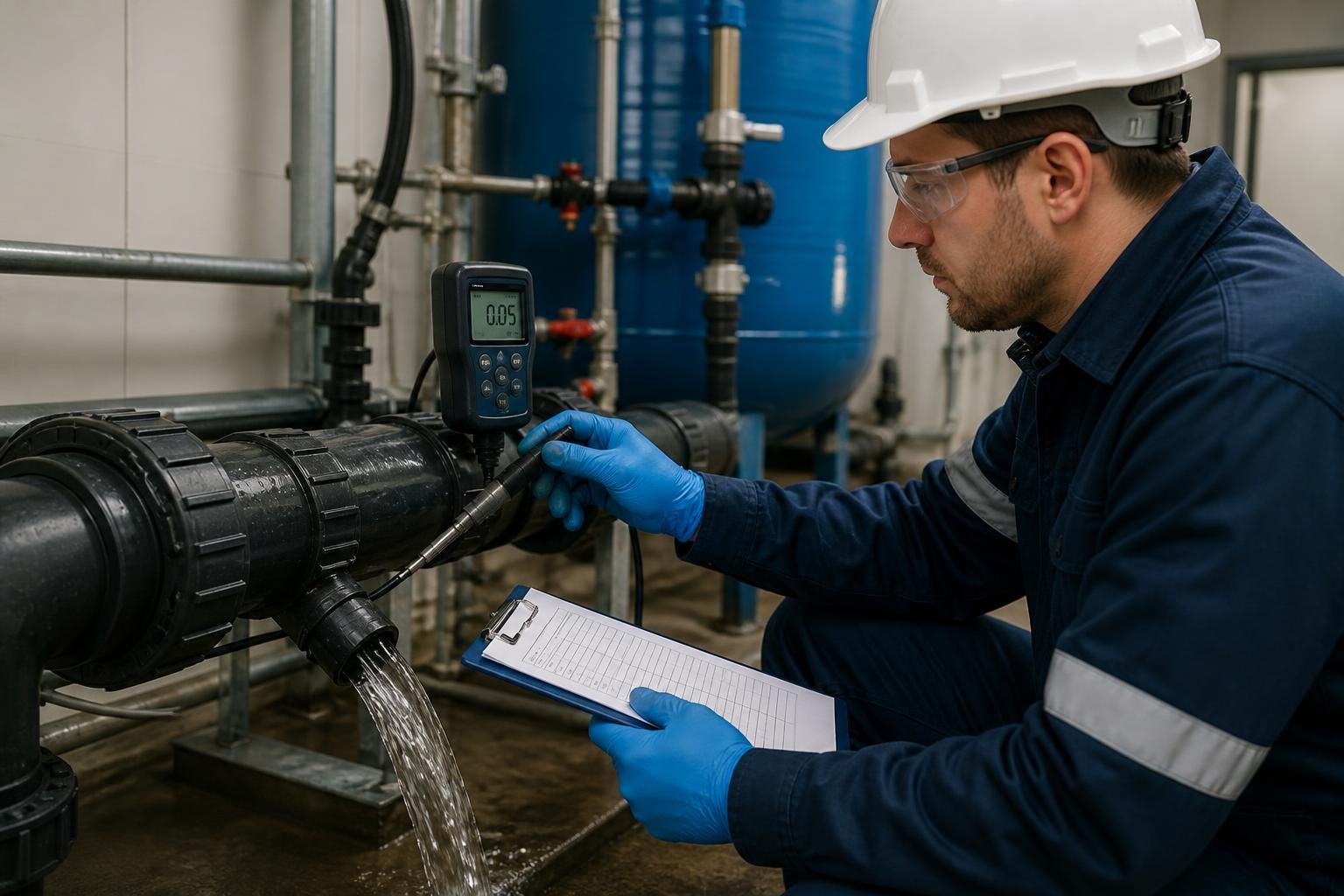
The record should provide an auditable chain from the decision to dechlorinate through to final acceptance of the water. It should show why treatment was required, how the chosen process was controlled, where the treated water went, and who reviewed the results. A complete record normally combines operational notes, test evidence, equipment checks and any relevant discharge documentation rather than relying on a single form.
In addition to the treatment details, include the following supporting information:
- Scope and location: identify the premises, water system, section of pipework, tank or discharge point concerned. Record the relevant work order, risk assessment or disinfection plan so that the activity can be linked to the wider maintenance task.
- Reason for the work: state whether dechlorination followed commissioning, cleaning, shock disinfection, remedial work, flushing or another planned activity. Note any site restrictions or conditions that affected the procedure.
- Method justification: record why the selected neutralising chemical, filtration arrangement or other treatment method was suitable for the water volume, chlorine concentration, discharge route and intended endpoint. Where a different method was used from the site procedure, explain the deviation.
- Chemical and equipment control: retain details that demonstrate the suitability and condition of dosing pumps, contact equipment, filters, test instruments and other relevant apparatus. This may include inspection records, calibration or verification checks, chemical identification, safety information and delivery or batch documentation.
- Sampling evidence: record sample references, sampling locations, the person taking each sample, the test method, the instrument or laboratory used and the associated result. Where samples are sent away, retain laboratory reports and any chain-of-custody information. Results should be recorded in a way that allows them to be matched to the precise stage of the operation.
- Discharge control: document the receiving sewer, drain, surface-water route, storage arrangement or other destination, together with any consent, notification or site instruction that applied. Keep evidence of checks made to prevent treated water entering an unsuitable drainage route or causing harm to the receiving environment.
- Safety and environmental observations: note relevant spill controls, chemical handling precautions, unusual appearance or odour, unexpected flow conditions and any environmental incident. Records should cross-reference incident reports, photographs or waste documentation where these exist.
- Exceptions and corrective action: explain failed checks, out-of-range readings, interrupted dosing, equipment faults, repeat sampling or additional flushing. The record should identify the action taken, the person who authorised it and the evidence used to close the issue.
- Review and sign-off: include the names or roles of the operator and reviewer, the date of technical review and the decision to proceed, stop, repeat or release the next stage of work. If the water was being prepared for return to a potable system, retain the separate approval evidence required by the site’s water safety procedure.
Records should be legible, contemporaneous and protected from unauthorised alteration. Corrections should leave the original entry readable and show who made the change and when. Electronic records should have suitable access controls, version history or an equivalent audit trail.
The retention period should follow the organisation’s water safety plan, risk assessment, contractual requirements and applicable regulatory or environmental obligations. Keep related documents together, including the work instruction, test reports, equipment checks, discharge permissions, incident records and approval documentation. This makes it possible to reconstruct the activity during an internal review, compliance audit or investigation.
For higher-risk sites, a standard dechlorination record can be supported by a site-specific checklist and a document register. The checklist helps operators capture information at the point of work, while the register confirms that all supporting evidence has been received and reviewed. Blue Fish Water Management can help organisations assess whether their existing records provide sufficient traceability for potable water disinfection and dechlorination activities.

A dechlorination record confirms that chlorine was controlled for the relevant discharge or operational stage; it does not, by itself, demonstrate that a potable water system is microbiologically safe to use. The record should therefore be interpreted within the wider disinfection and water safety documentation, rather than treated as evidence of successful disinfection or final clearance.
This distinction is particularly important where treated water is intended to return to a potable system. The dechlorination entry should show the outcome of chlorine control, while separate validation records should address any required flushing, water quality testing and formal release decision. Keeping these purposes distinct prevents a satisfactory neutralisation result from being mistaken for approval to restore the system to service.
Review your potable water dechlorination records
Review your current potable water dechlorination records against your water safety procedures and discharge requirements. If gaps remain, speak to Blue Fish Water Management about assessing the record-keeping process and supporting compliance documentation.