
What qualifications and relevant experience does your chlorine equipment team hold?
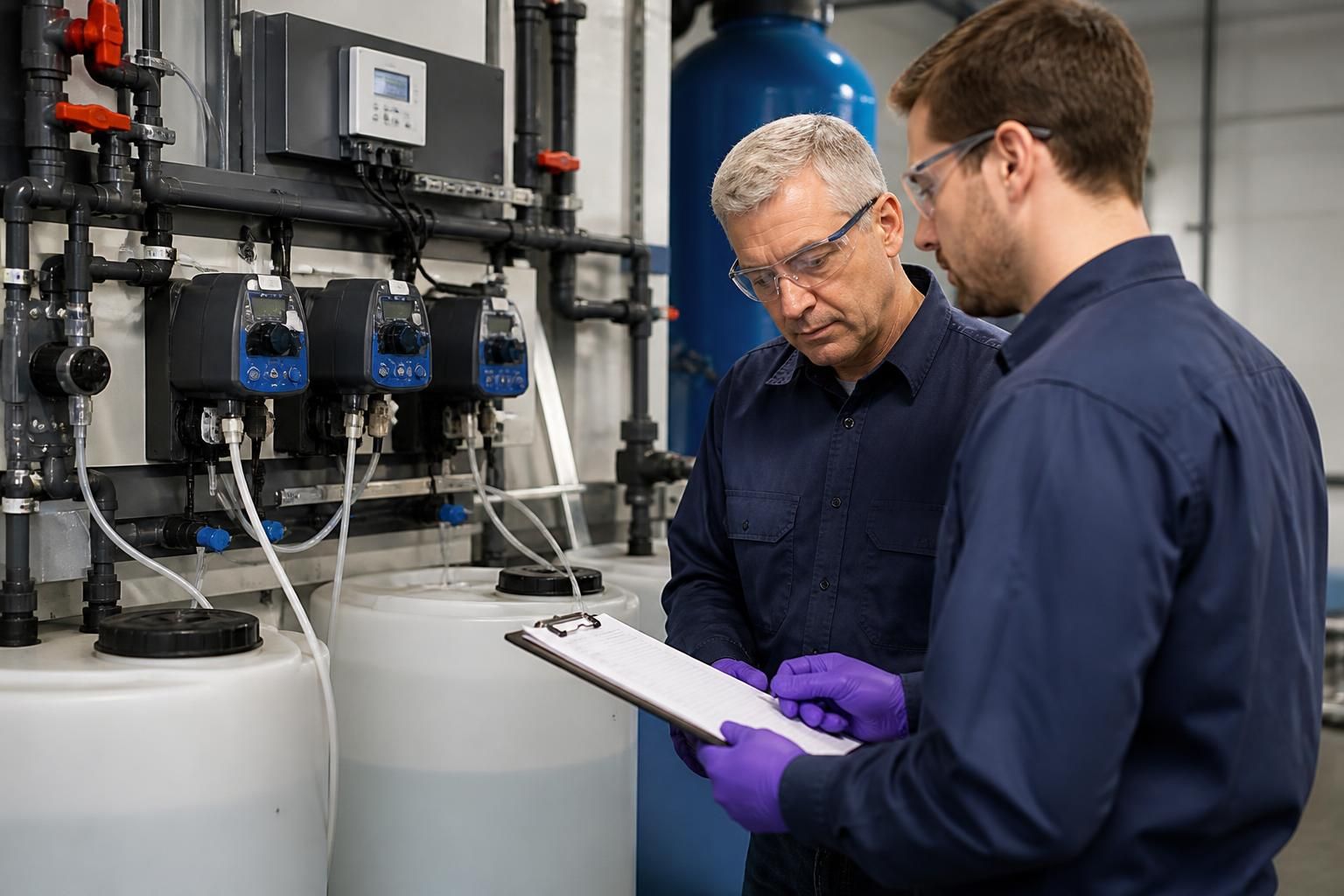
The team’s relevant competence covers the assessment, specification, installation oversight, commissioning and ongoing management of chlorine equipment used in water treatment. This combines water hygiene and legionella-control knowledge with practical understanding of dosing arrangements, filtration, monitoring, chemical safety and compliance evidence.
For chlorine equipment work, formal competence is relevant in several areas:
- Water hygiene and legionella control: understanding how water systems are designed, operated, monitored and controlled to reduce health risks.
- Chlorine treatment: familiarity with dosing principles, contact time, residual control, chemical storage, injection points, alarms and the interaction between treatment equipment and the wider water system.
- Risk assessment and compliance: the ability to identify hazards, assess control measures and produce practical recommendations that can be incorporated into operating and maintenance arrangements.
- Sampling and results interpretation: experience using water-quality information to assess whether treatment is operating as intended and whether further investigation or remedial action is required.
- Safe systems of work: knowledge of chemical handling controls, personal protective equipment, isolation procedures, emergency arrangements and the documentation needed for safe operation.
- Equipment coordination: practical understanding of how chlorine equipment connects with tanks, pipework, pumps, filters, control panels and monitoring devices, including the need to coordinate specialist installation activities where applicable.
Relevant experience is particularly important because a technically suitable component can still be unsafe or ineffective if it is incorrectly sized, poorly integrated or inadequately monitored. The team therefore considers the source water, system design, intended use, operating conditions, existing controls and maintenance requirements before advising on equipment. This helps ensure that recommendations are based on the actual water system rather than on a generic product selection.
Experience also supports the stages after specification. Competent personnel should be able to review installation details, check that controls and monitoring arrangements reflect the design, identify outstanding issues at commissioning and define the records needed for ongoing management. Where remedial works are required, the same understanding helps distinguish between a chlorine-equipment issue and a wider problem involving storage, distribution, flow, stagnation or operational control.
The precise certificates and qualifications relevant to a particular project depend on the equipment and the work being undertaken. For example, separate competence may be needed for chemical handling, electrical work, mechanical installation or specialist control systems. These activities should be carried out or supervised by suitably qualified personnel, with responsibilities clearly allocated in the project documentation.
When assessing a chlorine equipment provider, clients should request evidence appropriate to the proposed work. This can include staff training records, relevant qualification certificates, continuing professional development records, previous experience with comparable systems, risk assessments, method statements, commissioning documentation and details of how competence is maintained. Testing credentials should also be considered separately from individual qualifications: an accredited testing service demonstrates control of the testing process, while the people specifying and managing chlorine equipment must have competence suited to the system itself.
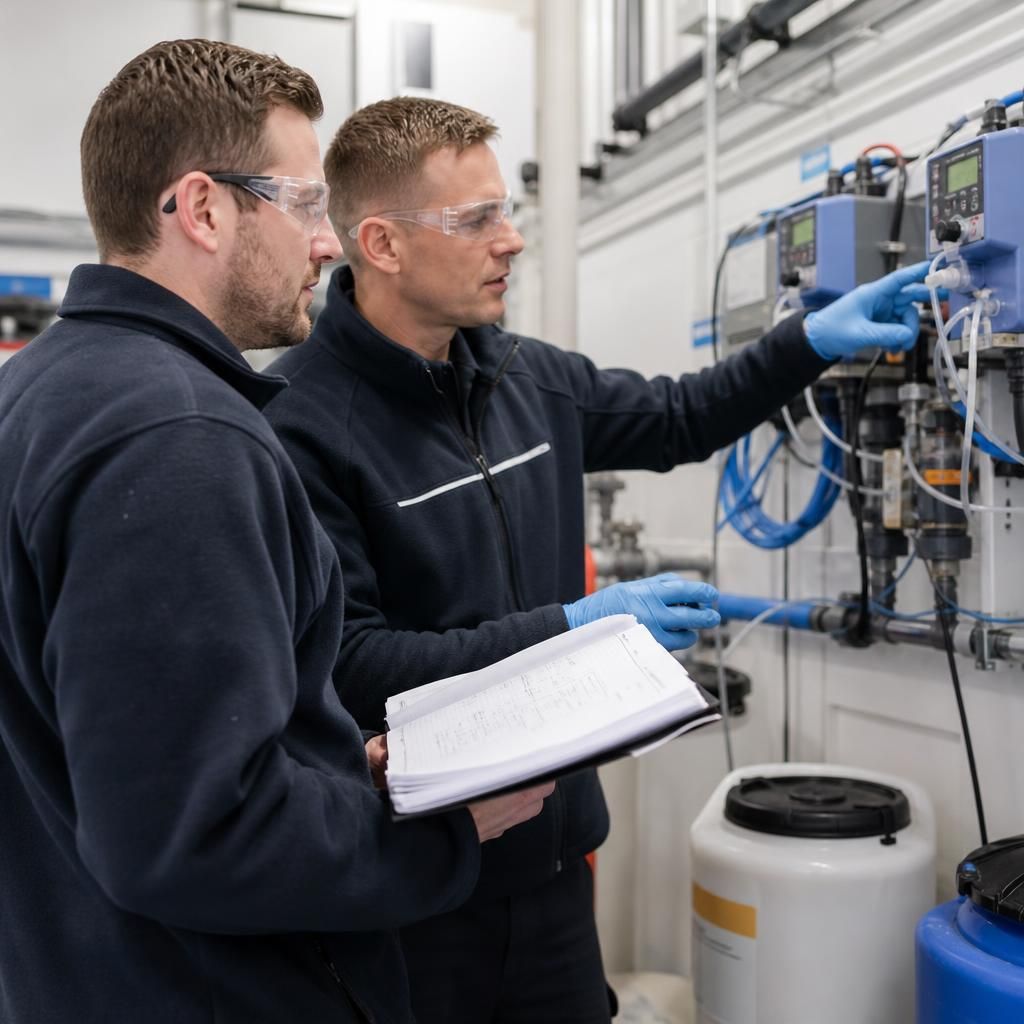
Relevant experience is particularly valuable during commissioning and handover, when the intended design must be translated into safe day-to-day operation. The chlorine equipment team should be able to identify whether dosing, alarms, interlocks and monitoring points have been set up as specified, and whether the operating instructions are clear for the people responsible for the system.
Practical experience also helps the team recognise issues that may not be apparent from equipment documentation alone, such as inconsistent readings, unsuitable access for routine checks or control arrangements that do not reflect how the water system is actually used. These observations can be recorded as commissioning actions, with responsibilities for completion and verification clearly identified before the equipment is treated as fully operational.
Ask About Our Chlorine Equipment Team’s Qualifications
If you are assessing chlorine equipment for a commercial water system, speak to our team about the project requirements, proposed scope and relevant competence. We can explain how our experience applies to specification, commissioning and ongoing system management.