
What ongoing support is included after chlorinator commissioning?
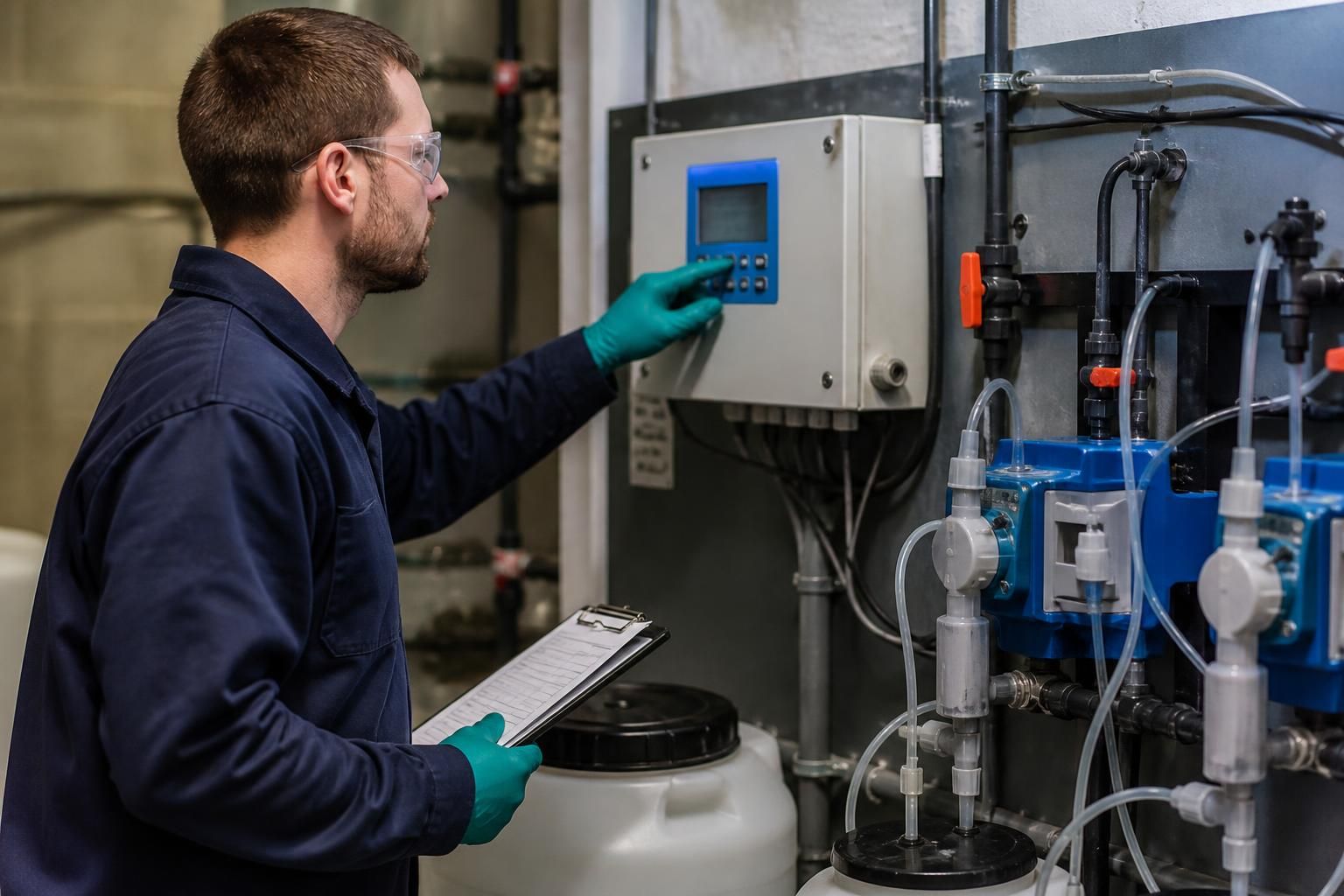
Ongoing support after chlorinator commissioning should maintain control of the dosing process, preserve reliable records and ensure the system remains suitable as operating conditions change. It is more than repairing equipment when it fails: it provides a structured link between the commissioned installation, day-to-day operation and the organisation’s wider water safety arrangements.
Commissioning handover and operating information
A proper handover should leave the responsible person with clear information about how the chlorinator and dosing equipment is intended to operate. This can include the system layout, dosing points, control settings, alarm functions, isolation arrangements, chemical handling requirements and the checks expected from site personnel. Relevant commissioning results and baseline readings should also be retained so later observations can be compared with the original operating condition.
The documentation should identify who is responsible for routine checks, what constitutes an abnormal result and how concerns are to be escalated. This avoids uncertainty between the system operator, facilities team and water treatment provider.
Routine operational review
Support may include reviewing operating records rather than relying only on occasional site visits. Trends in chlorine residual, plant status, chemical consumption, alarm history and interruptions to dosing can indicate deterioration before it becomes a wider water safety issue. A review should consider whether readings are consistent with the system design and the site’s risk assessment, rather than treating an isolated result as sufficient evidence of performance.
Where the installation has automatic controls, the review should also consider sensor condition, control response and the relationship between measured values and dosing output. Persistent deviations may indicate calibration issues, fouling, hydraulic changes, chemical supply problems or a fault elsewhere in the water system.
Maintenance, calibration and consumables
Planned support should define which components require inspection, cleaning, calibration or replacement, and how those activities will be recorded. Depending on the equipment and application, this may involve dosing pumps, injection points, strainers, tubing, valves, sensors, sample lines and associated control panels. Maintenance should be based on the manufacturer’s instructions, the water system’s operating conditions and evidence from previous inspections.
Chemical storage and dosing arrangements should remain suitable throughout the system’s use. Checks can cover containment, labelling, connections, leaks, ventilation and the condition of transfer equipment. Consumables and replacement parts should be identified clearly so that substitutions do not alter the intended dosing method or compromise safe operation.
Records and compliance evidence
Ongoing support should produce an auditable record of site observations, readings, maintenance, calibration, faults, corrective actions and outstanding recommendations. Records need to show not only that a check took place, but also what was found and how any deviation was addressed. This evidence can support internal reviews, water safety documentation and compliance audits.
When changes are made to the building, occupancy, water demand, storage arrangements or treatment strategy, the effect on the chlorinator should be assessed. A system that was appropriate at commissioning may require revised settings, additional controls or further investigation after a significant change.
Training and technical advice
Operators should understand the checks they are expected to complete, the meaning of alarms and readings, safe chemical handling and the limits of their responsibilities. Refresher training is useful where personnel change or where recurring operational errors are identified. Technical advice should explain the cause and significance of a problem, not simply recommend an adjustment without documenting why it is appropriate.
The support arrangement should also state what happens when results fall outside the agreed operating parameters. This may involve confirming the reading, checking the equipment and water system, assessing any potential effect on water safety, and recording the corrective action. Remedial work should be followed by verification so that the organisation can demonstrate that the issue has been addressed.
Before agreeing an ongoing support arrangement, confirm the scope of visits and reviews, the records that will be supplied, the division of responsibilities, the treatment of faults and the process for reviewing recommendations. The most useful arrangement is one that connects technical maintenance with water hygiene management, giving the responsible person a clear and current evidence trail for the chlorinator’s continued operation.

Ongoing support may include a defined water sampling programme to verify that chlorine dosing is achieving the intended outcome at representative points in the system. Sampling locations should reflect the system layout, including points where residual levels may differ from those measured at the dosing point. Results should be interpreted alongside operating conditions, flushing arrangements and any relevant changes to the installation.
Where a result is unexpected, the provider should distinguish between a sampling issue, a localised water quality concern and a wider dosing or distribution problem before recommending action. This avoids making unnecessary changes to chemical settings and helps ensure that any adjustment is supported by evidence. The sampling plan should be reviewed when the system configuration or use changes.
Discuss your ongoing chlorinator support requirements
Discuss your ongoing chlorinator support requirements with Blue Fish Water Management Ltd to establish a support arrangement suited to your water system, operating responsibilities and compliance needs.