
What chlorine dosing methodology will be used for our water system?
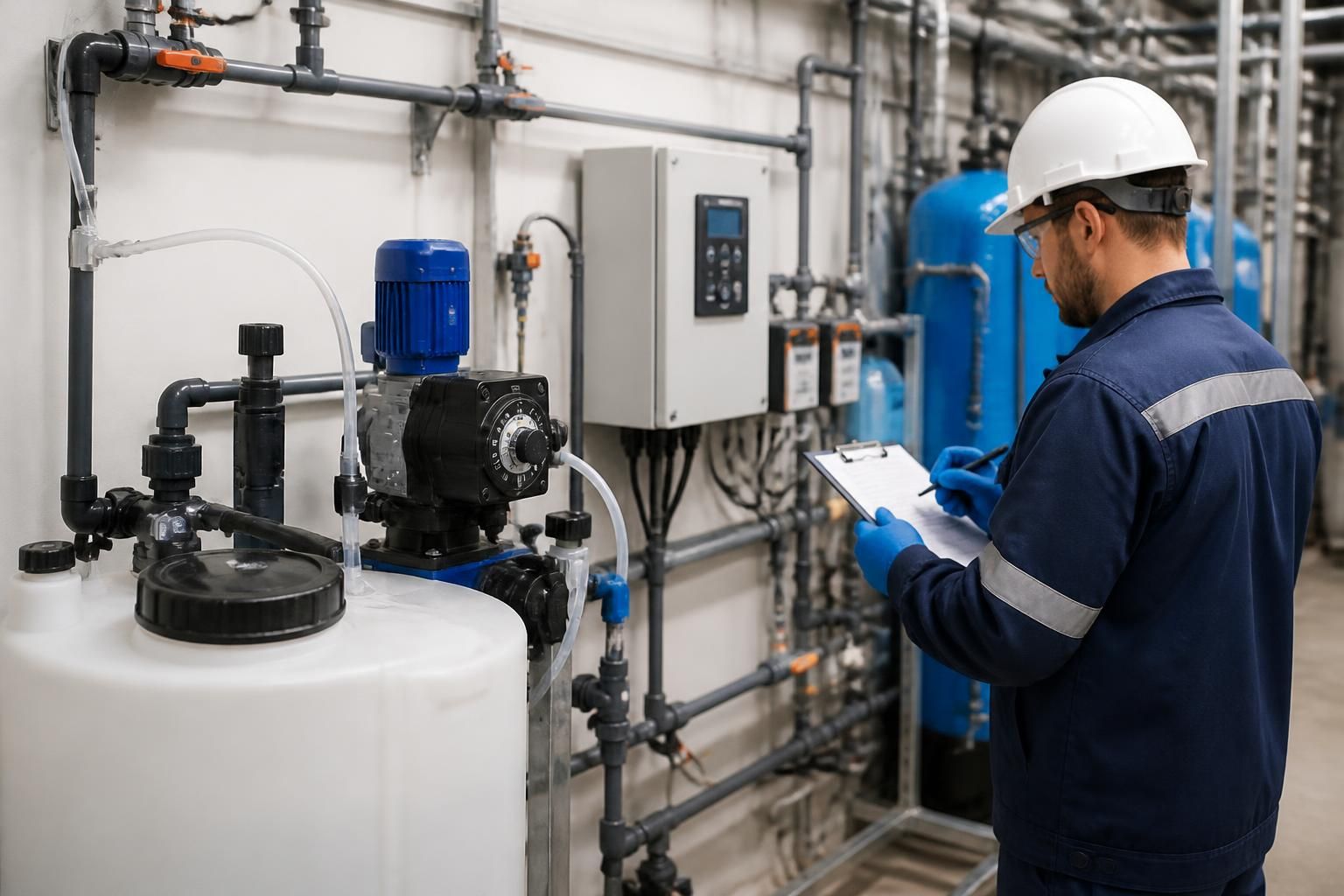
The appropriate chlorine dosing methodology is the one that delivers the required disinfectant residual consistently at the relevant points of the system, while accounting for demand, flow variation, contact time, water chemistry and the way the system is operated. In practice, this normally means choosing between continuous, flow-proportional, batch or targeted dosing, or using a controlled combination of methods where the system has different operating conditions.
Continuous dosing introduces chlorine at a controlled rate while the system is operating. It can be suitable where water demand is relatively consistent and a stable residual is required throughout a circulating or regularly used system. The dosing rate must still be linked to measured conditions, because a fixed pump setting may under-dose when chlorine demand rises or over-dose when demand falls. Continuous dosing is therefore normally supported by residual checks and adjustment limits.
Flow-proportional dosing varies chemical delivery in relation to the volume of water passing through a dosing point. A pulse or signal from a flow meter can control the dosing pump so that more chlorine is added during periods of higher demand and less during lower flow. This approach can improve consistency in systems with fluctuating consumption, although it does not by itself account for changes in chlorine demand caused by temperature, organic matter, biofilm or other water-quality factors. Residual monitoring remains important.
Batch or targeted dosing applies a calculated quantity of chlorine to a defined volume or section of the system. It may be appropriate for commissioning, remedial treatment, isolated sections, storage vessels or a planned disinfection exercise. The method requires control of the dose, mixing and contact period, followed by flushing or neutralisation where necessary and verification that the system can be returned to normal use safely. A one-off shock treatment is not a substitute for identifying and managing an ongoing source of contamination or inadequate system control.
The selection process should begin with an assessment of the system rather than the dosing equipment. Relevant considerations include:
- the source and characteristics of the incoming water;
- the system volume, pipework configuration, storage arrangements and circulation pattern;
- normal and peak flow rates, periods of low use and areas prone to stagnation;
- chlorine demand, pH, temperature, turbidity and other factors that affect disinfectant performance;
- the materials, seals and components that may be affected by chlorine exposure;
- the required contact time and the locations at which residuals need to be demonstrated;
- access for sampling, maintenance, calibration and safe chemical handling; and
- the consequences of under-dosing, over-dosing or interruption of the dosing process.
Where pH varies, the available disinfectant can change even if the measured chlorine concentration remains the same. The methodology should therefore consider both the chlorine residual and the water conditions that influence its effectiveness. Chemical compatibility, corrosion risk, taste and odour considerations, and any relevant discharge arrangements also need to be addressed before a dosing regime is put into service.
Dosing points should be positioned to promote effective mixing and representative control. Injection into a poorly mixed section can produce locally high concentrations while leaving other parts of the system inadequately treated. The design should identify where chemical is introduced, where it is expected to act, and where samples will be taken to confirm the result. Sampling locations should reflect the most remote, vulnerable or operationally significant parts of the system rather than relying solely on a sample close to the injection point.
A robust methodology also defines how the process will be controlled. This may include an automatic dosing pump, flow or level signals, chlorine residual measurement, pH measurement, alarms, interlocks and manual verification. Automatic controls should have clear set points, permissible operating ranges and failure responses. For example, a loss of flow, empty chemical container, failed probe or abnormal residual should generate an appropriate alert or inhibit dosing where continued operation could create a safety or water-quality risk.
Commissioning should verify that the selected method performs under representative operating conditions. This includes checking pump calibration, chemical concentration, injection equipment, sensor readings, alarm functions and the relationship between the dose applied and residuals measured around the system. Results should be recorded with the operating conditions at the time, since a residual result without its flow, temperature, pH and dosing context may be difficult to interpret.
The final methodology should be documented in the operating and maintenance information for the system. Documentation should state the chemical used, dosing equipment, control logic, sampling points, inspection requirements, calibration arrangements, alarm responses and any restrictions on operation. It should also explain when the dosing rate or control strategy must be reviewed, such as after alterations to pipework, changes in occupancy or water use, persistent residual loss, changes in incoming water quality or evidence of recurring contamination.
Blue Fish Water Management can use site findings, water-quality results and system operating information to help define a proportionate chlorine dosing methodology. The aim is not simply to add more chemical, but to establish a controlled and demonstrable process that supports legionella management, protects water quality and can be maintained by the responsible team.
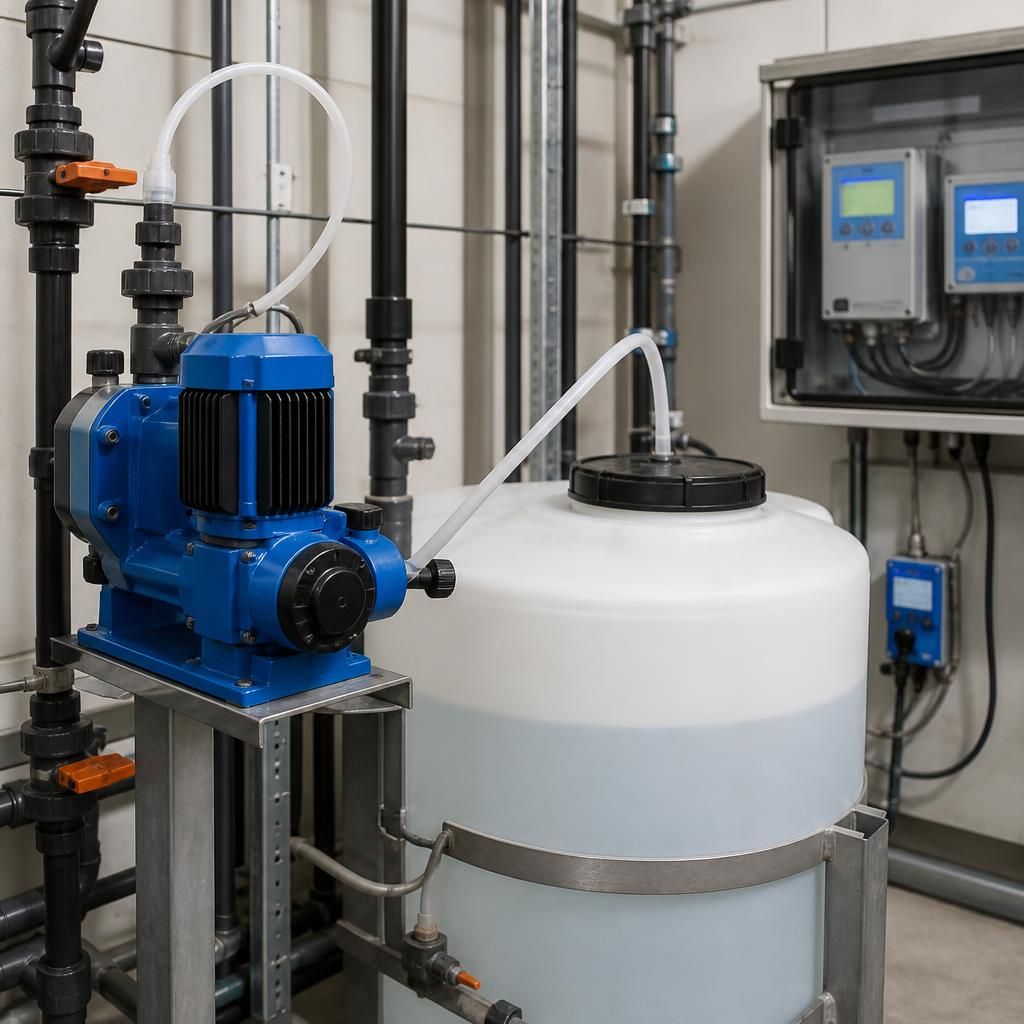
A chlorine dosing methodology should be assessed against trends, not a single residual reading. A result taken immediately after dosing may appear satisfactory while intermittent low-flow periods, changing demand or sensor drift cause inadequate control at other times. Reviewing dosing signals alongside flow, residual chlorine, pH and temperature helps establish whether the method remains effective throughout the system’s normal operating cycle.
Trend information also supports proportionate adjustment. A repeated residual decline may indicate increased chlorine demand, poor mixing, a sampling issue or a change in system operation rather than simply a need to increase the pump setting. The cause should be investigated before altering the dose, because unnecessary chemical addition can create water-quality, corrosion or operational problems. The methodology should therefore define which readings are recorded, how deviations are assessed and when a technical review is required.
Discuss Your Chlorine Dosing Methodology
Discuss your proposed chlorine dosing methodology with Blue Fish Water Management to assess its suitability for your system and operational requirements.