
How does the provider verify chlorine treatment throughout the water system?
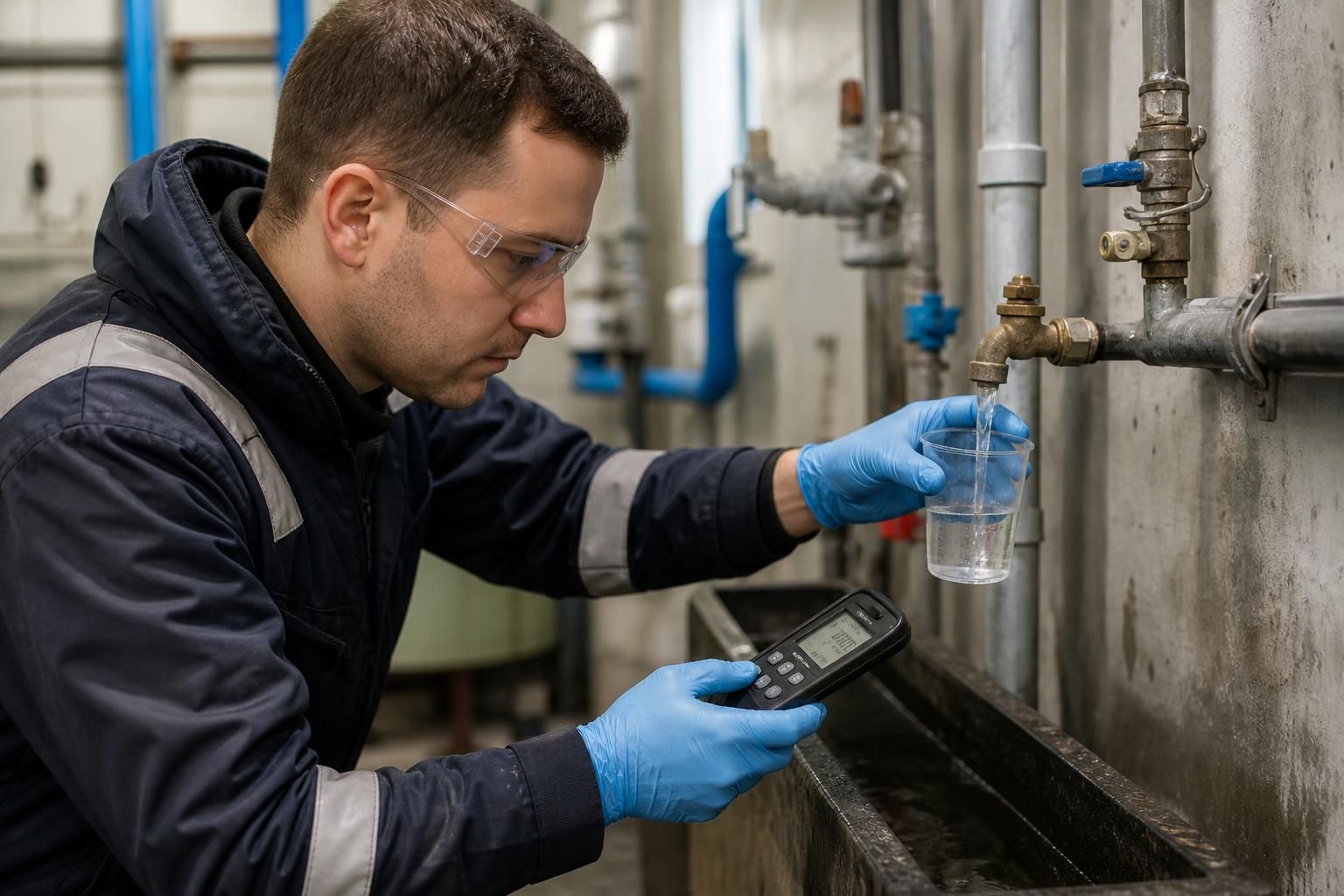
Verification of chlorine treatment is a controlled process that demonstrates both that the required disinfection conditions were achieved and that the treated system was left in an acceptable condition. A competent provider does not rely on a single chlorine reading. They compare the treatment plan with site conditions, confirm that the disinfectant reached the intended parts of the installation, assess the results against the specified criteria and retain a clear record of the work.
Before treatment begins, the provider should establish the system’s configuration and identify any features that could affect disinfection. This includes storage tanks, pumps, valves, dead legs, flexible connections, thermostatic devices, outlets and sections that may be isolated during the work. The provider should also confirm the type of chlorine product used, its concentration, dosing method and the required contact conditions. These details provide the basis for judging whether the treatment was suitable for the system rather than simply recording an isolated test result.
During treatment, verification normally considers three linked factors:
- Concentration: whether the disinfectant strength remained at the specified level during the required treatment period.
- Contact time: whether the system was held under treatment for long enough, taking account of the system design and the agreed disinfection method.
- Distribution: whether treated water was able to pass through the relevant pipework, storage arrangements and terminal fittings without parts of the system being bypassed or left untreated.
Measurements should be taken using a suitable test method and equipment that is maintained and checked for reliable operation. The person carrying out the work should record the time of each relevant reading, the location or component tested and any conditions that could affect interpretation, such as continued dosing, stagnant sections or restricted flow. Where results do not meet the treatment requirement, the provider should investigate the cause rather than treating the result as confirmation of successful disinfection.
Interpretation is particularly important at outlets and other remote parts of a system. A satisfactory result close to the dosing point does not, by itself, demonstrate that distant or hydraulically separate sections received the same treatment. The provider therefore reviews the pattern of results across the installation and checks whether variations indicate poor circulation, excessive demand from deposits or biofilm, a closed valve, an unrecognised branch or another system defect.
After the treatment stage, the system may need to be flushed until the disinfectant level is appropriate for return to service. The provider should distinguish between evidence that disinfection was completed and evidence that the system was subsequently flushed and reinstated correctly. Depending on the specification, further water quality testing may be used to provide additional assurance that the system is suitable for use. Any required samples should be handled, identified and submitted in a way that preserves the connection between the sample, the system location and the work record.
A useful completion file may include:
- the system description or marked-up schematic used to plan the treatment;
- the agreed disinfection method and treatment requirements;
- details of the chlorine product, dosing equipment and test equipment;
- records showing treatment conditions, readings, times and relevant locations;
- details of sections that were isolated, inaccessible or treated separately;
- flushing, reinstatement and any post-treatment water quality results;
- deviations from the planned method and the corrective action taken; and
- the person completing and reviewing the verification records.
The provider should also explain any limitation in the evidence. For example, an inaccessible branch, an outlet that could not be operated or an alteration made after the treatment may prevent the records from demonstrating complete system coverage. Clear qualification is more useful than presenting incomplete results as an unconditional pass. If results are unsatisfactory, further investigation, repeat treatment, remedial work or additional monitoring may be necessary, depending on the reason for the failure and the system’s risk profile.
For a commercial client, the final evidence should be sufficiently clear for the responsible person, facilities team or water safety adviser to understand what was treated, how success was assessed and whether any outstanding actions remain. This documentation supports the site’s water safety records and provides an auditable basis for deciding whether the system can be returned to normal operation.
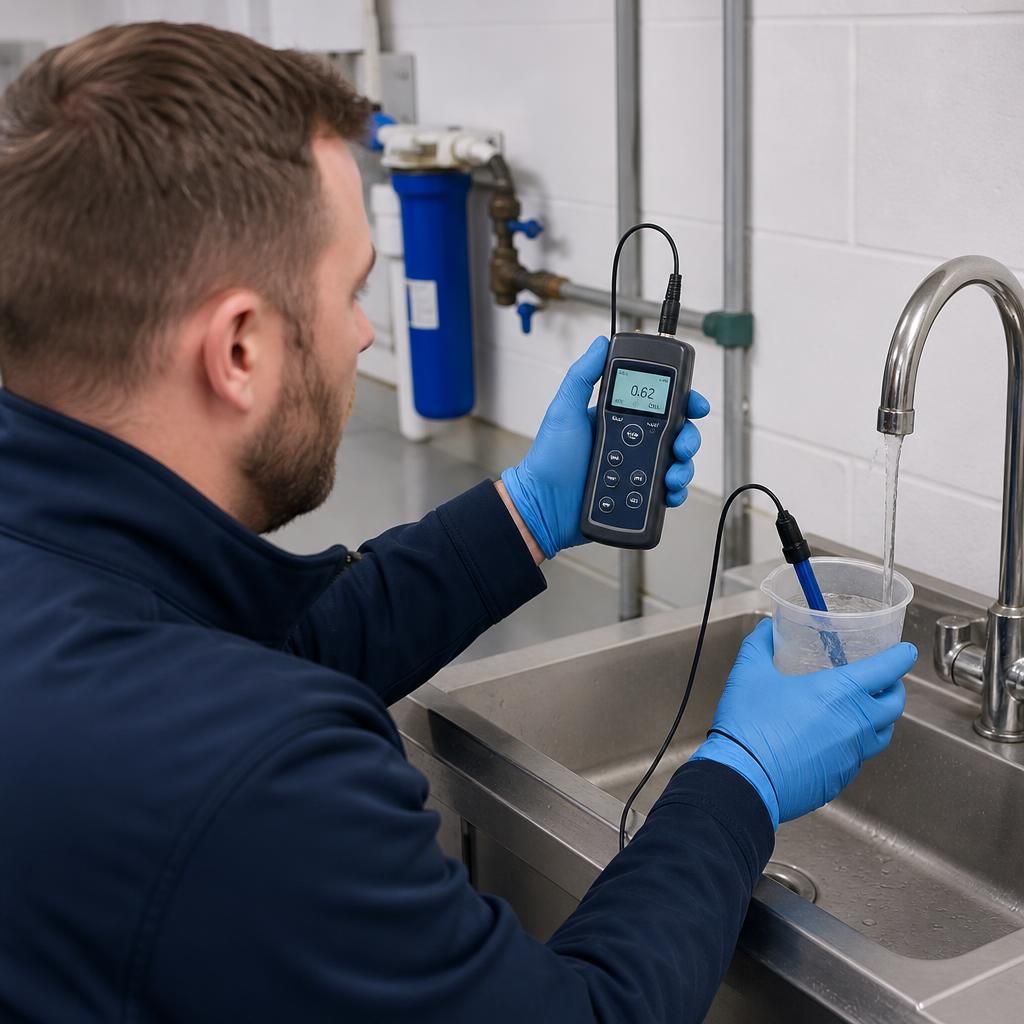
Reliable verification depends on collecting each chlorine sample correctly, because a reading can be misleading if the outlet, container or sampling technique affects the result. The provider should use a suitable, clean sampling container, prepare the outlet appropriately and allow the sample to represent water from the system rather than residual water held within the fitting.
Sampling should follow the same documented method at each selected location, with the outlet, collection time and test result linked together. This makes differences between outlets easier to assess and helps identify whether an unusual result reflects the treatment conditions or a problem with the sample itself. Where laboratory analysis is required, correct labelling, preservation and transport are also part of maintaining reliable evidence.
Ask about verifying chlorine treatment in your water system
Need to establish whether your chlorine treatment records demonstrate complete system coverage? Contact Blue Fish Water Management Ltd to discuss your verification requirements and the evidence needed for your water safety records.