
What timescale should be allowed for commercial water chlorination?
Commercial water chlorination does not have a single fixed timescale: the duration depends on the system’s size and complexity, preparation, access, contact time, flushing and verification requirements. Allow additional time where remedial work, repeat testing or coordination with building operations is needed before the system can be returned to service.
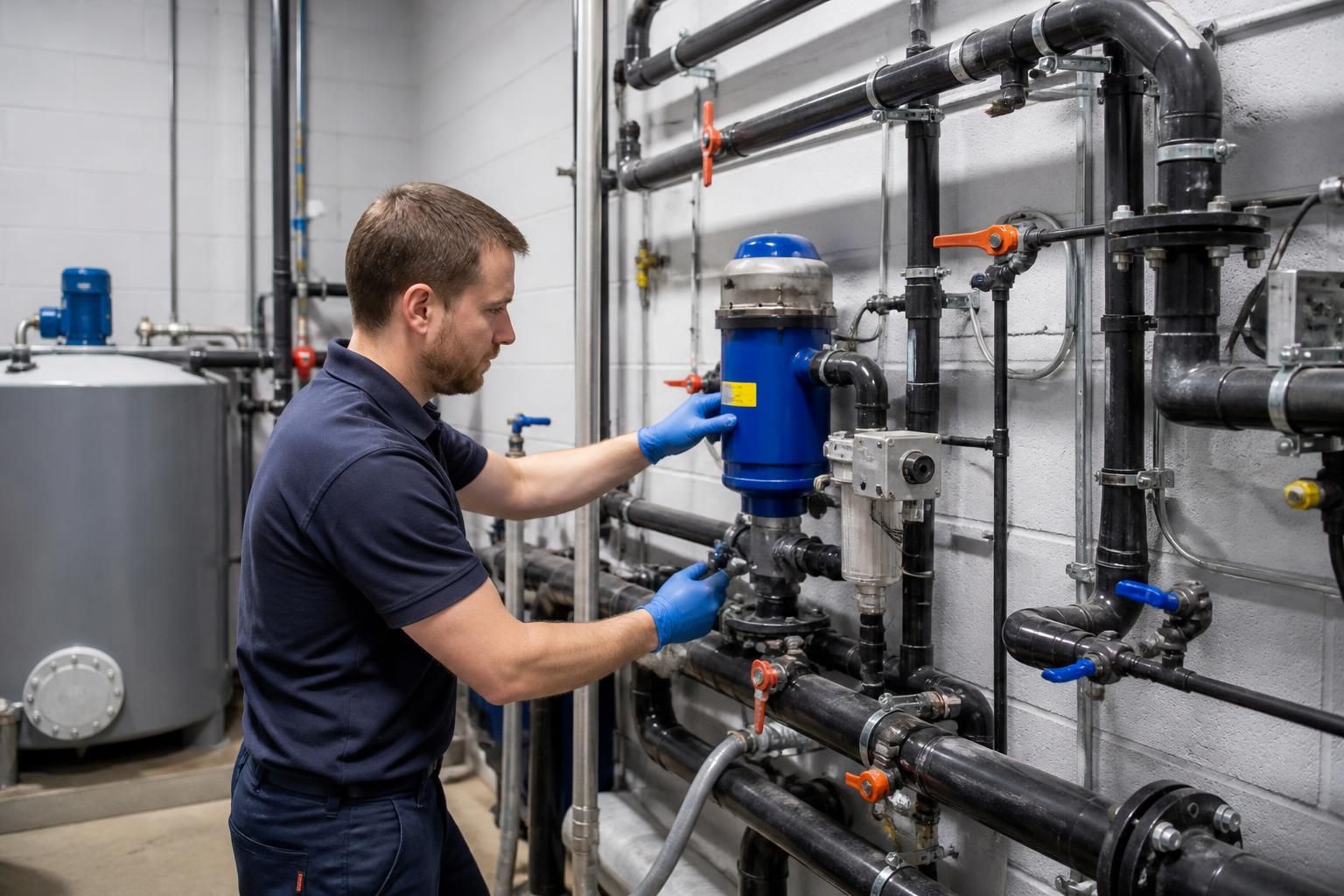
The timescale for commercial water chlorination should be planned as a complete process, rather than as the time spent applying disinfectant. A suitable programme allows for reviewing the system, preparing it for treatment, carrying out the chlorination, flushing and sampling, assessing the results, and producing the compliance records. The exact elapsed time depends on the work required and on whether the system is ready to be treated when the contractor arrives.
It is useful to distinguish between on-site working time and the overall project timescale. The on-site work may involve several separate activities, while the overall programme can extend further because of laboratory analysis, access arrangements, remedial work or the need to repeat part of the process.
- Pre-treatment planning: The provider needs sufficient information about the water system, its layout, storage arrangements, outlets, isolation points and current condition. A method statement and risk assessment should establish how the system will be isolated, disinfected, flushed and returned to service.
- System preparation: Valves may need to be checked, dead legs considered, tanks inspected and outlets made accessible. Any repair, cleaning or modification needed before disinfection should be completed first, as treating an unprepared system can lead to an ineffective result or repeat work.
- Isolation and shutdown: Commercial premises may need advance coordination with building managers, occupants, tenants, process operators or facilities teams. The programme should account for the time needed to isolate the system safely and manage the loss of water service during the work.
- Disinfection: The system must receive the required treatment in accordance with the agreed procedure. The disinfectant concentration and contact period need to be controlled and recorded; they should not be shortened simply to fit a convenient operational window.
- Flushing and recovery: After treatment, the system needs to be flushed until the water is suitable for return to service under the relevant procedure. This can require careful management of discharge, drainage capacity and access to representative outlets.
- Sampling and reporting: Samples may be taken from relevant points to demonstrate that treatment has been effective and that the system can be placed back into use. The final project record should normally include treatment details, readings, sample information, results and any limitations or follow-up actions.
The laboratory stage is an important part of the calendar allowance. Sampling may take place after flushing, but the project is not necessarily complete until the results have been reviewed. A result that does not meet the agreed acceptance criteria may require investigation, further cleaning or disinfection, additional flushing and repeat sampling. For this reason, a programme with no contingency can leave a commercial site without enough time to complete the evidence needed for safe recommissioning.
The most appropriate timescale also depends on why chlorination is being undertaken. A newly installed or altered system may require commissioning checks and confirmation that the installation is ready for use. A system affected by contamination may need investigation and remedial work before treatment. Planned maintenance can usually be coordinated with building operations more easily than urgent work, but it still requires a realistic shutdown and recovery period.
Before agreeing a date, the person responsible for the premises should confirm:
- which parts of the water system are included;
- whether all tanks, outlets, risers and plant rooms can be accessed;
- which areas will lose their water supply and for how long the operational shutdown is expected to last;
- how occupants, contractors and affected departments will be informed;
- where treated water and flushing discharge can be safely managed;
- which tests and records are included in the quotation; and
- what contingency applies if the system requires remedial work or repeat sampling.
A provider should be able to explain the proposed sequence and identify the dependencies that could change the completion date. The quotation or method statement should make clear whether the stated allowance covers only the chlorination visit or also includes sampling, laboratory analysis, certification and any return visit. This distinction prevents a short site attendance from being mistaken for the full compliance timescale.
For a commercial building, the safest approach is therefore to schedule chlorination as a controlled project with time for preparation, treatment, clearance, verification and documentation. Allowing contingency for unforeseen system conditions and repeat work is preferable to planning around the minimum possible site time, particularly where the water supply supports occupied premises or business-critical processes.

Large or divided commercial water systems may need to be chlorinated in separate sections rather than treated as one connected installation. Each section must be isolated, dosed, held for the required contact period, flushed and checked before the next section is addressed. This sectional approach can extend the programme even when the individual treatment stages are straightforward.
The timescale should therefore be based on the system’s treatment boundaries, not simply the building size. A provider should identify the sections involved, explain the order of work and confirm how progress between sections will be recorded. This gives the responsible person a clearer basis for coordinating the treatment with the building’s operational requirements.
Discuss Your Commercial Water Chlorination Timescale
Discuss your proposed commercial water chlorination programme with Blue Fish Water Management Ltd to clarify the required activities, dependencies and evidence before a date is agreed.