
What do legionella training courses cover?
Legionella training courses cover the principles of legionella control, including risk assessment, water hygiene, monitoring, record-keeping and compliance responsibilities. Depending on the course level, they may also address system management, control measures, incident response and practical guidance for maintaining safer water systems.
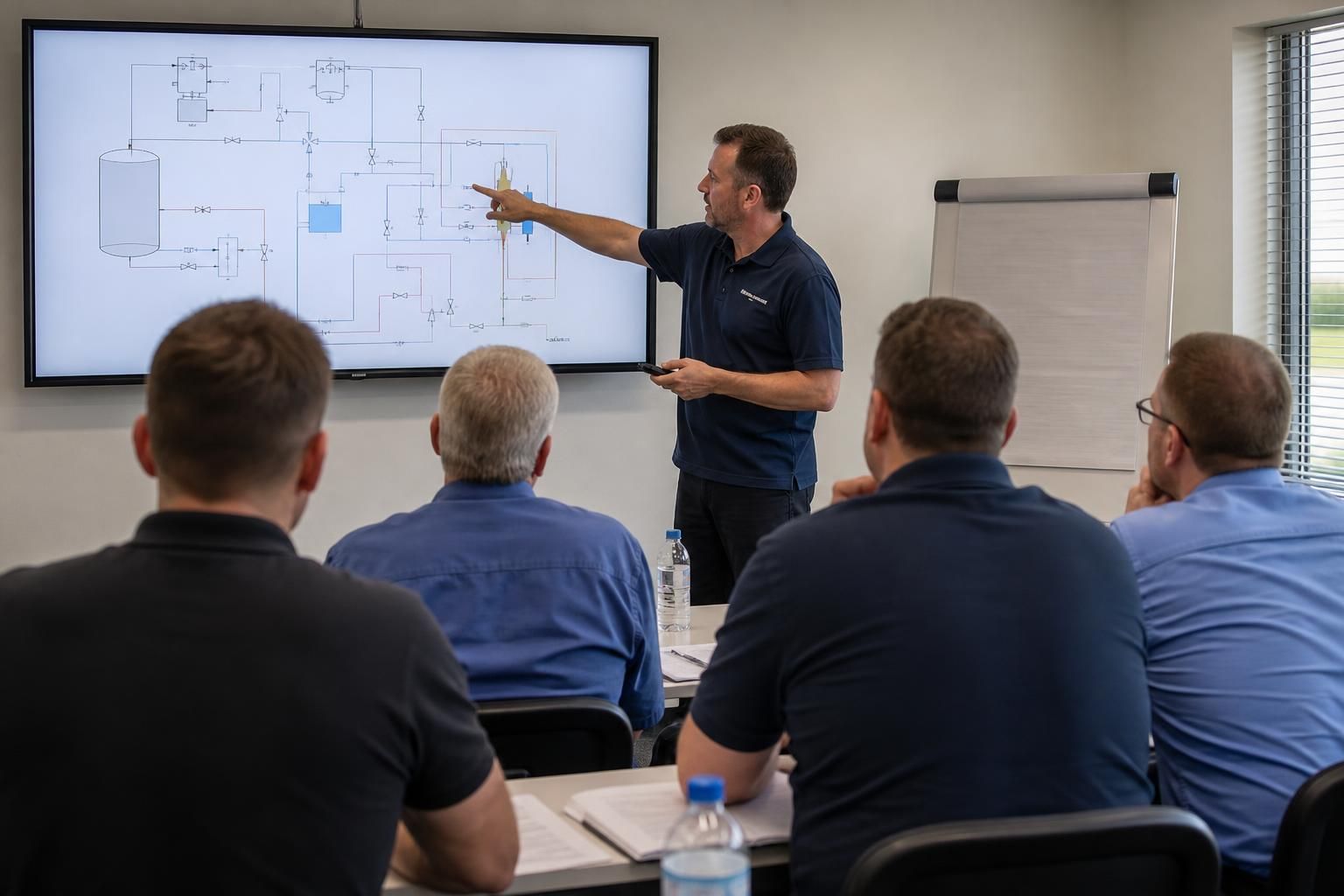
Legionella training courses explain how legionella bacteria can develop and spread in water systems, how exposure can occur, and what people with water safety responsibilities must do to reduce the risk. The content varies according to the learner’s role, the complexity of the premises and the level of responsibility involved.
Core subject areas usually include:
- Legionella and health: the characteristics of legionella bacteria, the conditions that support growth, routes of exposure and the illnesses associated with inhaling contaminated water droplets or aerosols.
- People at greater risk: factors that can increase vulnerability, including age, underlying health conditions, smoking and impaired immunity. Training may also explain why a building’s occupants, visitors and maintenance staff need to be considered separately.
- Water system design: how hot and cold water services, storage cisterns, calorifiers, pipework, outlets, showers, thermostatic mixing valves and cooling systems can create different risk conditions.
- Conditions that support bacterial growth: suitable temperatures, stagnation, low or inconsistent use, deposits, biofilm, corrosion and poor circulation. Learners are shown how these conditions can arise in both straightforward and complex installations.
- Roles and responsibilities: the duties of employers, dutyholders, responsible persons, facilities teams, contractors and other people who influence water safety. This commonly includes an overview of relevant UK health and safety expectations and the principles set out in HSE guidance.
Practical control measures are normally an important part of the course. Depending on the level, learners may explore how to maintain appropriate temperature control, reduce stagnation, manage little-used outlets, keep systems clean and in good condition, and apply suitable cleaning or disinfection procedures. Training should make clear that controls must be appropriate to the system rather than copied from a generic checklist.
Courses for people managing premises often cover how to understand a written scheme, follow planned control tasks, identify changes to a system and escalate defects. More technical courses may examine system schematics, outlet identification, temperature measurement, sampling arrangements, flushing regimes, cleaning and disinfection documentation, and the interpretation of information supplied by competent contractors.
Risk-based decision-making is another key element. Learners may work through examples involving dead legs, redundant pipework, low-use rooms, changes in occupancy, alterations to plant, loss of temperature control and remedial work. These examples help show how to recognise a significant change, decide what information is needed and determine when specialist advice is appropriate.
Many courses also explain how to review evidence from inspections, temperature checks, sampling, maintenance records and remedial actions. The aim is not simply to collect paperwork, but to understand whether the control scheme is being followed and whether the available evidence indicates that further investigation is needed.
The depth of coverage depends on the course audience:
- Awareness training introduces the health risks, common sources of exposure and the importance of reporting defects or unusual conditions.
- Responsible-person training focuses on organising control arrangements, coordinating competent contractors, reviewing findings and ensuring that duties are assigned clearly.
- Operational or technical training gives greater attention to system components, monitoring methods, maintenance activities and the practical limitations of different control measures.
- Specialist training may address higher-risk or more complex systems, including facilities where aerosol-producing equipment, cooling processes or unusual water services require additional controls.
Training can include case studies, system diagrams, demonstrations, site-based exercises or written scenarios. These activities help connect the principles to real premises, where access arrangements, vulnerable occupants, system alterations and contractor coordination can all affect the way controls are applied.
A well-structured course should also explain the limits of a learner’s role. Training provides knowledge and supports competence, but it does not automatically make someone competent to undertake every task. Specialist assessment, sampling, disinfection, engineering work or technical interpretation may require suitable experience and additional expertise.
For organisations selecting a course, the most relevant programme is one that matches the learner’s duties and the systems under their control. Course information should identify the intended audience, learning objectives, level of technical detail, practical elements and any assessment method. This makes it easier to distinguish general awareness from training intended for people who manage or carry out specific legionella control activities.
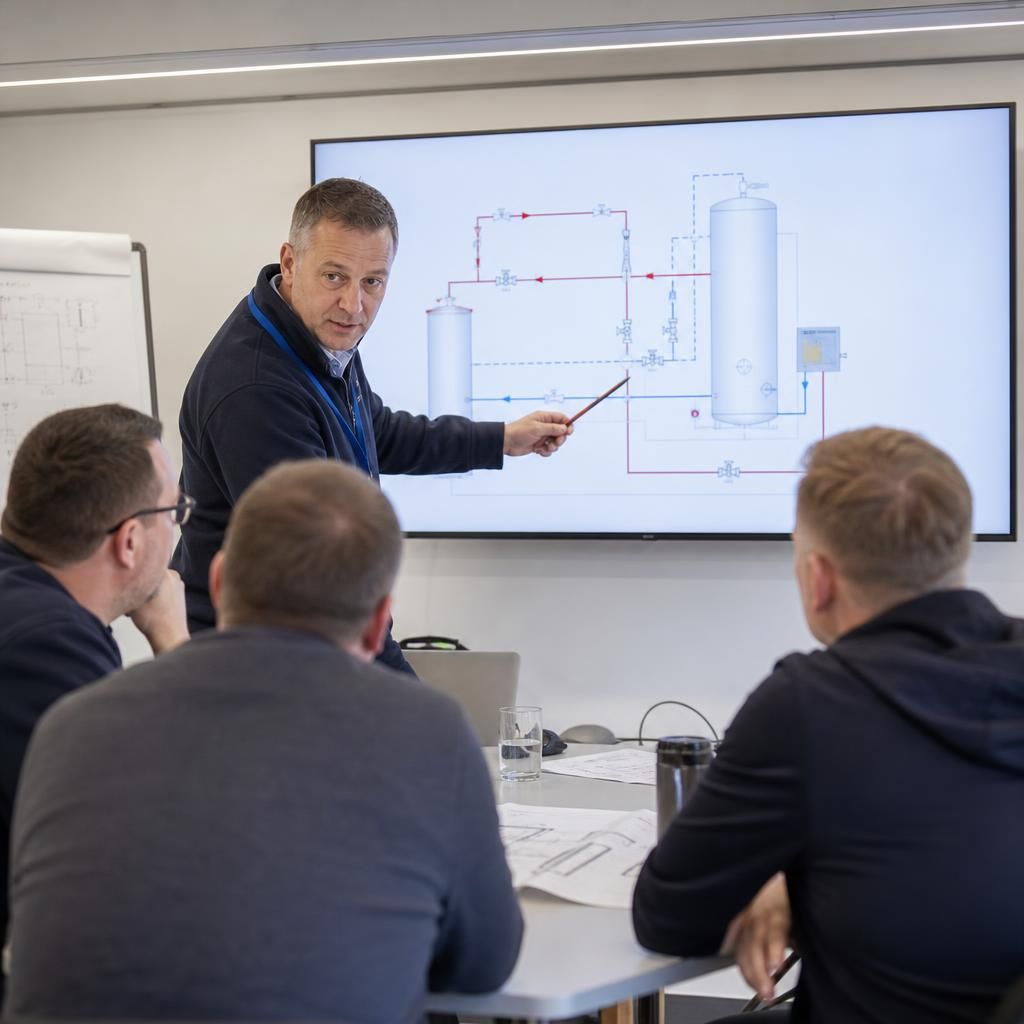
Legionella training courses often cover the difference between a hazard, the level of risk it creates, the control selected and the evidence used to show that the control is working. This helps learners assess information logically rather than treating every defect or test result as having the same significance.
For example, a temperature reading outside the expected range may require checking the outlet, measurement method, circulation and recent system use before deciding what action is appropriate. Training may therefore include how to question incomplete information, record the reasoning behind a decision and identify when a finding needs escalation. This approach supports consistent judgement when applying legionella control procedures to real buildings.
Discuss your legionella training requirements
Discuss your organisation’s legionella training requirements with Blue Fish Water Management Ltd to identify a course that suits your responsibilities and water systems.