
What happens when HSG274 identifies a legionella control failure?
When HSG274 identifies a legionella control failure, the responsible person should act promptly to control the risk, investigate the cause and review the risk assessment and control scheme. Remedial work, follow-up testing and documented verification may then be needed before normal monitoring and compliance arrangements resume.
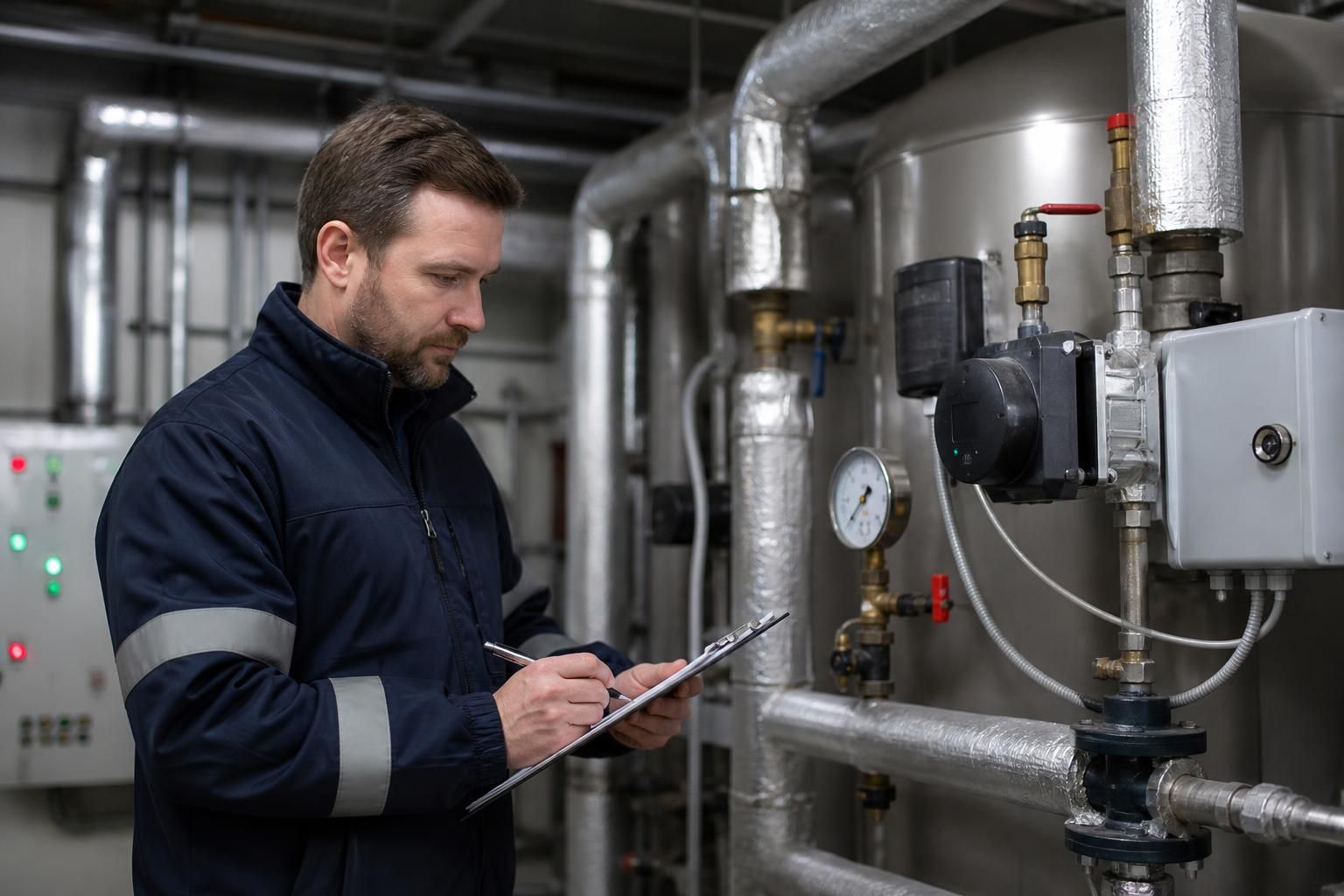
A legionella control failure under HSG274 means that a required control measure has not been achieved, implemented or evidenced well enough to demonstrate that the water system remains adequately controlled. The consequence is a proportionate response based on the type of failure, the people exposed, the system involved and any evidence of bacterial contamination.
The finding should first be classified. Not every non-conformance presents the same level of risk. Examples include temperatures outside the control parameters, inadequate flushing of infrequently used outlets, poor maintenance of tanks or calorifiers, missing monitoring records, ineffective control of water treatment, or a laboratory result indicating Legionella. A documentation gap may require a different response from a confirmed failure of temperature control in a system serving vulnerable occupants.
The responsible person should establish whether the issue is isolated or indicates a wider loss of control. This involves checking recent temperature and flushing records, reviewing maintenance and sampling results, confirming which outlets or plant are affected, and considering changes to occupancy, usage or the system itself. The risk assessment should also be checked for assumptions that are no longer accurate, such as outlets that have been added, areas that are now vacant or changes in how hot and cold water services are operated.
Immediate protective measures depend on the finding. These may include restricting use of an affected outlet, supplying suitable warnings, increasing flushing or temperature checks, removing redundant fittings from service, correcting a treatment fault or arranging urgent cleaning and disinfection. Where a result or system condition suggests a significant exposure risk, the responsible person should obtain competent advice on whether parts of the system need to be isolated while the cause is investigated. Action should be recorded with the reason, date, person responsible and completion status.
A positive Legionella result does not, by itself, describe the full level of risk or determine a single response for every premises. The result must be interpreted alongside the sampling location, organism identified, sample conditions, system design, control records and the vulnerability of exposed people. Additional sampling, a wider investigation or immediate remedial work may be appropriate. Sampling should not be used as a substitute for correcting a known control failure.
The investigation should identify the underlying cause, not only the visible symptom. For example, a low outlet temperature may result from poor balancing, a failed valve, insufficient circulation, incorrect plant settings, excessive dead-leg pipework or a faulty thermometer. Repeated failure to flush an outlet may indicate that it is rarely used, inaccessible or not allocated clearly to a responsible person. Corrective action is more reliable when it addresses that cause rather than simply recording another check.
Remedial work may include cleaning and disinfecting parts of the system, repairing or replacing defective components, removing redundant pipework, improving insulation, balancing hot-water circuits, correcting storage or circulation arrangements, revising outlet use arrangements, or improving monitoring equipment. The work should be specified according to the system and verified afterwards. A contractor's completion statement alone may not demonstrate that effective control has been restored.
Verification is a separate stage from repair. The responsible person should define what evidence will show that the failure has been corrected. Depending on the circumstances, this may include repeat temperature checks, confirmation that outlets are being flushed, inspection of plant, review of chemical treatment records, follow-up microbiological sampling or an independent assessment. Results should be compared with the control scheme and documented so that the decision to return to routine monitoring is clear.
The risk assessment and written control scheme should be amended where the failure exposes a weakness in either document. Changes should identify the revised control measures, monitoring frequencies, action limits, escalation arrangements and named responsibilities. Staff who carry out temperature checks, flushing or other routine tasks may need further instruction if the failure arose from misunderstanding, inadequate records or unclear ownership.
Where the premises has a responsible person, they retain overall oversight even when specialist contractors carry out testing or remedial work. The responsible person should ensure that recommendations are understood, prioritised and closed out, rather than treating a survey or laboratory report as the end of the process. Significant unresolved findings may need to be escalated through the organisation's management structure and, where relevant, communicated to those responsible for occupational health, facilities or building operations.
Routine monitoring can resume once the relevant control measures have been restored and the evidence supports that decision. Some failures require a period of increased checking before the normal regime is reinstated. The records should retain the original finding, investigation, risk judgement, remedial actions, test results, verification and any changes to the control scheme. This creates an auditable account of how the water safety risk was managed.
A competent legionella specialist can support this process through risk assessment review, UKAS-accredited water testing, compliance auditing, system monitoring, training and remedial works. The appropriate service depends on whether the issue concerns the assessment, day-to-day controls, the physical system, microbiological evidence or the quality of existing records.
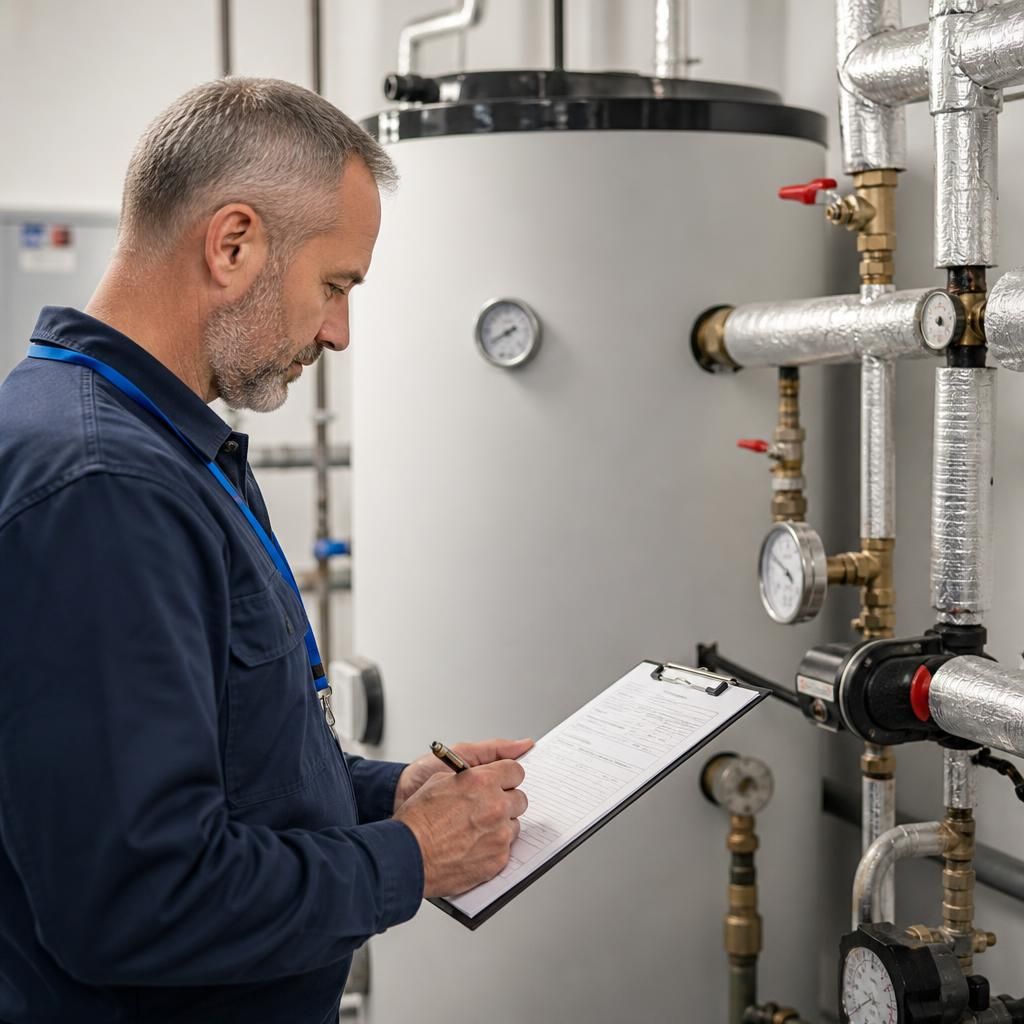
A control failure does not automatically mean that an entire premises or water system must be taken out of use. The response should match the part of the system affected and the potential exposure. A localised defect may require restrictions at specific outlets, while evidence of wider loss of control may justify broader precautions. The responsible person should record why the chosen restriction or precaution was proportionate to the information available.
The action record should also state what must be true before any restriction is lifted. This might include completion of a repair, satisfactory operating checks, confirmation that affected outlets are safe to use, or evidence that revised controls are working. Clear conditions prevent normal use from resuming simply because remedial work has been reported as complete.
Discuss a legionella control failure with a specialist
Discuss the finding with a legionella specialist to clarify the appropriate next steps and evidence needed to close the control failure. Blue Fish Water Management Ltd can support targeted review, testing or remedial work according to the circumstances.