
Does HSG274 apply to every type of commercial water system?
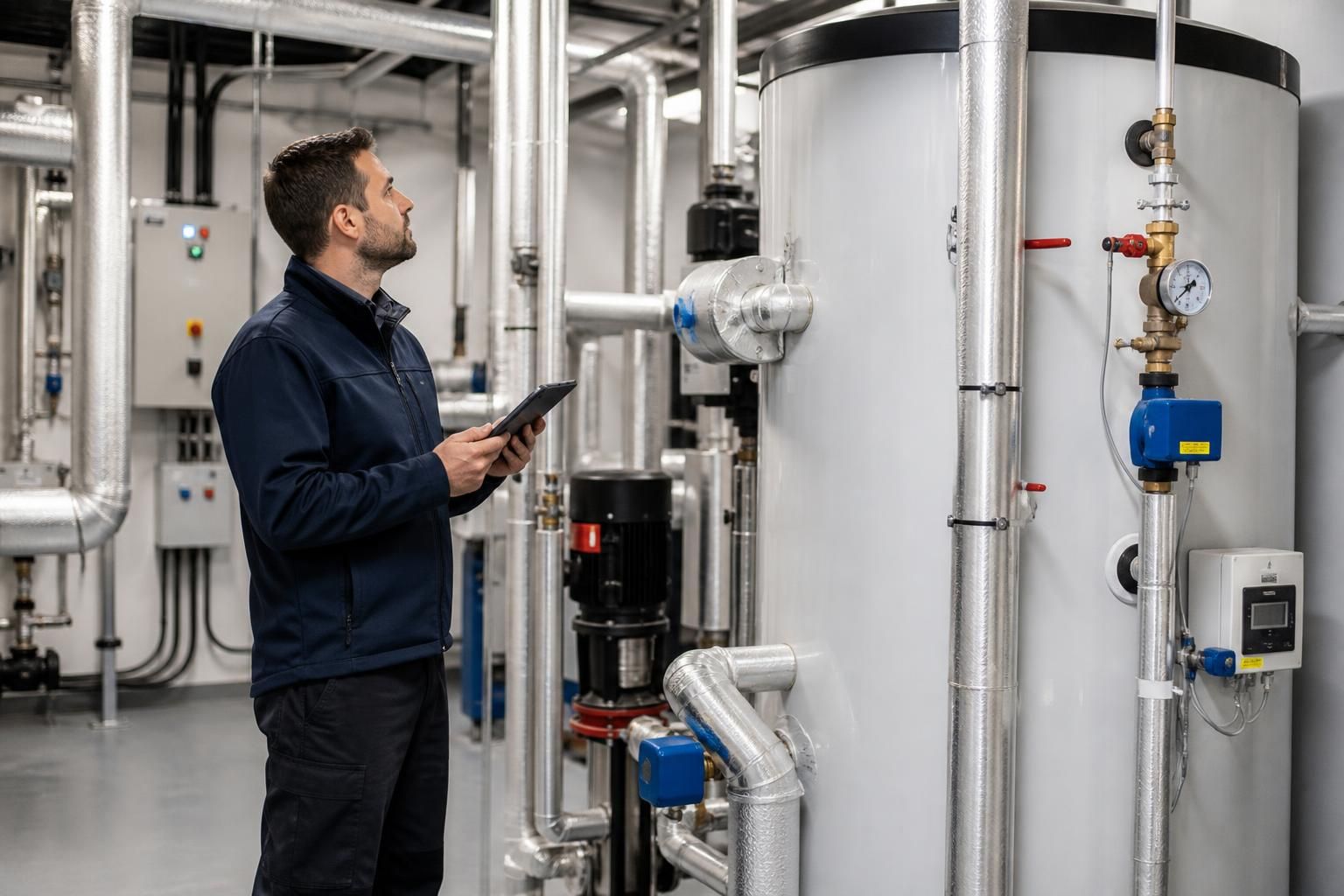
No. HSG274 is not a single set of controls that applies identically to every commercial water system. Its recommendations are divided according to the type of system and the way it could create a legionella exposure risk. The applicable section, and the extent of the measures required, should therefore be determined through a suitable and sufficient risk assessment.
HSG274 is arranged into three technical parts:
- Part 1: Evaporative cooling and industrial wet systems. This covers systems such as cooling towers and evaporative condensers, where contaminated water can generate and disperse aerosols. These systems require controls that address water treatment, drift, cleanliness, operation, sampling and the risks associated with recommissioning or maintenance.
- Part 2: Hot and cold water systems. This is relevant to many premises with showers, taps, water storage tanks, calorifiers, pipework and other domestic-type water services. It addresses design, temperature control, avoiding stagnation, monitoring, cleaning and disinfection.
- Part 3: Other risk systems. This provides guidance for water systems that do not fit neatly into the first two categories. The necessary controls depend heavily on the system’s construction, operating conditions, water quality and potential to produce an inhalable spray or aerosol.
The distinction matters because a control that is appropriate for a stored hot-water system may not be suitable for an evaporative cooling system or a specialised process installation. For example, temperature management is central to many hot and cold water systems, while cooling systems also require close attention to drift, biocide management, deposits, corrosion and system cleanliness. Applying a generic checklist without considering the system’s design can leave important hazards unaddressed.
HSG274 may be relevant to a system even where it is small, infrequently used or not traditionally viewed as a major water installation. Low use can increase stagnation, and infrequent operation can allow water conditions to change between uses. The assessment should consider outlets, dead legs, storage arrangements, water temperatures, turnover, aerosol generation, maintenance activities and the people who could be exposed. A system is not automatically outside the scope of legionella control simply because it serves a small premises.
Some systems require consideration alongside other sources of technical guidance. Spa-pool systems, for example, have specific risks associated with warm, aerated water and aerosol production. Process plant, humidification equipment, emergency showers, ornamental water features and other unusual installations may also need a tailored assessment rather than reliance on the hot and cold water guidance alone. The relevant manufacturer’s instructions, operational information and specialist standards should be considered where they affect safe management.
There is also an important difference between the legal duty and the technical guidance. The Health and Safety at Work etc. Act and associated regulations create duties to manage risks to employees and others. The Approved Code of Practice L8 explains practical expectations for controlling legionella risks, while HSG274 provides more detailed technical guidance. HSG274 is not legislation in itself, so it does not operate as a universal statutory specification for every water system. Alternative methods may be acceptable where they control the risk effectively and can be justified, documented and maintained.
For a commercial premises, the responsible person should establish what water systems are present before deciding which HSG274 recommendations apply. This normally involves:
- identifying and describing each water system and its key components;
- recording how the systems are used, maintained and altered;
- assessing where legionella could grow and how exposure could occur;
- selecting controls that match the system and its risk profile;
- assigning responsibilities for monitoring, remedial action and record keeping; and
- reviewing the arrangements when the system, occupancy, use or control results change.
A system may also fall under more than one area of guidance, particularly where water is stored, heated, circulated, treated or discharged through aerosol-producing equipment. The assessment should map the complete installation rather than considering individual components in isolation. It should also distinguish between systems that are connected, systems that share plant and systems that have separate sources or control regimes.
In practice, HSG274 should be treated as a system-specific technical reference, not as a universal tick-box exercise. Where the installation is complex, poorly documented, modified or outside the common examples covered by the guidance, a competent legionella professional can help determine the relevant controls, testing requirements and remedial priorities.
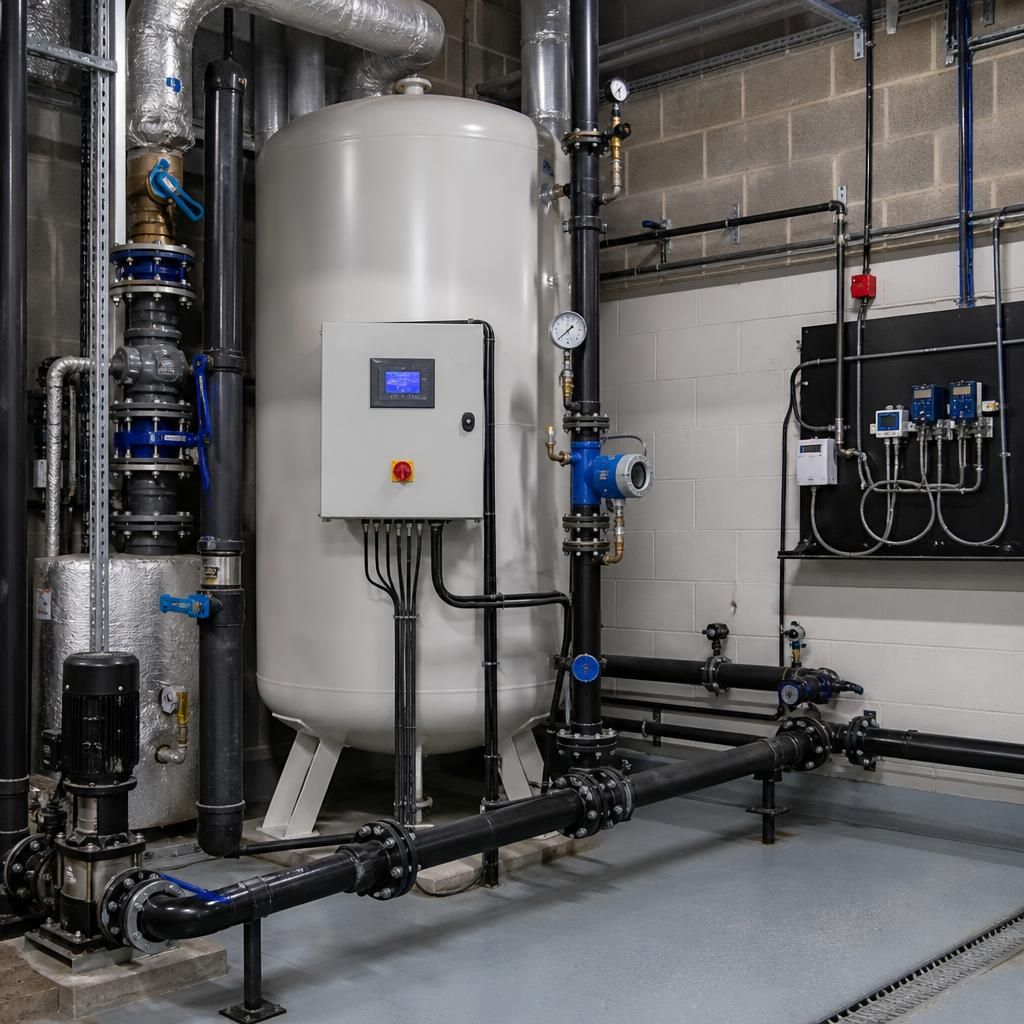
The fact that equipment is installed in a commercial building does not determine which HSG274 controls are needed. The relevant question is how the system operates, whether conditions could support legionella and whether people could be exposed to contaminated water or aerosol. A premises may therefore contain several water systems requiring different control approaches, while some recommendations may not be relevant to a particular installation.
Each decision should be recorded in the legionella management documentation. This should explain which parts of HSG274 were considered, which controls have been adopted and why any recommendations are not applicable. Clear reasoning helps the responsible person, maintenance staff and contractors understand the intended control regime, particularly when equipment is altered or responsibilities change.
Get Expert Advice on Your Commercial Water System
If you need help determining how HSG274 applies to a commercial installation, contact Blue Fish Water Management Ltd for practical legionella advice tailored to your water systems and management duties.