
What is the difference between routine and investigative water monitoring?
Routine water monitoring is scheduled, ongoing checking that control measures remain effective, while investigative monitoring is targeted work carried out after an abnormal result, incident, system change or suspected control failure. Routine monitoring confirms performance over time; investigative monitoring seeks to identify the cause of a problem and determine appropriate corrective action.
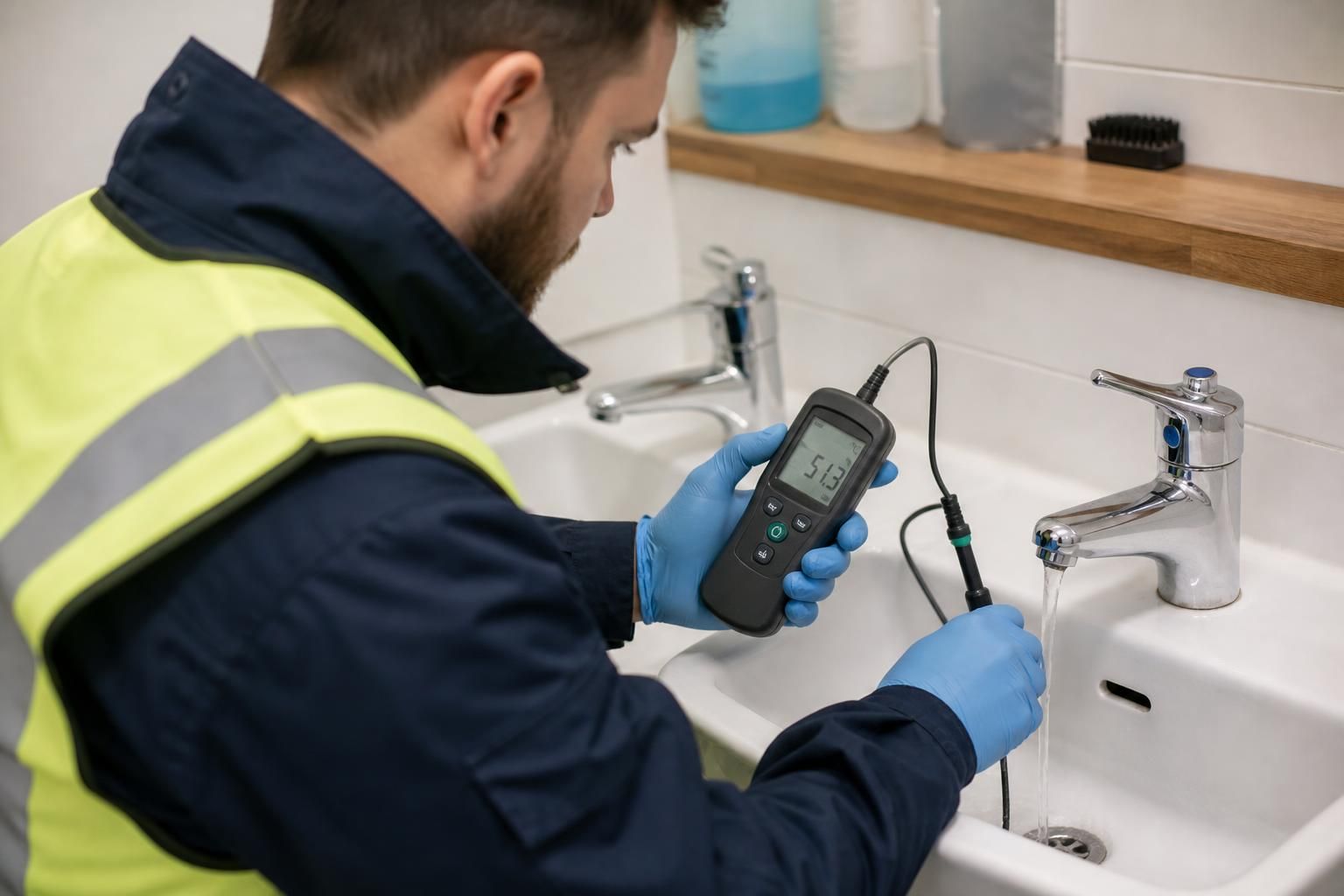
The practical difference is the decision each type of monitoring supports. Routine monitoring checks whether an established water safety control programme is operating as intended across normal conditions. Investigative monitoring is designed to answer a specific concern, such as why a control has failed, where an abnormal result originated, or whether a change to the system has created a new risk.
Routine monitoring follows a planned schedule. Its activities are selected from the findings of the legionella risk assessment and the nature of the water systems in use. Depending on the system, this may include checking hot and cold water temperatures, disinfectant residuals, sentinel outlets, storage tanks, distribution arrangements, outlet usage and general system condition. The purpose is to create consistent evidence that important controls are being maintained.
Routine checks should be carried out at representative locations and by people with suitable knowledge and competence. Results need to be compared with the control parameters set for the system, rather than considered in isolation. A single reading may be affected by recent use, flushing, access conditions or measurement technique, whereas a pattern of deteriorating results can indicate a developing problem.
Investigative monitoring is question-led. It is introduced when routine information, a laboratory result, an incident or a system change indicates that further examination is needed. The work may involve additional temperature checks, more extensive microbiological sampling, a review of outlets and pipework, inspection of storage and distribution components, or examination of how the system is operated. The locations and frequency are chosen to test a particular explanation rather than simply to continue the normal schedule.
Examples of circumstances that may justify investigative monitoring include:
- an adverse or unexpected microbiological result;
- repeated temperatures or disinfectant readings outside the system’s control parameters;
- evidence of stagnation, low use, poor circulation or inadequate turnover;
- alterations to pipework, plant, occupancy, water demand or operating arrangements;
- a complaint, suspected exposure or confirmed case requiring assessment of possible water-system involvement; and
- uncertainty about whether previous remedial work has resolved the underlying issue.
Investigative work should not be limited to taking another sample from the same point. A repeat sample can confirm whether an abnormal result persists, but it may not explain the cause. A broader investigation may need to trace the system from source to outlet, identify little-used branches or dead legs, assess heat loss and circulation, check blending valves and storage arrangements, and review whether flushing, cleaning, disinfection and other controls have been completed correctly.
The sampling strategy is also different. Routine sampling normally provides planned trend information from defined points. Investigative sampling is more flexible and may include upstream and downstream locations, areas with different temperatures or flow conditions, and points selected to compare affected and unaffected parts of the system. Sampling plans should be proportionate to the concern and carried out using appropriate methods, with samples submitted for suitable laboratory analysis where required.
Results from investigative monitoring need to be interpreted alongside operational evidence. Laboratory findings alone do not identify every source of contamination, and a satisfactory result does not automatically demonstrate that the system is fully controlled if other evidence indicates a continuing defect. Conversely, an isolated result should be assessed in context, including sampling conditions, recent remedial work and previous trends.
The outcome of each approach is different. Routine monitoring normally leads to continued control, recording and periodic review when results remain acceptable. Investigative monitoring should lead to a documented conclusion: either the suspected issue has been discounted, or corrective action is required. Actions may include repairing or modifying equipment, removing redundant pipework, improving circulation, correcting temperature control, increasing outlet use, cleaning or disinfecting relevant components, changing operating procedures, or taking further samples to verify the result.
Investigative monitoring does not replace routine monitoring after corrective work. Once the immediate concern has been addressed, follow-up checks should establish whether the corrective action has worked. If the system, its use or its controls have materially changed, the risk assessment and monitoring arrangements may also need to be reviewed. The system should return to an appropriate routine programme only when the available evidence supports that decision.
Records should show the reasoning behind both types of monitoring. They should identify the date, location, reading or result, person carrying out the work, equipment or sampling method where relevant, and any deviation from the expected control. Investigative records should additionally explain the trigger, the questions being examined, the locations selected, the findings, the decisions made and any outstanding actions. Clear records help demonstrate that abnormal results were not ignored and that monitoring was connected to practical control measures.
In summary, routine monitoring provides structured evidence of normal system control, while investigative monitoring examines a defined concern in greater depth. Effective water safety management uses the two together: planned monitoring to identify change, and targeted investigation to understand and correct it.
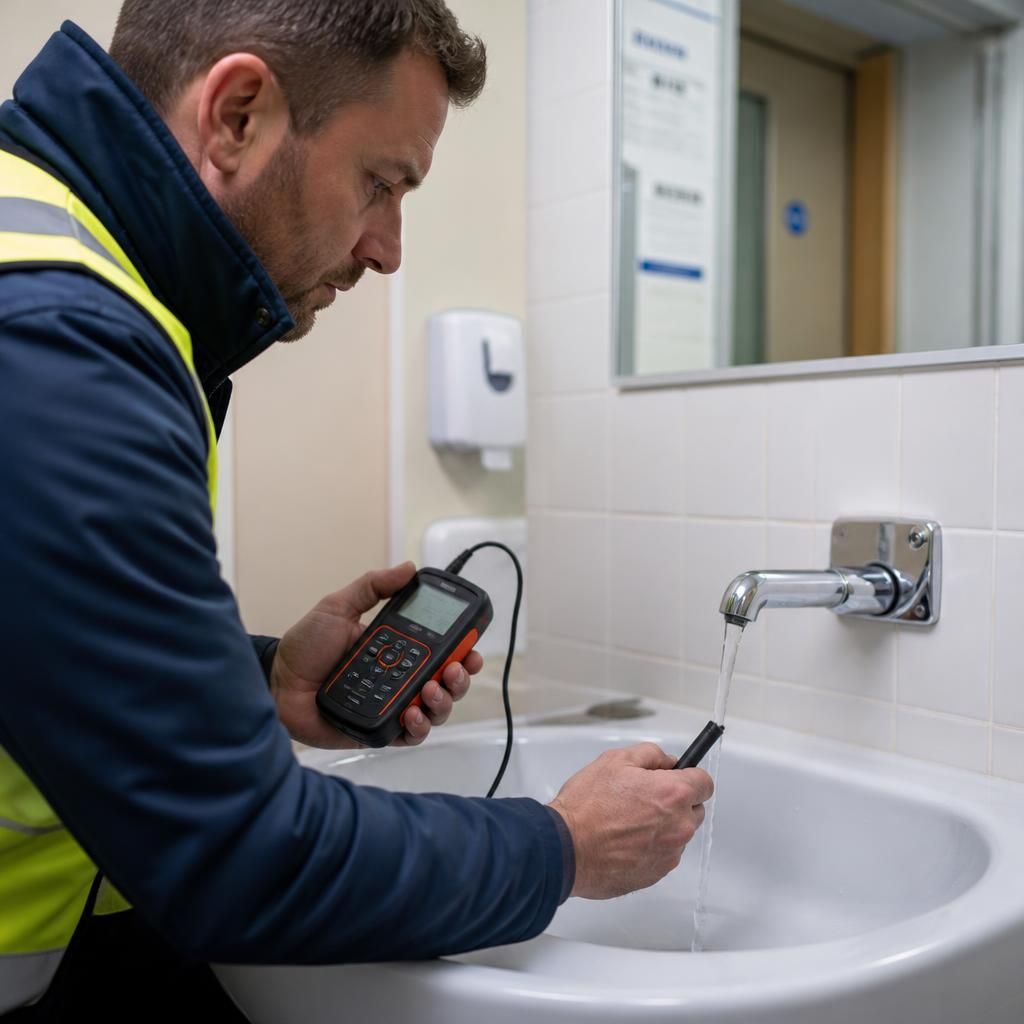
The distinction also affects who plans and reviews the work. Routine monitoring can follow the established written procedure for the system, with results checked against its defined control parameters. Investigative monitoring needs a separate scope based on the concern being examined, so the person overseeing it must decide what evidence is relevant, whether additional technical input is needed and when the investigation can be closed.
This prevents two common errors: treating every unexpected result as proof of widespread contamination, or treating a recurring warning as an ordinary monitoring entry. The investigation should be sufficiently focused to test the suspected issue, while its conclusion should state what the evidence does and does not establish. That conclusion then informs any change to the water safety arrangements.
Discuss Your Water Monitoring Requirements
Discuss your water monitoring requirements with Blue Fish Water Management Ltd to identify an appropriate approach for your premises and existing water safety arrangements.