
Can dechlorination results be supported by UKAS-accredited water testing?
Yes. UKAS-accredited water testing can provide independently produced, technically reliable evidence of dechlorination results when samples are collected correctly and tested against the relevant parameters.
It supports verification by showing whether residual disinfectant and other specified water-quality results meet the agreed criteria, while the sampling method, test scope and interpretation must remain appropriate to the water system and treatment objective.
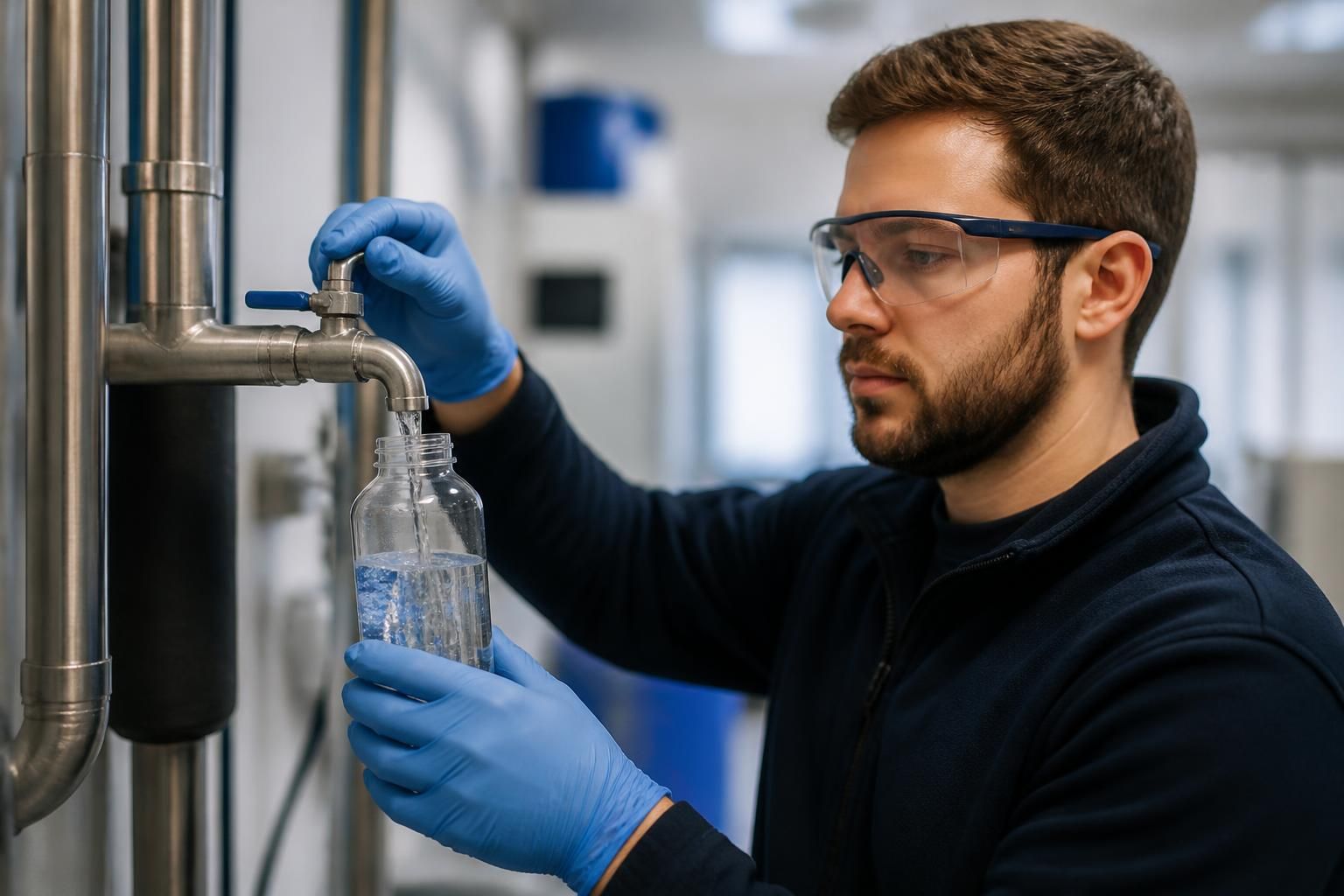
UKAS-accredited testing supports dechlorination results by adding a controlled, traceable evidence trail to the treatment process. The usefulness of that evidence depends on more than the laboratory’s accreditation status. The sampling plan, sample handling, analytical scope, reporting and comparison with the treatment objective must all be suitable for the water system.
Check what the accreditation covers. UKAS accreditation applies to defined laboratory activities and methods, not automatically to every test a laboratory may offer. A competent review should therefore confirm:
- which parameters are included within the accredited scope;
- whether the analytical method is suitable for the disinfectant or water-quality characteristic being assessed;
- whether the laboratory is accredited for the relevant type of sample and testing activity; and
- whether any part of the result has been produced outside the accredited scope.
This distinction matters where a report contains several tests. An accredited result for one parameter does not make associated observations, calculations or other analyses accredited by default. The report should make the scope clear so that those relying on it can distinguish verified analytical results from interpretation or supplementary information.
Sampling is a critical part of the evidence. Dechlorination results can be affected by the sampling point, the condition of the outlet, the container used, the time between collection and analysis, and any preservative required for the test. Samples should represent the treated water that the assessment is intended to evaluate. A sample taken before treatment, from a poorly flushed outlet or from an unsuitable location may produce a technically valid laboratory result that does not answer the practical question being investigated.
A suitable sampling record normally identifies the system or asset, sampling location, date and time, sampler, treatment stage and any relevant operating conditions. It should also record whether the sample was taken before treatment, during a controlled discharge or after the system had reached the intended operating condition. This context helps the reviewer decide whether the result can be compared meaningfully with the agreed acceptance criteria.
The test parameters should match the purpose of dechlorination. Testing may be used to establish whether residual disinfectant has been reduced to a specified level, but the appropriate analytical scope depends on the system and the reason for treatment. In some circumstances, additional water-quality or microbiological testing may be required to assess the wider condition of the water. These tests should not be added routinely without considering the risk assessment, system design and intended use.
It is also important to separate three questions:
- Has the treatment changed the measured residual disinfectant as intended?
- Does the resulting water meet the criterion set for the particular use or discharge?
- Does the result provide sufficient assurance that the system is suitable to return to its planned operation?
A laboratory result may help answer the first question without, by itself, answering the other two. Acceptance criteria should therefore be agreed before sampling and should be linked to the risk assessment, method statement, client requirements and any relevant compliance obligations.
Timing affects interpretation. A result represents the condition of the sample at the time it was collected. It does not automatically demonstrate that conditions remained unchanged throughout the system. Where water quality may vary, a single sample may need to be considered alongside samples from other representative points, repeat testing, operational readings and records of the treatment process. Any delay, interruption or change in system condition should be documented rather than overlooked.
The report should provide enough information for another technically informed person to understand what was tested and how the conclusion was reached. Useful content includes:
- sample identifiers and sampling locations;
- collection and receipt details;
- the analytical methods and applicable accreditation status;
- reported results with units and any relevant detection or reporting limits;
- observations about sample condition or possible limitations;
- the acceptance criteria used for comparison; and
- a clear distinction between measured data, professional interpretation and recommended action.
Results should be reviewed with the dechlorination records rather than in isolation. The reviewer may need to compare laboratory findings with the chemicals or treatment equipment used, flow conditions, contact time, flushing arrangements, readings taken during the work and the final condition of the system. If a result is unexpected, possible explanations can include an unrepresentative sampling point, incomplete mixing, residual disinfectant entering the sample after collection, insufficient treatment or a change in flow.
Where results do not meet the agreed criterion, the appropriate response is not simply to relabel the outcome as a failure or success. The sampling and treatment records should be checked first, followed by a documented decision on whether further treatment, investigation, repeat sampling or specialist remedial work is appropriate. Any revised conclusion should retain the original result and explain why the decision changed.
For businesses managing water systems, this approach creates a defensible record of what was done, what was measured and how the result was assessed. Blue Fish Water Management Ltd provides legionella control and water hygiene services, including UKAS-accredited water testing, with testing and interpretation considered alongside the wider water safety requirements of the system.
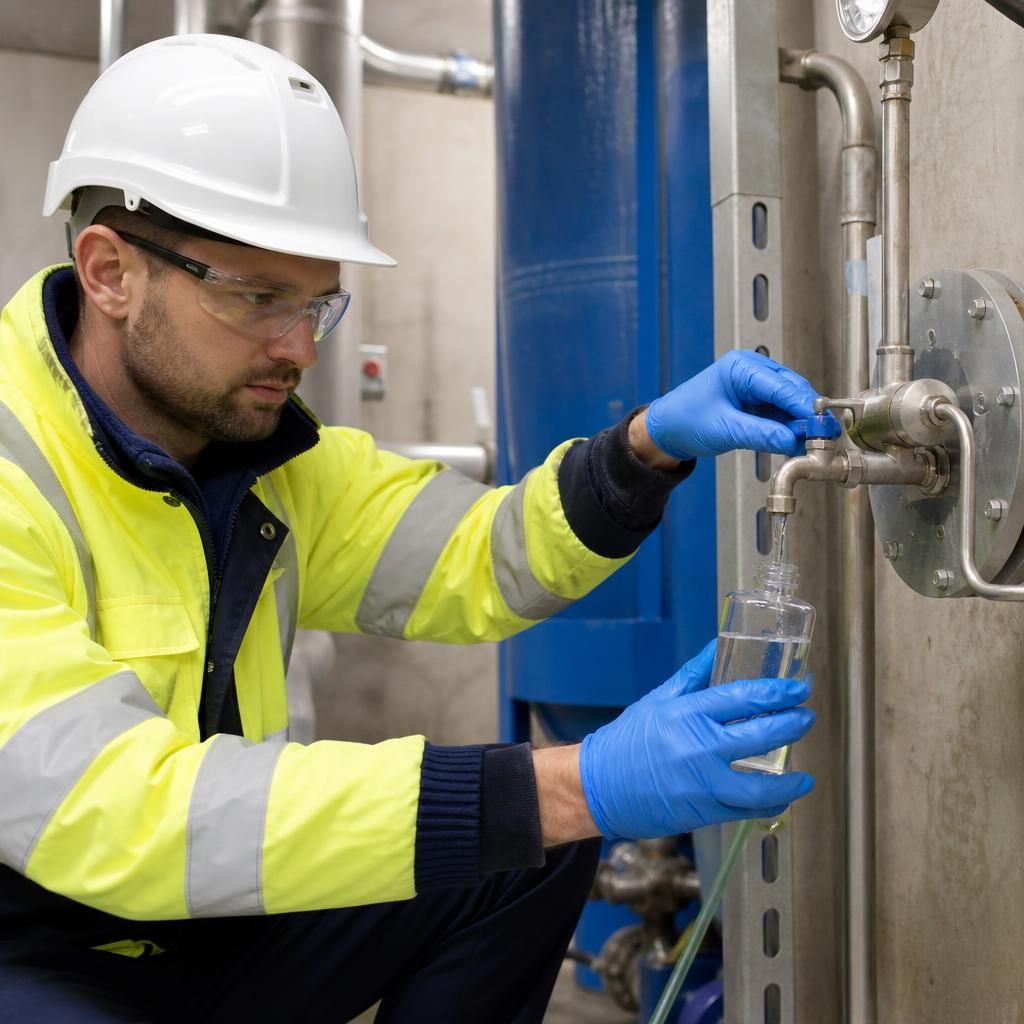
A UKAS-accredited result must be interpreted alongside its reporting limit, particularly where the laboratory reports a result as below the limit of detection or quantification. This wording does not necessarily mean that the disinfectant is completely absent; it means that the concentration is below the level the stated method can reliably identify or quantify.
For dechlorination verification, the reporting limit should be low enough to assess the agreed acceptance criterion. If it is higher than that criterion, the result may not provide sufficient evidence that the treated water meets the required standard, even though the analysis was performed within an accredited scope. The reviewer should therefore consider the reported value, units, analytical method and reporting limit together before approving the result.
Discuss your dechlorination testing requirements
Discuss your dechlorination testing requirements with Blue Fish Water Management Ltd to identify an appropriate testing scope and evidence review for your water system. Share your treatment objective and existing records so the next steps can be considered in context.