
What site information should a provider review before proposing chlorine monitoring and control?

Before proposing chlorine monitoring and control, a provider should establish the site’s management arrangements, treatment objectives, available technical information, water chemistry and practical operating constraints. This information allows the proposal to distinguish between routine monitoring, automated control, investigative work and any remedial action that may be required.
The provider should review who is responsible for the water system and how decisions are made. This includes the appointed responsible person, operational staff, maintenance contractors and any specialist parties involved in dosing or water quality. The proposal should identify who will take readings, who can adjust equipment, who authorises corrective action and who receives reports. Clear ownership is particularly important where a site has several buildings, departments or contractors.
Useful technical documents may include:
- current schematic drawings and asset registers;
- dosing equipment specifications, control-panel information and calibration records;
- commissioning documents and previous modification records;
- plant-room drawings, valve schedules and electrical or control-system details; and
- records showing where samples have previously been taken and how results were recorded.
These documents should be checked against the installation rather than accepted without verification. Drawings may be out of date, sampling points may no longer represent the wider system, and equipment may have been altered without the records being updated. A site visit can therefore be needed to confirm pipework arrangements, instrument locations, injection points, sample points, tank configuration and the condition of accessible components.
Water quality information is also central to the proposal. The provider may need to examine historical results for free chlorine, total chlorine, pH, temperature, turbidity and other parameters relevant to the treatment process. The relationship between these measurements can indicate whether a dosing issue, demand within the system, poor mixing, stagnation or an instrument problem is influencing the result. Where the available data is incomplete, the proposal should state what baseline sampling or survey work is needed before control settings are finalised.
The intended control philosophy should be defined in practical terms. This may include:
- the parameter to be measured and the location at which it should be measured;
- whether monitoring is manual, continuous or a combination of both;
- the desired operating range and the actions associated with readings outside it;
- how often instruments are checked, cleaned, calibrated and maintained;
- how dosing is adjusted and protected against loss of chemical, blocked injection or instrument failure; and
- how readings, alarms, adjustments and corrective actions are retained as auditable records.
A provider should also establish whether the proposed controls need to interface with an existing building management system, remote alarm arrangement or electronic reporting process. The relevant information includes available connections, alarm-routing arrangements, data ownership and any restrictions on installing new equipment or transmitting readings. A technically suitable monitor may still be inappropriate if its alarms cannot reach the people responsible for acting on them.
Information about the water treatment chemicals and their management should be reviewed separately. This includes the chemical currently used, storage arrangements, delivery and replenishment procedures, safety data, bunding, ventilation, compatibility of materials and procedures for dealing with spills or leaks. The provider should understand whether chemical storage capacity, delivery access or site rules could limit the proposed dosing arrangement. Any recommendation should also account for safe isolation, maintenance and access to the equipment.
Operational information helps determine whether readings will represent normal conditions. The provider may need to understand planned shutdowns, seasonal changes, production cycles, cleaning regimes, process changes, occupancy changes and periods when parts of the system are not used. These factors can alter chlorine demand or cause readings to vary, so they should be reflected in the monitoring plan and in the interpretation of results.
The review should cover the site’s incident and decision-making history without treating a single abnormal reading in isolation. Relevant evidence may include previous alarms, complaints, failed samples, chemical outages, equipment faults, investigations, remedial work and records of how issues were closed. The provider should identify recurring patterns, unresolved actions and any gaps between taking a reading and responding to it. This helps determine whether the proposal needs stronger alarm thresholds, more representative sampling, additional staff training or changes to the operating procedure.
Finally, the provider should agree the scope and assumptions before pricing or specifying the work. The proposal should identify the assets and locations included, information still required, exclusions, testing responsibilities, maintenance requirements, reporting arrangements and the method for verifying that the controls are working as intended. Where site information is uncertain, the uncertainty should be recorded rather than concealed. A clear evidence base produces a more proportionate chlorine monitoring and control proposal and makes later performance reviews easier to interpret.
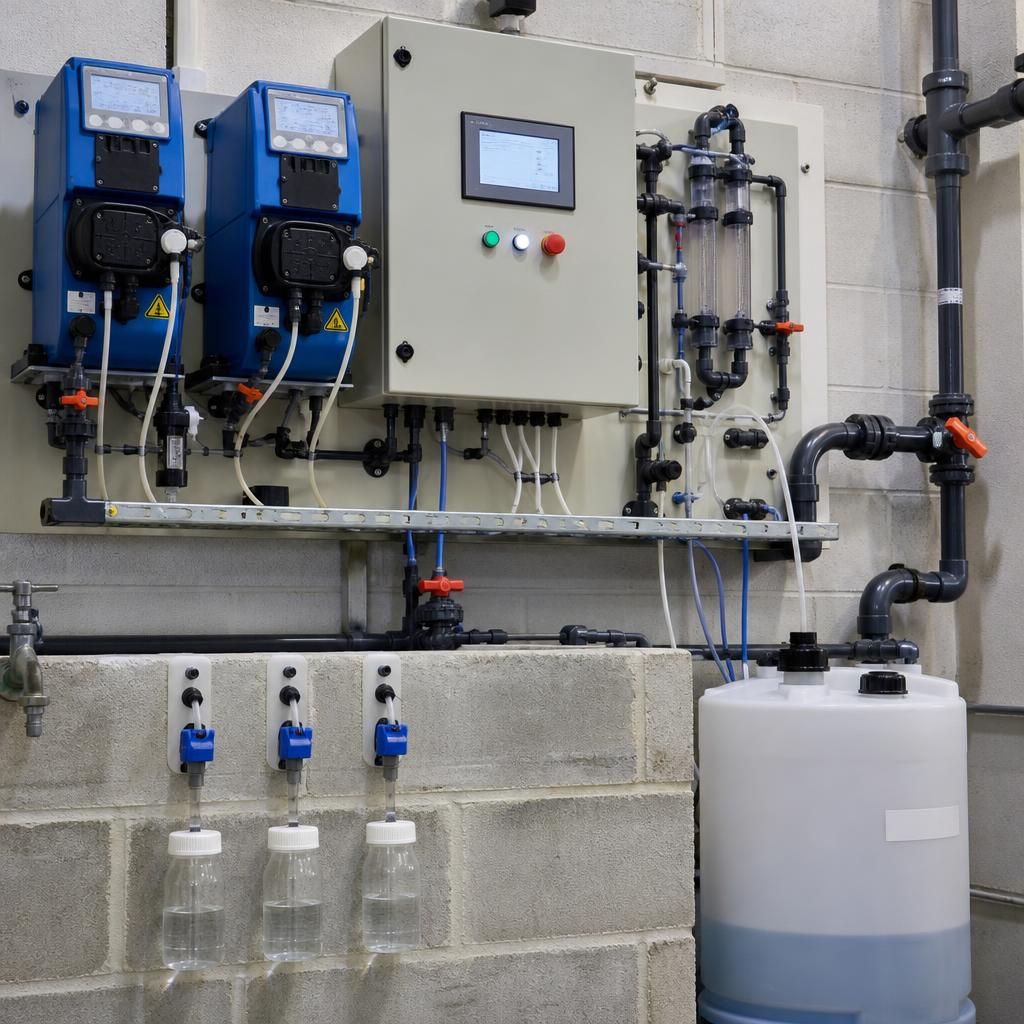
A provider should review the site’s user profile and the consequences of inadequate chlorine control before recommending monitoring arrangements. Information about healthcare settings, care environments, residential accommodation, workplaces, process operations and other uses helps establish how water is used and which areas require closer consideration.
The review should also identify any users who may be particularly susceptible to water-related harm, together with critical activities that could be affected by a loss of suitable water quality. This context helps the provider assess whether routine checks are sufficient or whether additional sampling locations, alarm arrangements, documented actions or management review should be included in the proposal. The reasoning should be recorded so that the recommended controls can be assessed against the site’s actual risk profile rather than applied as a standard package.
Review Your Site Information Requirements
If you are preparing a chlorine monitoring and control brief, contact Blue Fish Water Management Ltd to discuss the appropriate scope and any information still needed.